

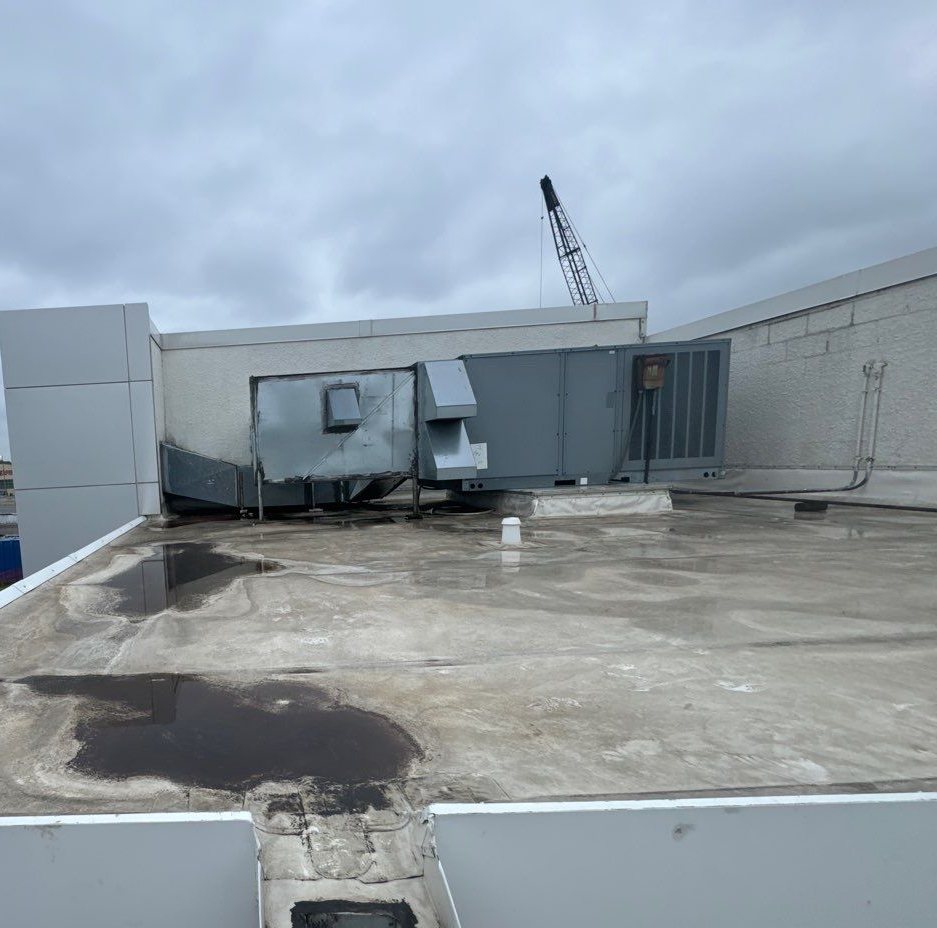
Twin Cities Flat Roof Repair: What Roof Do You Have, and Can It Be Saved?
Flat roof repair in Minneapolis and St. Paul starts with identifying the roofing material and documenting the failed detail, drainage and surrounding condition. A repair or recoat may be reasonable when the existing assembly is suitable; replacement needs evaluation when it is not.
Look up at your roof from the street or alley. Which can you see: silver rolls behind a parapet, a black rubber edge over the garage, loose gravel, or a white sheet around rooftop equipment?
Those clues give you somewhere to start—not a diagnosis. For flat roof repair in Minneapolis and St. Paul, first identify the actual roofing material, then ask what failed and whether the surrounding roof can support a dependable repair. A shiny coating and a new membrane are different purchases.
How can I identify the flat roof on my Twin Cities building?
Match visible clues with installation records and an inspection. Modified bitumen, built-up roofing, EPDM, TPO and PVC need different repair approaches; silver or white color alone cannot identify the roof underneath.
Use a safe window, old photographs or the inspector's report. Leave roof access, seam testing and sample cuts to qualified people. The clues below are possibilities to investigate, not a reason to order a patch kit.
| What you see or hear | What it may mean | What to ask |
|---|---|---|
| Granulated rolls with repeated overlaps | Modified bitumen, often shortened to mod bit: reinforced, polymer-modified asphalt sheets | Which membrane and cap sheet are installed? Are the laps and wall details sound? |
| Silver or aluminum-coated roof | A reflective coating over an existing roof, potentially modified bitumen or built-up roofing | What is beneath the aluminum roof coating, and are earlier repairs still bonded? |
| Built-up roof, BUR, or “tar and gravel” | A layered roofing assembly that may have gravel, a surfaced sheet or coating on top | What is concealed by the surfacing? Do records identify the assembly? |
| Broad black rubber sheets | Possibly EPDM, a synthetic rubber membrane; white EPDM also exists | Can the product be confirmed before selecting EPDM rubber roof repair materials? |
| Light-colored single-ply sheets | Possibly TPO: thermoplastic polyolefin, with heat-welded seams | What manufacturer and membrane are documented? How will the repair match them? |
| Another white, gray or tan sheet roof | Possibly PVC: polyvinyl chloride, a different thermoplastic with welded seams | Is this a PVC roof or TPO? Do not choose by color. |
| A continuous painted-looking surface | A coating or liquid-applied system; identify both the surface chemistry and the underlying roof | Is it silicone, acrylic or another product? What preparation and adhesion testing are needed? |
| Coated foam | Spray polyurethane foam with a protective coating | Is the foam sound, and what coating system protects it? |
| Metal panels on a shallow pitch | A low-slope metal roof, not a sheet-membrane roof | Will the scope address panel joints, fasteners and penetrations? |
| Basic asphalt roll roofing on a garage or addition | A rolled product that should not automatically be called a multi-ply mod-bit system | Is the actual product approved for this roof's measured slope? |
Gravel is not conclusive: single-ply membranes can also be held down with stone ballast. Hybrid assemblies can combine materials. Keep the old proposal or warranty with your inspection photos rather than relying on a color description.
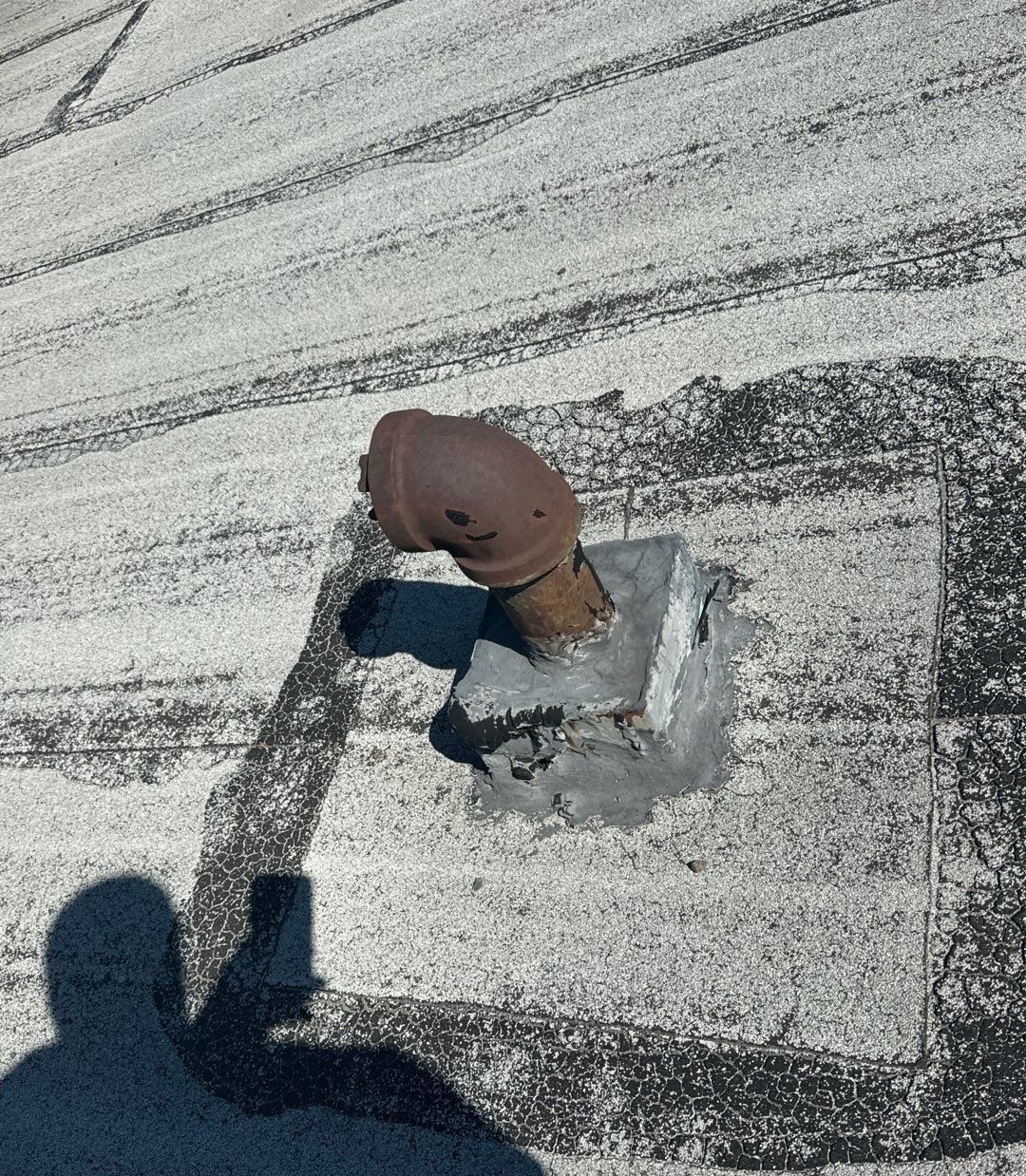
Is a torch-down roof different from a modified-bitumen roof?
Torch-down describes how a roof is installed; modified bitumen describes the material. Not every mod-bit roof uses a torch, and the installation method should be confirmed before planning repairs.
The asphalt roofing manufacturers' association describes APP and SBS as two asphalt modifiers. Its installation guidance includes heat-welded, cold-adhesive, hot-asphalt and self-adhered approaches, depending on the system. A cap sheet is the top roofing sheet—not a later coat of silver paint.
For mod bit roof repair, ask the contractor to identify the membrane, failed detail and compatible repair method. “Torch down roof patch” is not a complete specification, especially near walls, wood construction or equipment.
Can an aluminum-coated flat roof be saved with another coating?
Possibly, if inspection supports keeping the existing roof and the proposed coating is compatible. Recoating should follow necessary repairs and substrate evaluation; it should not be the explanation for skipping them.
A silver-coated roof deserves a close look at laps, cracked surfacing, edges and old patches. Ask what the coating will do, what repairs happen first and what evidence supports keeping the underlying assembly.
That distinction matters when comparing silicone roof coating, acrylic roof coating and aluminum roof coating. A product's tolerance of standing water does not explain why the water is there. Ask for the drainage finding separately from the coating recommendation.
Surface cracking alone does not reveal the depth of deterioration. Request close-ups, a description of what remains sound and an explanation of how suspected moisture below the surface will be checked.
Start your flat-roof photo file without climbing up
Send an existing roof photo and a note about the leak to help us prepare for an inspection.
Send a flat roof photoShould I repair, recoat or replace my Minneapolis flat roof?
Repair addresses a defined defect; recoating is an option for an eligible existing roof after preparation and repairs. Flat roof replacement in Minneapolis deserves consideration when deterioration, concealed conditions or repeated failures make another limited repair hard to justify.
| Option | When to investigate it | Evidence to request |
|---|---|---|
| Targeted repair | An isolated puncture, open seam or flashing defect with sound material around it | Photos locating the defect, compatible materials and the limits of the repair |
| Repair plus recoat | The existing roof is a suitable substrate and repairable defects have been addressed | Moisture findings, preparation, adhesion checks and the named coating system |
| Recover with a new roof covering | The existing assembly may be retained, subject to condition and applicable code | Existing covering count, underlying condition and permit review |
| Tear-off and replacement | Widespread deterioration, unsuitable underlying material or recover restrictions | What gets removed, what is replaced, and how drainage and details will change |
Ask what a proposed patch leaves unresolved. If a repair buys time before replacement, have that limitation written down. For insulation, cover boards and decking below the surface, use our Minnesota commercial flat roof layers guide rather than guessing from the top sheet.
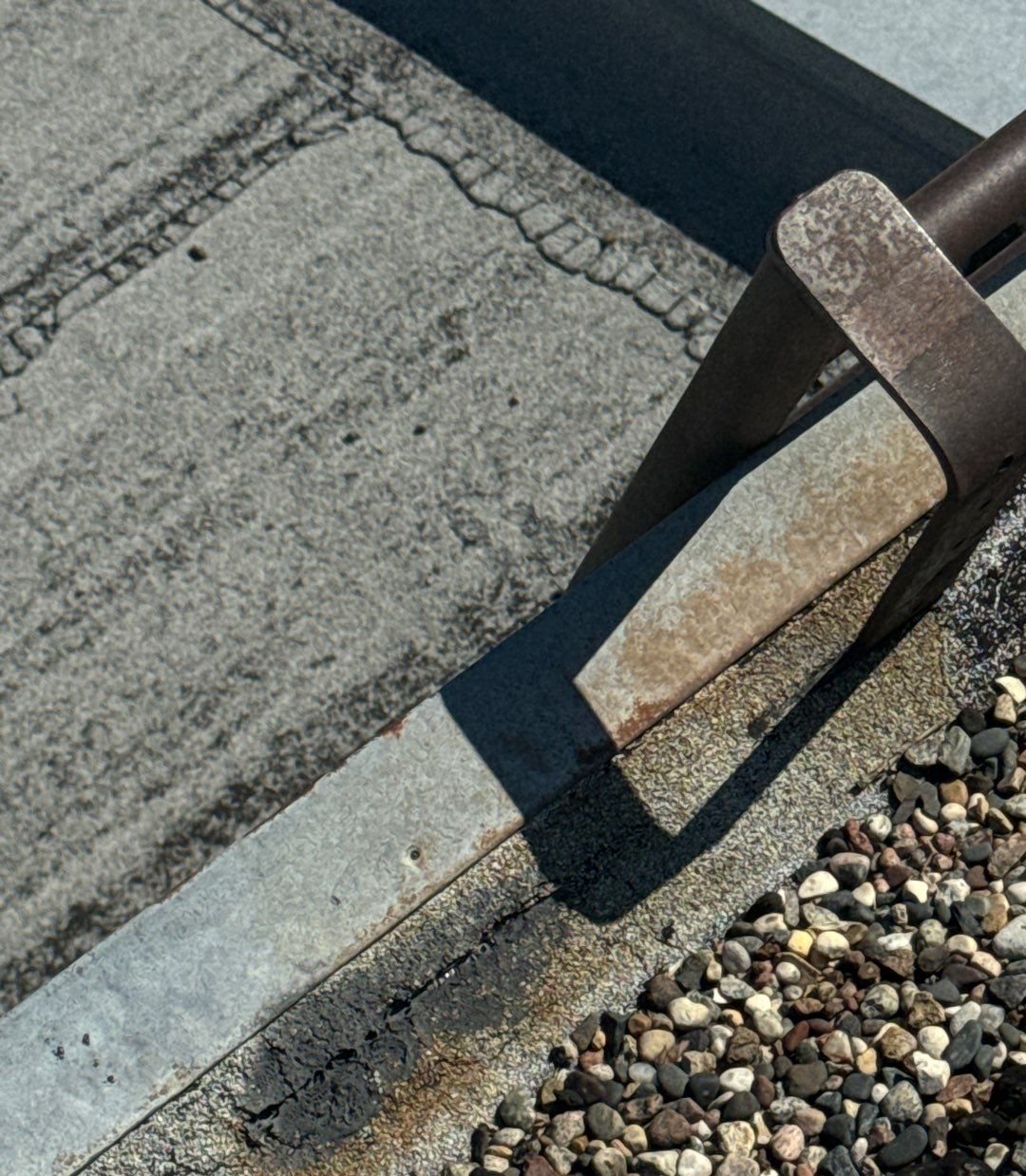
What should a flat roof leak inspection document before winter?
Request a record connecting the roof material, visible defects, drainage path and interior leak history. The useful result is a location-specific repair plan, not simply “roof is old.”
Before the appointment, write down when the leak appears: during rain, after snow melts or during equipment use. Treat those observations as clues for the inspector, not proof of a cause.
- Roof identity: membrane, coating history and any documents confirming the products.
- Leak map: dated interior pictures paired with roof-area photos, including surrounding details.
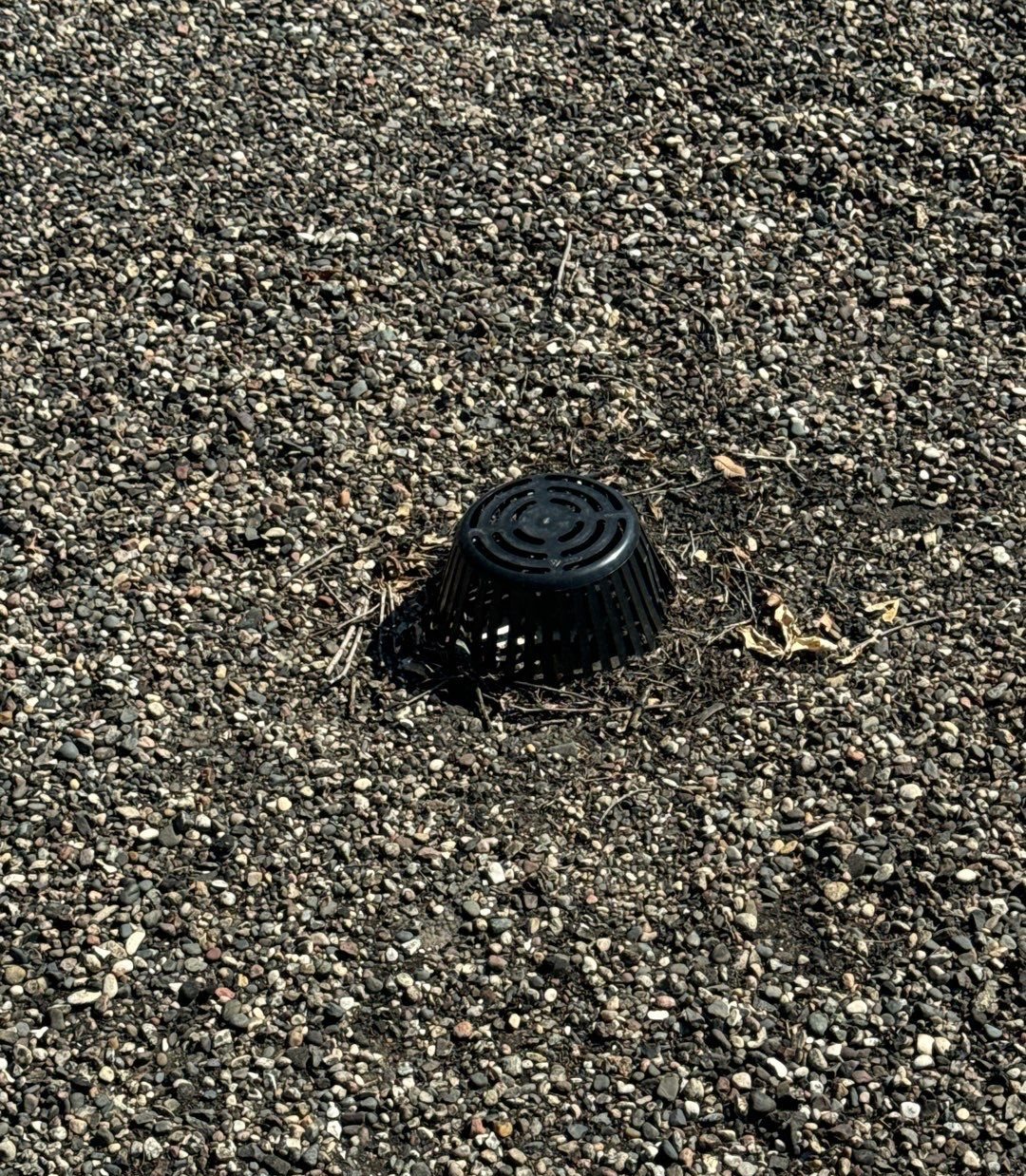
- Drainage route: drains, scuppers—the outlets through roof-edge walls—and where water discharges.
- Repair history: patches, open flashing seams, deteriorated sealant and changes around rooftop equipment.
- Uncertainty: hidden areas or suspected moisture that need additional investigation.
ARMA recommends spring and fall roof inspections and keeping drains and scuppers clear of debris. For a commercial flat roof in the Twin Cities, planned roof maintenance gives those follow-up checks a place on the calendar.
Why do ponding water and ice at flat-roof drains need attention in Minnesota?
Drainage belongs in the repair plan, particularly before repeated freezing and thawing. Do not treat a blocked outlet, a membrane defect and a snow-load concern as the same problem with the same fix.
ARMA describes ponding water as water remaining for at least 48 hours. Its guidance explains that moving ice can damage membrane surfaces and that debris can interfere with drainage. Record puddle locations and timing from safe existing observations; do not walk onto a wet or icy roof to measure them.
If you suspect a flat roof ice dam or ice blocking a drain or scupper, request an assessment rather than chopping into the roofing. Keep clear of sagging ceilings and water near electrical equipment. Active leaking calls for prompt emergency roof-repair help.
A flat roof snow load is a structural question, not something a coating can solve. Our Minnesota flat-roof snow-load guide covers warning signs and removal decisions; use it for that separate concern instead of assuming one snow depth is safe for every building.
Can I add another flat-roof layer in Minneapolis or St. Paul?
Not automatically. The Minnesota Building Code's roof-recover provisions restrict recover over water-soaked roofing, material too deteriorated to provide an adequate base, and two or more existing roof-covering applications.
A new coating and a new roof covering are not interchangeable descriptions. Ask the contractor and building official to confirm which provisions apply to the actual assembly and scope. Do not count the individual plies within one built-up roof as separate reroofing generations.
Minneapolis publishes roofing requirements for one- and two-family dwellings; do not assume those documents settle a commercial project's requirements. St. Paul's commercial flat-roof checklist requests the proposed material, roof pitch, drain and overflow information, discharge location, and existing and proposed insulation. Confirm the permit route before work begins.
For the broader assembly and code discussion, keep reading the flat-roof layers article. This guide is about identifying the roof you have and deciding what evidence you need before authorizing work.
Who repairs flat roofs in the Twin Cities?
Repair King provides flat and low-slope roof inspection, repair and replacement in the Twin Cities. Start with a free inspection to discuss an existing mod-bit or coated roof, EPDM rubber, TPO or PVC and whether repair, recoating or replacement fits the findings.
Looking for flat roof repair in St. Paul or Minneapolis? See our St. Paul and Minneapolis service pages. Nearby information is available for Bloomington, Edina, Richfield, Roseville and Maplewood. For Brooklyn Park or another nearby community, check our service-area overview.
For a garage roof, bring any previous repair invoice. For a duplex, fourplex, apartment building or storefront, include access information and the affected unit or room. Our flat-roofing service page explains the inspection process, and commercial roofing covers larger properties.
The next step is not choosing a bucket of coating or committing to a new roof. It is getting the existing roof identified and its condition documented. Request a free flat roof inspection and ask us to show you what can be repaired and what cannot.
Find out whether your flat roof can be saved
Request a free flat roof inspection, photos of the findings and a practical discussion of repair, coating or replacement.
Questions people also ask
Does a silver finish prove I have an aluminum-coated mod-bit roof?
No. The visible coating does not conclusively identify the roof beneath it. Ask for the membrane identification and coating history before approving another product.
Can TPO roofing handle Minnesota projects better than EPDM?
There is no single winner for every building. TPO and EPDM are different materials with different seam and repair systems. Have the proposal explain why the complete assembly fits your building, drainage and operating conditions.
Does a puddle in a roof photo prove that my roof has a ponding problem?
Not by itself. ARMA defines ponding as water remaining at least 48 hours, so timing matters. Record safe observations and ask the inspector to evaluate the drainage route.
Can you repair just the flat garage roof instead of replacing the house roof?
Ask for the garage roof to be evaluated as its own area, including the connection to other roofing. A defined defect may support a targeted repair, but the surrounding material and any shared details still need inspection.
What should I send when requesting flat roof leak repair?
Send the property location, the room or unit affected, when the leak appears and existing photos taken safely. Add prior roof invoices or membrane records if you have them. Do not climb onto the roof to collect missing information.
Is putting another membrane over the old roof the same as recoating?
No. A new covering and a protective coating are different scopes. Minnesota roof-recover restrictions and the condition of the existing assembly need review before a new covering is proposed.
Sources
- Guidelines for Selecting Cool Roofs (U.S. Department of Energy)
- Selecting a Single-Ply Membrane (Carlisle SynTec Systems)
- Types of Asphalt Roofing (Asphalt Roofing Manufacturers Association)
- Choosing the Right Installation Method for Your Low-Slope Asphalt Roofing System (Asphalt Roofing Manufacturers Association)
- Roofing & Repair FAQs (KARNAK)
- How to Develop a Maintenance Program for Your Commercial Asphalt Roof (Asphalt Roofing Manufacturers Association)
- Effects of Ponding Water on Low-Slope Asphalt Roofing Systems (Asphalt Roofing Manufacturers Association)
- Minnesota Building Code 2020, Section 1511, Reroofing (UpCodes)
- Roofing (City of Minneapolis)
- Permit Applicant Checklist for Commercial Flat Roof Projects (City of Saint Paul)
- Flat Roof Repair & Replacement Twin Cities (Repair King)
Repair King is a licensed contractor, not an insurance company, public adjuster or attorney. We inspect, document and repair. Coverage decisions belong to your insurer, so read your own policy and ask your agent.


