

What's inside a commercial flat roof? The layers explained (with video)
A commercial flat roof is a stack: membrane, cover board, rigid insulation, fasteners or adhesive, a vapor barrier where needed, and the structural deck. Which layer failed decides repair vs. replacement.
The roof looks like one smooth white sheet from the drone. Then a leak shows up over a tenant's office, someone cuts a test hole, and suddenly there are five or six different materials in the hole and a contractor talking about "the assembly." Here's what all of that is, in the order it sits on your building.
Most commercial flat roofs in Minnesota are a stack, not a single layer: a waterproof membrane on top, often a thin cover board under it, rigid insulation, the fasteners or adhesive that hold it all down, sometimes a vapor barrier, and the structural deck. Each layer has a job, and knowing which one failed tells you whether you need a repair or a new roof.
What are the layers of a commercial flat roof, from top to bottom?
From the top: membrane, cover board, rigid insulation, attachment (fasteners and plates or adhesive), vapor barrier where the design calls for one, and the structural deck sitting on joists or beams. Not every roof has every layer, but the order rarely changes.
| Layer | What it usually is | Its job |
|---|---|---|
| 1. Membrane | White TPO or PVC sheet (EPDM rubber and modified bitumen are other options) | Keeps water out; the only layer meant to get wet |
| 2. Cover board | Thin high-density board, often 1/2" high-density polyiso or gypsum | Protects the insulation from foot traffic and hail, gives the membrane a firm base |
| 3. Rigid insulation | Polyiso boards, sometimes several layers or tapered to create slope | Keeps heat in; tapered boards move water toward drains |
| 4. Attachment | Screws with metal plates, induction-welded plates, or adhesive | Holds the system down against wind uplift |
| 5. Vapor barrier (where used) | A sheet or self-adhered membrane laid on the deck | Stops warm, moist indoor air from condensing inside the insulation |
| 6. Deck | Corrugated steel, concrete or wood | The structural surface everything is fastened to |
| 7. Structure | Steel joists and beams bearing on the walls | Carries the roof, snow and equipment loads |
Why are TPO and PVC seams welded with heat instead of glued?
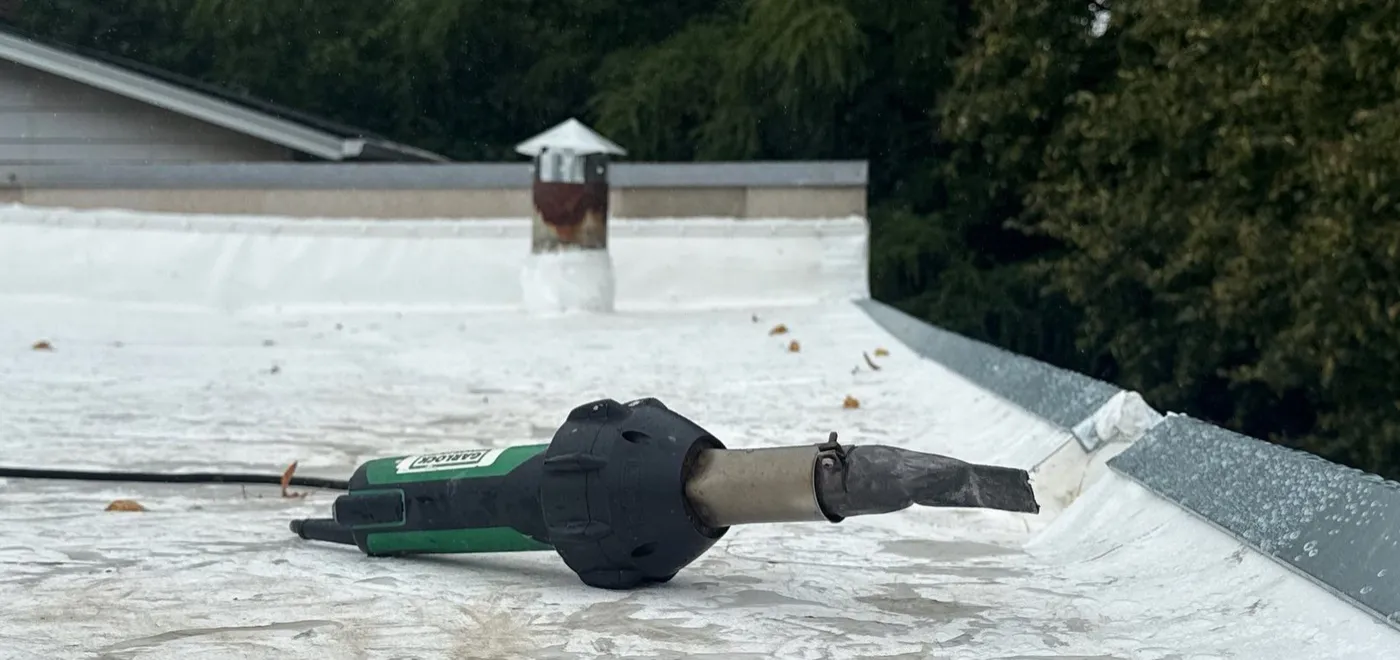
TPO and PVC are thermoplastics, so overlapping sheets can be melted together with hot air into one continuous piece. A good weld is usually the strongest part of the sheet, which is why seams are tested and probed, not just looked at.
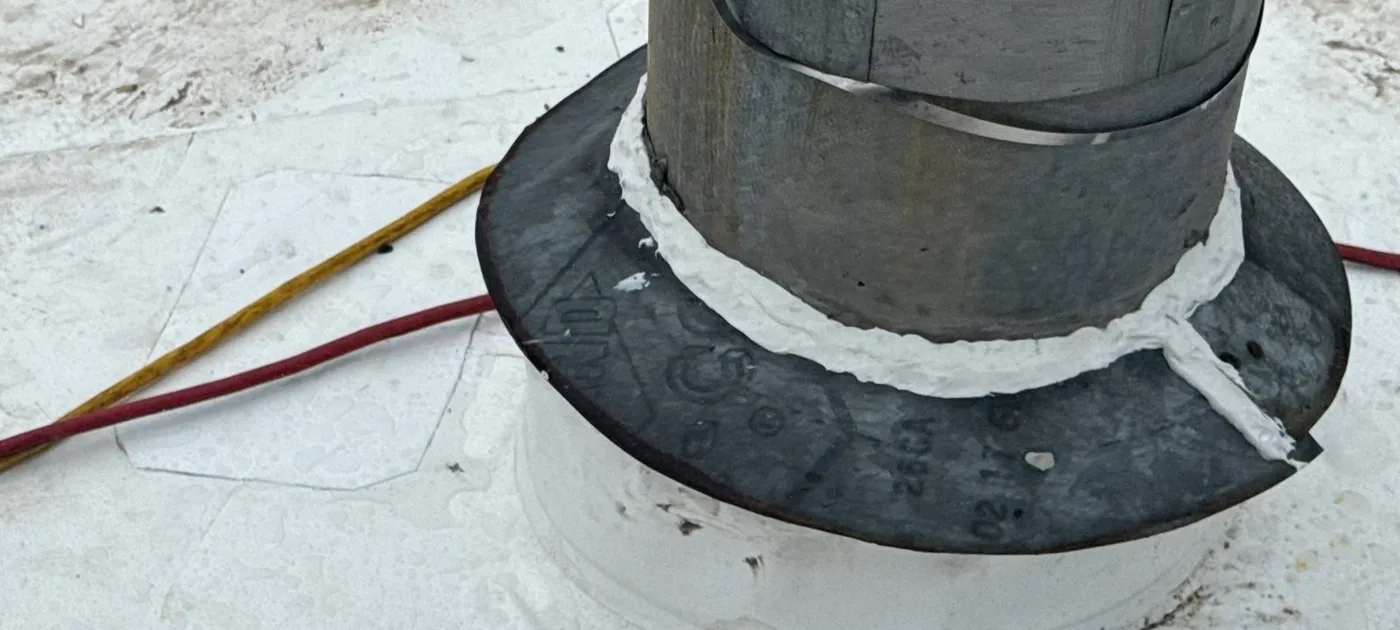
That's the tool in the photo below. When a white roof leaks, the cause is usually at a detail: a seam that never fully fused, a corner patch, or flashing around a pipe, curb or drain. Those are repairable spots. Open field membrane rarely fails first unless something punctured it.
What is a cover board, and does my roof need one?
A cover board is a thin, dense board between the membrane and the foam insulation. It isn't on every roof, but it makes the system tougher against hail, foot traffic and dropped tools.
For a Minnesota building with HVAC units that get serviced several times a year, or a roof in a hail-prone area, that layer matters. Without it, a hailstone or a technician's knee can crush the insulation under the membrane even when the membrane itself looks fine.
How is a flat roof held down: fasteners, plates or glue?
One of three ways: screws and plates driven through the insulation into the deck, plates that the membrane is induction-welded to from above, or adhesive. The method is chosen for wind uplift, the deck type and the building's use.
Why should an owner care? Fasteners that back out, or plates that rust, can push up through the membrane and start leaks. Fastener pattern also matters for a recover: you can't just screw a new roof onto a deck that's lost its holding power.
Does a Minnesota flat roof need a vapor barrier?
Often it should be considered. Minnesota sits in cold climate zones 6 and 7, where warm, humid indoor air can condense inside roof insulation during winter. A vapor barrier on the deck stops that moisture before it reaches the insulation.
Buildings with high indoor humidity (pools, food processing, laundries, some manufacturing) are the ones where this matters most. If your roof drips in January when it hasn't rained in weeks, condensation inside the assembly is a real possibility, not just a membrane leak.
Why does wet insulation turn a repair into a replacement?
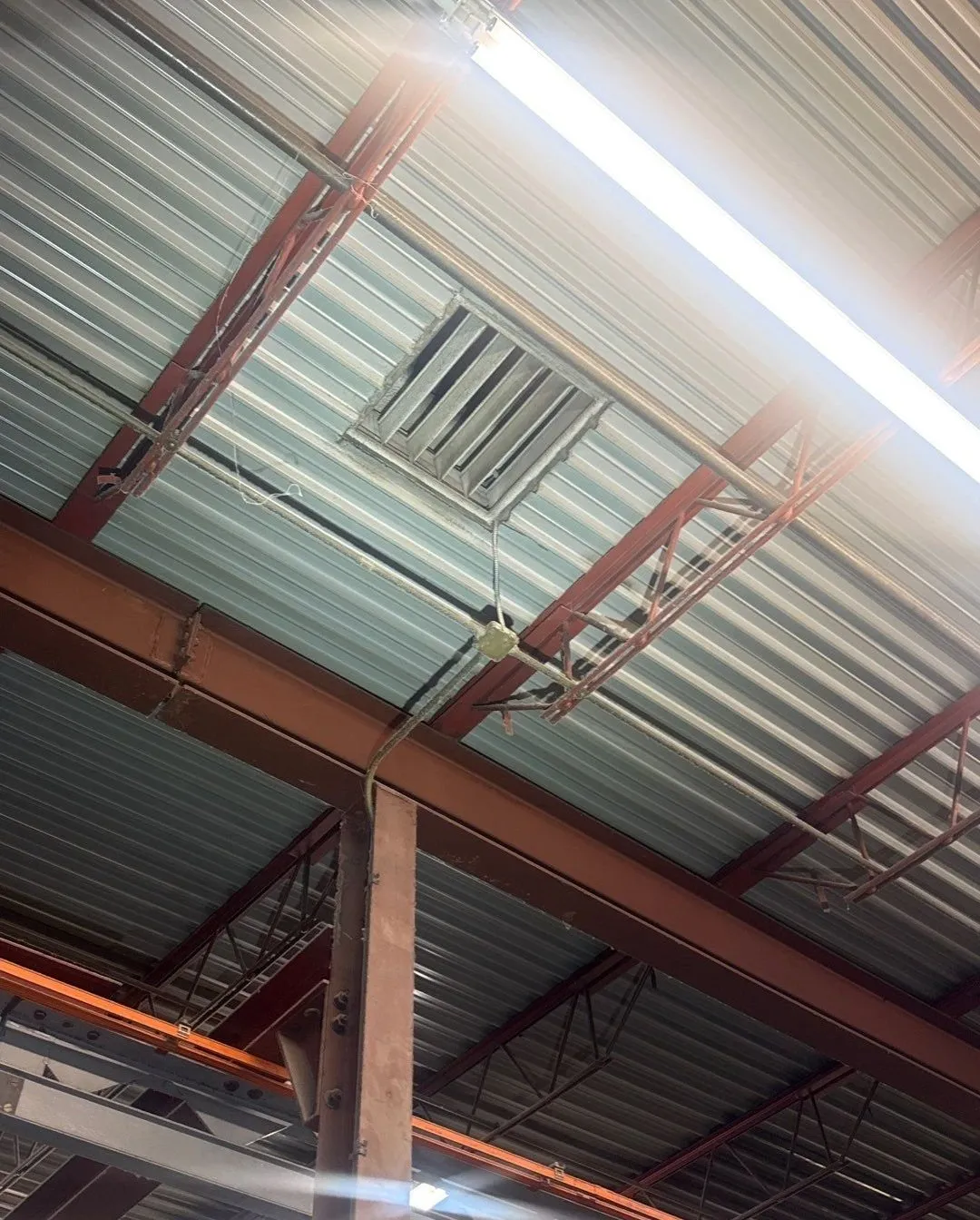
Wet insulation loses much of its value as insulation, stops supporting the membrane well, and can't be roofed over. Once water has spread through a large area of insulation, patching the membrane on top doesn't fix what's underneath.
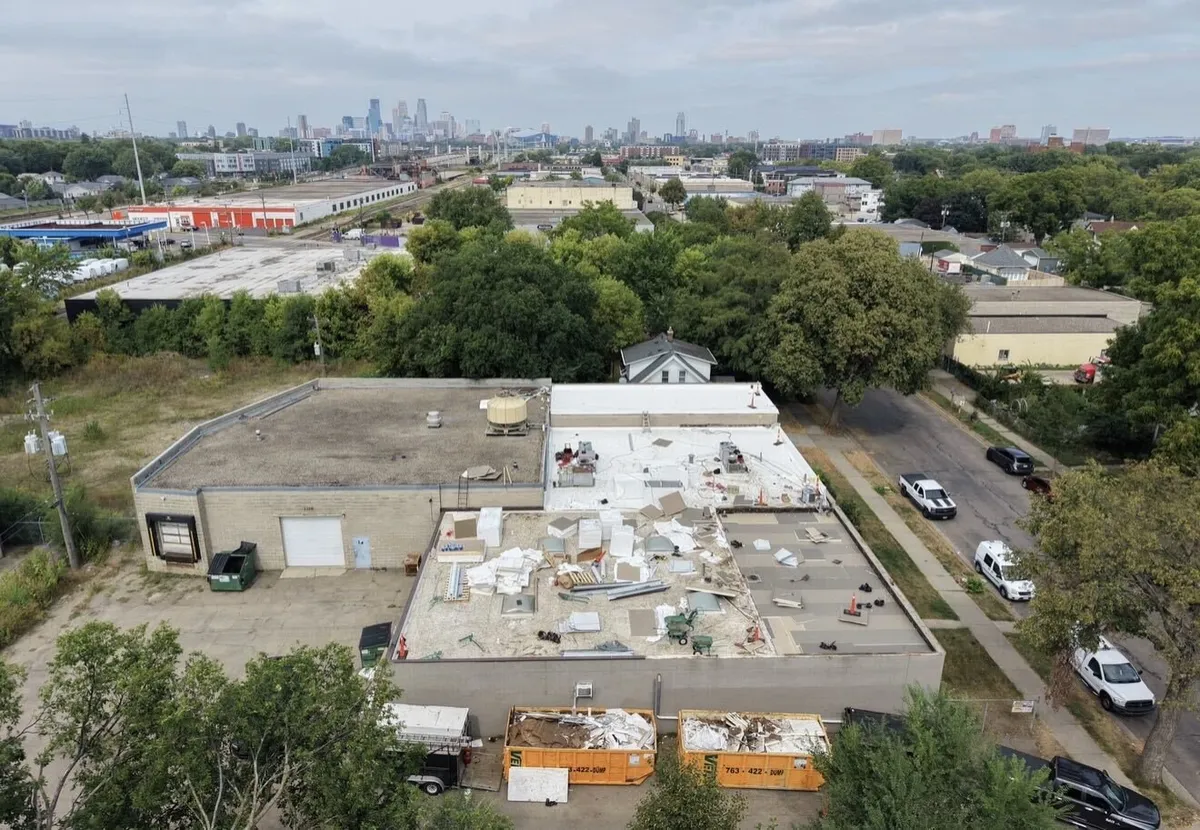
That's why the first question on an older flat roof isn't "how old is the membrane?" It's "how much of the insulation is still dry?" A small wet area around one failed seam is a cut-out-and-replace repair. Wet insulation across a whole section usually means tear-off, like the Minneapolis roof in the drone photo at the top of this page, where the old layers are being stripped down to the deck.
What does Minnesota code require when a commercial roof is replaced?
A permit, plus a few rules that catch owners off guard: rusted flashings can't be reused, roofs with parapets that trap water need a secondary (emergency) drainage path, and energy code insulation rules apply to alterations as well as new buildings.
We'll walk the roof, check what's wet, photograph every layer we can see, and tell you plainly whether it's a repair, a recover or a replacement.
Schedule a Commercial Roof AssessmentWhat should a commercial roof report show you?
Photos of every problem area, what layer the problem is in, how much of the roof is affected, and the repair-or-replace options with the reasons for each. If a report only says "roof is at end of life," ask for more.
If a new roof is in the cards for a nonresidential building, the tax side may help: our Section 179 roof page explains how a roof can qualify. For more on the building side, see flat roof repair and replacement, how to judge snow load on a flat roof, and how other roof systems compare. Property managers can also look at roof maintenance agreements or book an assessment.
Not sure which layer is failing?
We'll walk the roof, check for wet insulation and photograph every problem area, then lay out repair, recover or replacement options.
Questions people also ask
Can a new flat roof go over the old one in Minnesota?
Sometimes. The building code Minnesota adopts does not allow a recover if the existing roof is water-soaked or too deteriorated to be a base, or if there are already two or more roof coverings. A moisture check comes first.
Why does my flat roof drip in winter when it hasn't rained?
It could be snowmelt finding a failed seam, or it could be condensation forming inside the roof from warm, humid indoor air. Buildings with high indoor humidity and no vapor barrier are the usual suspects. A roof inspection can tell you which.
Is a white TPO roof the same as PVC?
No, but they're installed in similar ways. Both are thermoplastic single-ply membranes with heat-welded seams. They're made from different materials, and the right choice depends on the building, budget and what's on the roof.
How do you find wet insulation without tearing off the roof?
Contractors use small test cuts (core samples), moisture meters and infrared scans to map wet areas. Each has limits, so findings should be confirmed with cores before big decisions.
Do I need a permit to replace a commercial roof in Minnesota?
Plan on it. Commercial reroofing typically requires a building permit from your city, and the replacement has to meet the building code's reroofing rules and the commercial energy code. Your contractor should pull it.
Sources
- Specification: TPO Systems, Mechanically Attached (Mule-Hide)
- Specification: TPO Systems, Induction Welding Attachment (Mule-Hide)
- Why Do I Need a Coverboard (GAF)
- Very Severe Hail insulation (Carlisle SynTec)
- A Guide to Vapor Retarder Design in Low-Slope Roof Systems (2024) (GAF)
- Minnesota Building Code 2020, Chapter 15 Roof Assemblies (UpCodes)
- Minn. R. 1305.1511 Reroofing (MN Revisor of Statutes)
- Fact sheet: 2024 Minnesota Commercial Energy Code (MN Department of Labor and Industry)
Repair King is a licensed contractor, not an insurance company, public adjuster or attorney. We inspect, document and repair. Coverage decisions belong to your insurer, so read your own policy and ask your agent.


