
Chicago Flat Roof Repair: What Roof Do You Have, and Can It Be Saved?
For flat roof repair in Chicago, identify the membrane and inspect seams, flashing, drainage and underlying materials before choosing a repair, coating or replacement. A silver finish alone does not show whether the roof is sound or which products can safely repair it.
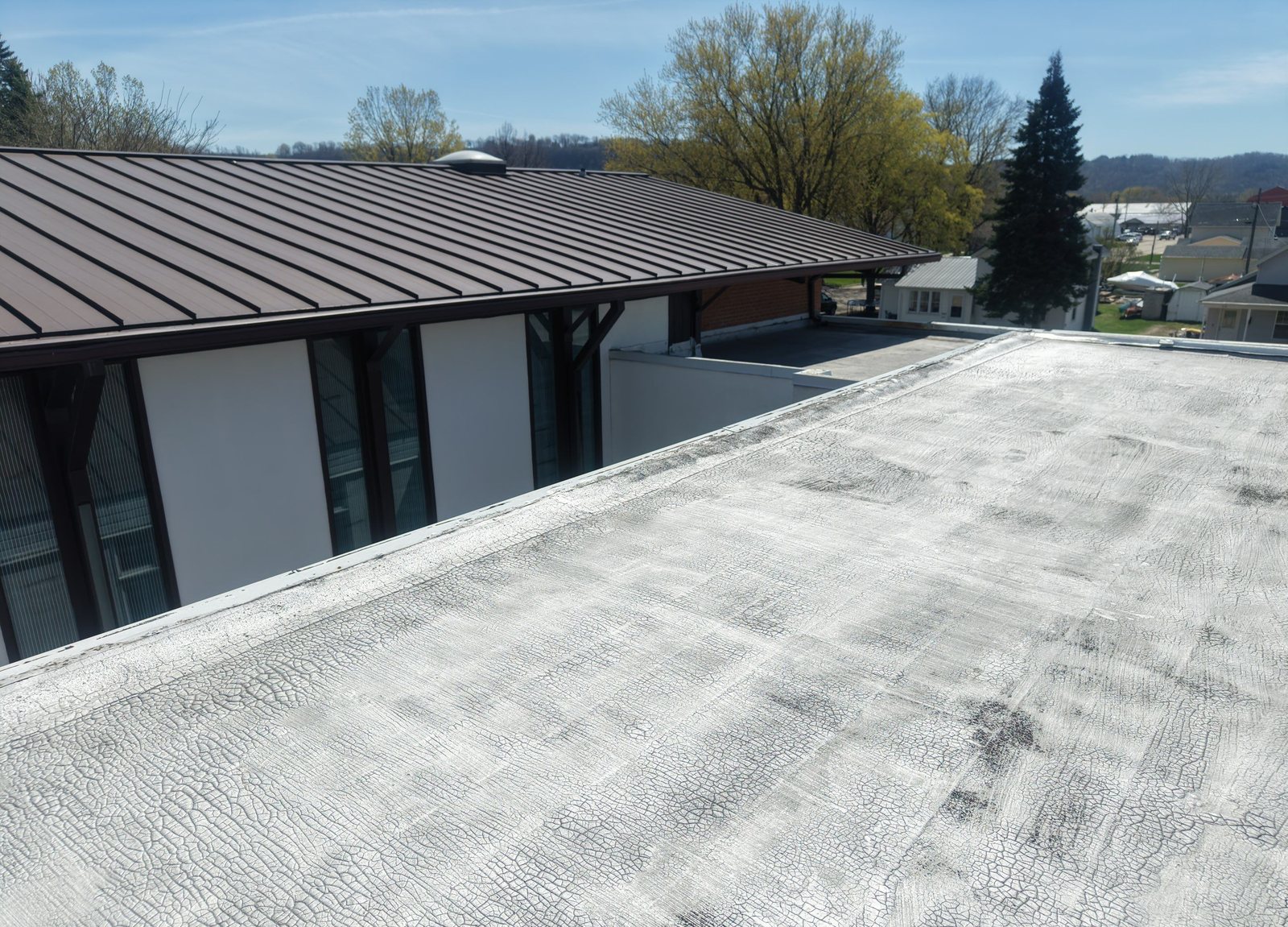
The silver-painted roof behind your Chicago two-flat still looks bright from the upstairs window. But the puddle near the back corner keeps returning, and now there is a brown mark on the ceiling below.
Start with the roof underneath that silver finish. For flat roof repair in Chicago, the useful question is not “Can someone paint it again?” It is “Are the membrane, seams, flashing and materials below it still repairable?” A coating recommendation should come after that answer.
Which flat roof do I have on my Chicago building?
Look for sheet overlaps, surface texture and records identifying the membrane. Silver coating is a surface treatment, not a reliable identification of the roofing system beneath it; a white sheet alone does not tell you whether you have TPO or PVC.
Use these clues from a safe window, existing photos or an inspection report. Do not climb onto the roof, lift seams or cut samples yourself.
- Silver surface with repeating roll overlaps: investigate an asphalt-based roof, including coated modified bitumen or built-up roofing. Confirm before choosing repair products.
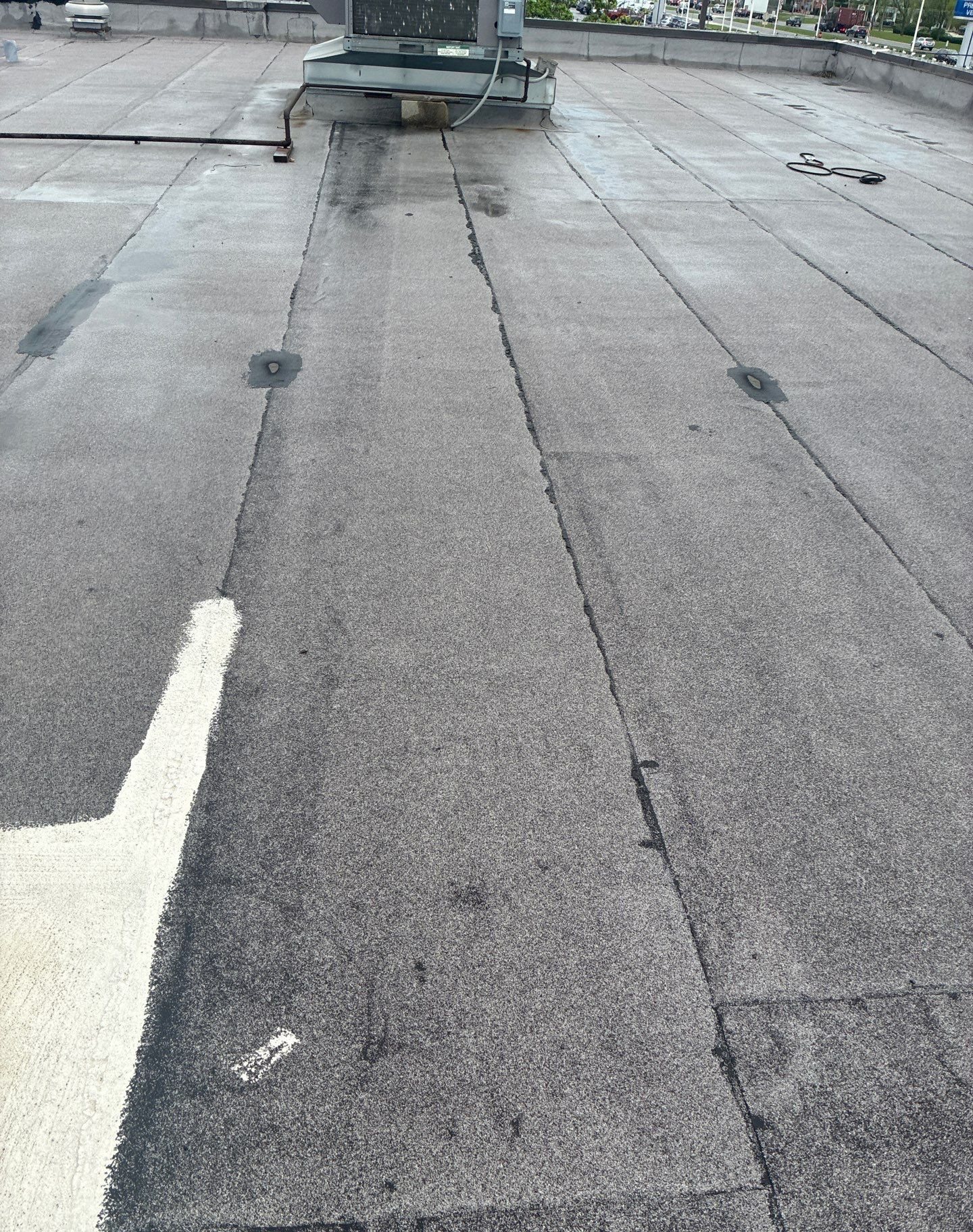
- Rough, granulated sheets with visible laps: ask whether this is a modified-bitumen cap sheet or another rolled asphalt product.
- Loose gravel over an older roof: investigate built-up roofing, but remember that stone can also ballast a single-ply membrane.
- Broad, usually black rubber sheets: EPDM is a candidate. EPDM means ethylene propylene diene monomer, a synthetic rubber.
- Smooth, usually light-colored sheets: check product records for TPO or PVC rather than guessing from color.
- A continuous painted-looking finish: identify both the coating chemistry and the underlying roof. Previous coatings affect what can bond next.
For a two-flat roof, three-flat, brick bungalow back roof or detached garage roof, save old proposals and repair invoices. For a courtyard building, six-flat or storefront, ask for the roof plan and maintenance history. Those records can settle what a photograph cannot.
How do Chicago flat roof types compare?
Modified bitumen and BUR are asphalt-based systems; EPDM is rubber; TPO and PVC are different single-ply plastics. Coatings go over eligible existing roofs and should not be confused with the roof assembly itself.
| Flat roof type | What it looks like | Chicago building context | Typical issues to check | Repair versus replace notes |
|---|---|---|---|---|
| Modified bitumen, including silver-coated mod bit | Overlapping asphalt sheets; smooth, granulated or coated finish | Check two-flats, three-flats, bungalow additions and garages | Laps, blisters, cracks and wall flashing | Consider compatible local repairs when surrounding material is sound; investigate widespread deterioration before recoating |
| BUR: built-up roofing, often called tar and gravel | Multiple asphalt-and-felt plies, sometimes surfaced with gravel or a cap sheet | Check older courtyard buildings, six-flats and storefronts | Drainage, flashing and condition beneath surfacing | Determine moisture and layer condition before selecting repair, recover or tear-off |
| EPDM rubber | Usually black sheets, sometimes stone-ballasted; white versions exist | Check residential additions and commercial flat roofs | Seams, punctures, edges and penetrations | Specify EPDM-compatible repairs; extensive tearing or failed underlying materials needs broader evaluation |
| TPO | Usually light-colored single-ply sheets with welded seams | Check multifamily buildings and commercial properties | Seam integrity, equipment curbs and physical damage | Verify material and repair compatibility; assess the full assembly before replacement |
| PVC | Usually light-colored single-ply sheets; visually similar to TPO | Check storefronts and larger managed buildings | Seams, flashing and punctures | Do not treat PVC and TPO as interchangeable repair surfaces |
| Roof coating or restoration system | Silver aluminum finish or a continuous elastomeric coating | Check the coating and substrate on any eligible low-slope roof | Peeling, adhesion, ponding and unresolved leaks | Repair and test first; coating is not a substitute for correcting a failed assembly |
| Asphalt roll roofing | Granulated rolls with overlaps | Check garage and small accessory-building roofs | Laps, edges and deteriorated material | Confirm the exact product and permitted slope; do not assume it is a multi-ply mod-bit system |
These are starting points for identification, not a remote diagnosis. A garage product is not automatically suitable for a nearly level roof: GAF lists its Mineral Guard asphalt roll roofing for slopes of 2:12 and greater. Our flat and low-slope roofing service page explains the inspection-to-repair process; this guide helps you understand what to ask about your existing roof.
Is a torch-down roof the same as modified bitumen?
Torch-down describes an installation method, not every modified-bitumen roof. APP and SBS describe different asphalt modifiers; some modified-bitumen products are torch-applied, while others use adhesives or self-adhering sheets.
GAF describes APP as asphalt modified with atactic polypropylene, a plastic, and SBS as asphalt modified with styrene-butadiene-styrene, a synthetic rubber. Its SBS systems allow several installation methods, including self-adhered application; APP is typically torch-applied.
A cap sheet is the top roofing sheet, not the silver coating someone may later apply. When comparing modified bitumen roofing in Chicago, ask the proposal to name the base and cap sheets, attachment method and flashing details. “New torch down roof” by itself leaves too much unanswered.
When is aluminum roof coating enough, and when is it hiding a problem?
Aluminum roof coating can be appropriate maintenance for a compatible asphalt roof that remains sound and has its defects repaired first. A new silver finish does not establish that cracked seams, wet materials or drainage problems have been corrected.
KARNAK explains that aluminum and acrylic coatings can lift or peel when submerged for prolonged periods. It also identifies preparation, coverage, traffic and weather exposure as factors affecting coating performance. That is why the inspection must come before the bucket.
Ask for separate findings: what needs repair, whether the substrate is suitable for coating, and why the selected product will adhere. For elastomeric restoration, require the actual silicone or acrylic system, preparation and reinforcement details—not just “white coating.”
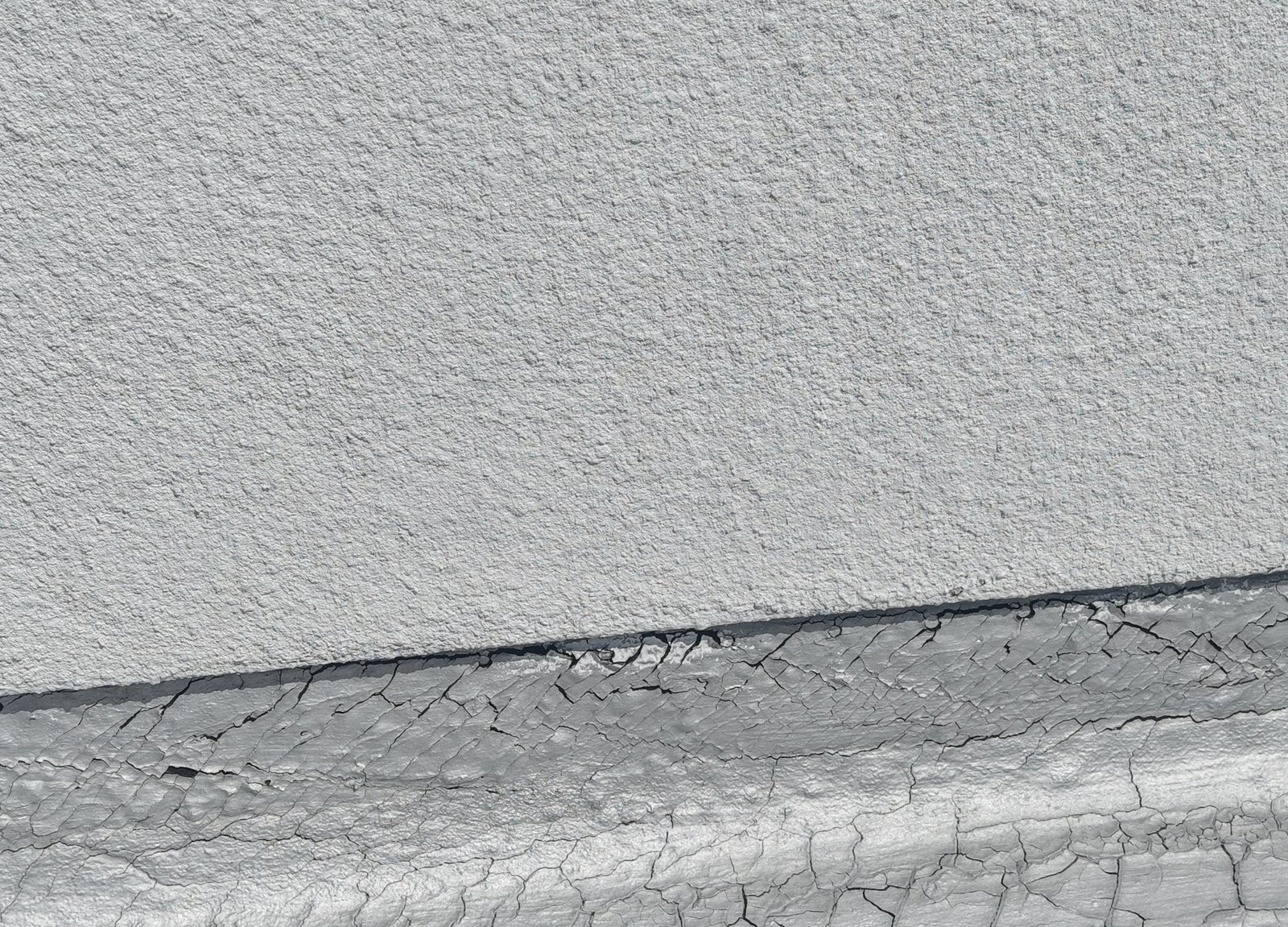
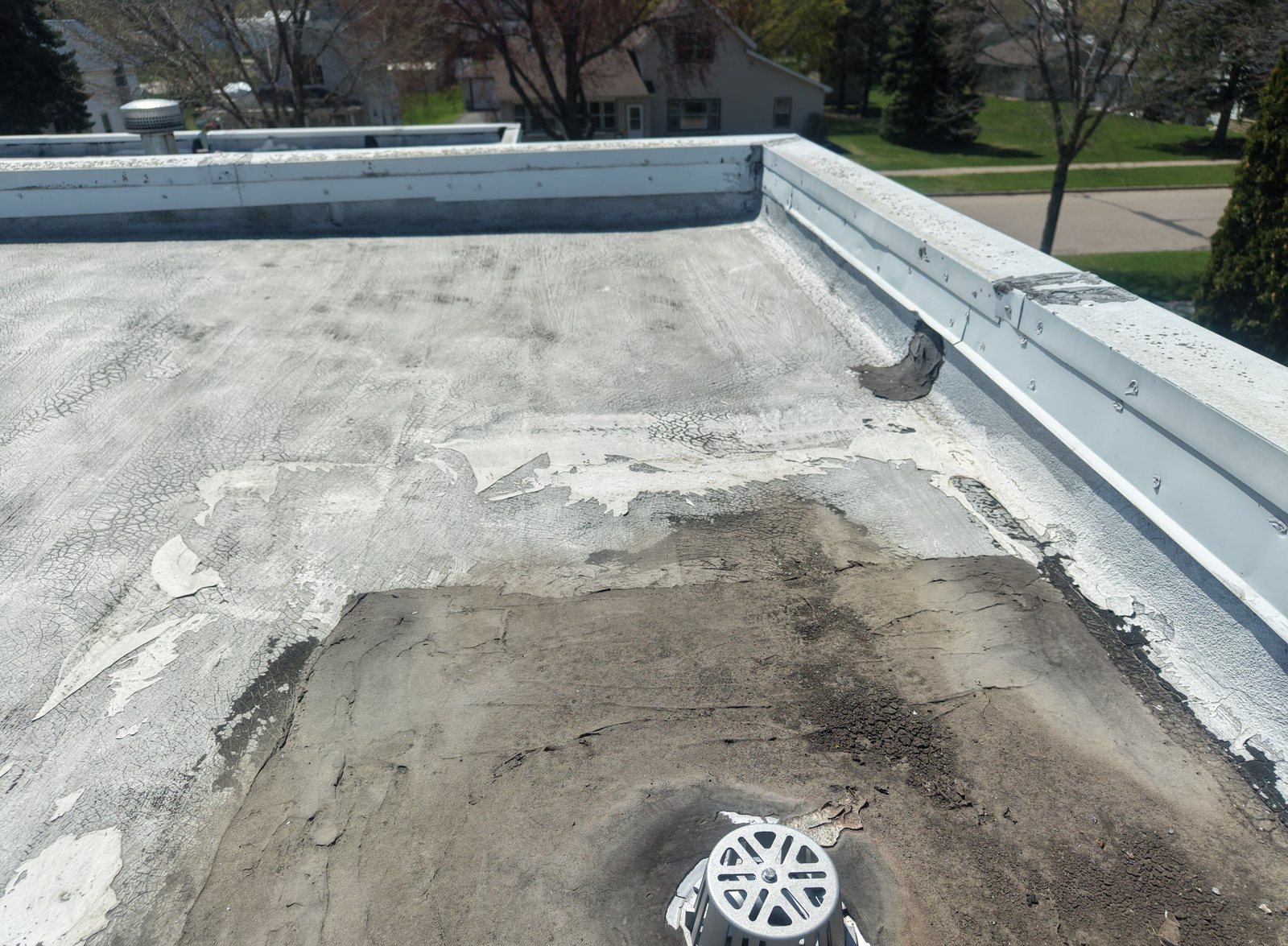
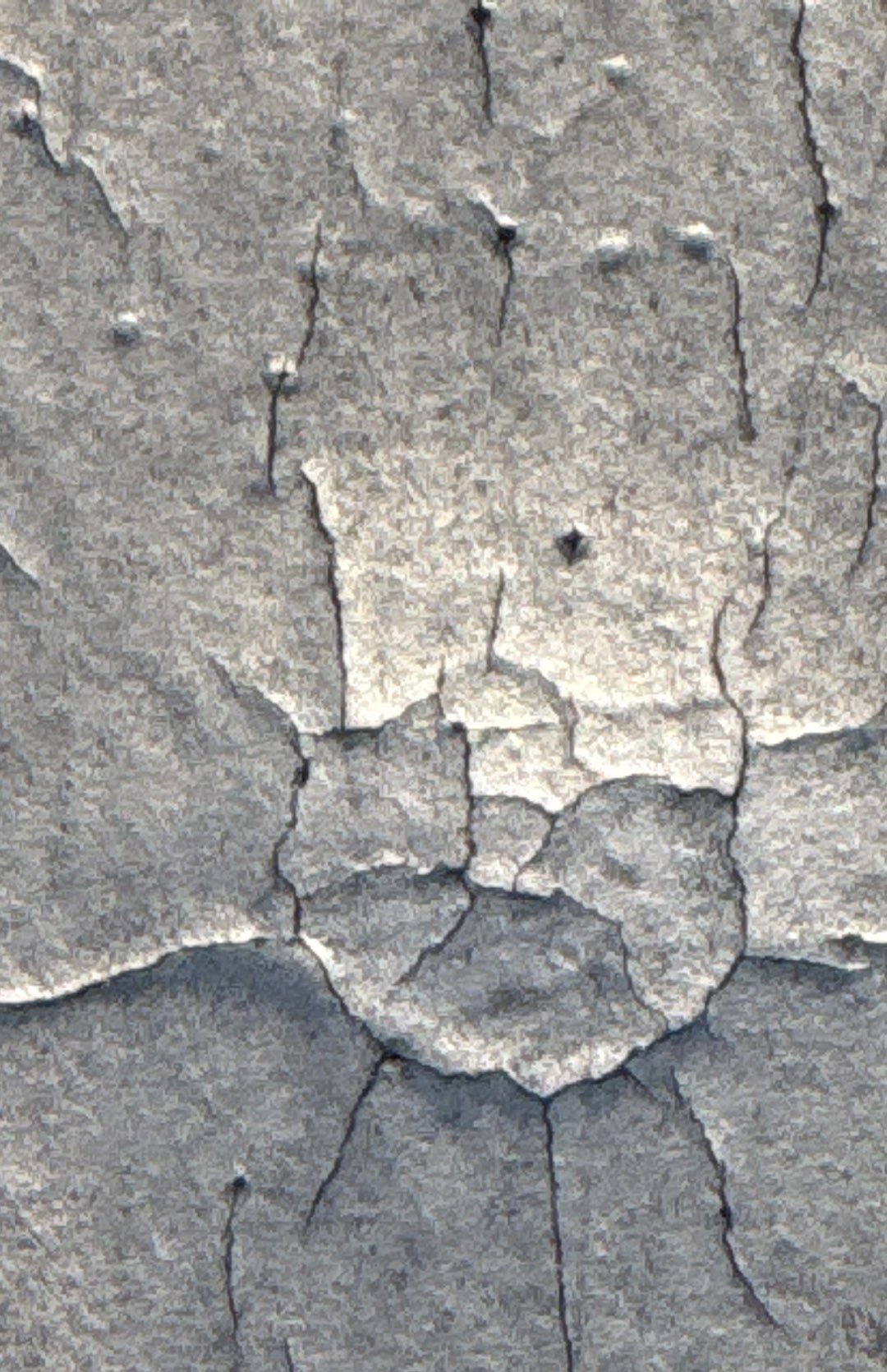
A silver coated roof with widespread splitting, failed repairs or suspected moisture below it deserves a replacement evaluation. Surface alligatoring—the cracked, reptile-skin pattern—should prompt a closer look, but a photograph alone cannot establish how deep the deterioration goes.
Not sure what is under that silver coating?
Share an existing roof photo and what you are seeing inside. Stay off the roof to get it.
Send us a photo of your flat roofWhat should a Chicago flat roof leak inspection check?
Check the drainage route and roof details, not just the spot above the ceiling stain. Seams, parapet flashing, coping, scuppers and equipment penetrations all deserve inspection before a repair is specified.
ARMA's maintenance guidance identifies open flashing seams, deteriorated sealants, damaged pitch pans and loose fasteners as inspection targets. It also calls for keeping drains and scuppers clear and examining masonry and metalwork for deterioration.
- Ponding: record where water remains and how long after rainfall. Ask whether blocked outlets, roof shape or another condition needs correction.
- Parapet walls and coping: inspect the roof-to-wall flashing and metal caps rather than assuming every leak begins in the field membrane.
- Blisters and alligatoring: document extent, associated splits and nearby repair history before deciding on mod bit roof repair.
- Scuppers, drains and downspouts: follow the drainage path beyond the roof opening.
- Rooftop decks and HVAC curbs: inspect accessible flashing and document areas hidden by deck components or equipment.
- Freeze-thaw exposure: review drainage and vulnerable details before winter and again in spring instead of waiting for the next interior stain.
ARMA recommends inspections in spring and fall and notes freeze-thaw cycles and equipment-service traffic among the challenges roofs face. For landlords and condo boards, planned roof maintenance provides a better framework than an undocumented series of emergency patches.
Should I repair, recoat or replace my flat roof?
Choose repair for a defined, repairable defect; consider recoating only after confirming a suitable existing roof; consider replacement when problems extend beyond a dependable local repair. Ask for evidence supporting the recommendation.
For rubber roof (EPDM) repair, the scope should identify compatible seam or flashing materials. For TPO roofing in Chicago or PVC work, it should identify the existing membrane before specifying welded repairs. A coating chosen for an asphalt roof should not automatically be carried over to a different membrane.
Request findings about moisture below the surface, deck condition, drainage and recurring failure locations. Ask how suspect wet areas will be verified and what material will be removed. For the components below the membrane, see our commercial flat roof layers guide; its code discussion is Minnesota-specific, not Illinois advice.
How long do flat roofs and silver coatings typically last?
Published life estimates are planning guides, not replacement deadlines. InterNACHI lists typical estimated lives of about 20 years for modified bitumen, 30 years for BUR, 15–25 years for EPDM, 7–20 years for TPO and 3–7 years for aluminum coating.
That chart assumes recommended maintenance and normal wear; it is not a Chicago-specific forecast or warranty. It does not provide a PVC estimate, so we are not inventing one. Aluminum coating life is also not the life of the roof underneath it.
Do not replace a roof solely because it reaches a chart's age—or accept a coating solely because someone promises more years. Combine installation records with current inspection findings.
Can you add another flat roof layer in Chicago?
Sometimes, but “just put another layer on” is not a complete plan. Chicago's Express Permit Program lists roof recover over one existing roof-covering layer; recover over two or more existing layers requires drawings or calculations from an Illinois-licensed architect or structural engineer.
That is a permit-program distinction, not blanket permission for every roof. Have the existing coverings, moisture condition and proposed assembly evaluated before selecting recover over tear-off. Do not confuse the plies within one BUR system with separate generations of roof coverings.
Chicago also lists nonstructural roof replacement under the program. Its permit-exemption page describes limited patching exceptions but specifically flags low-slope roof work for permit attention. Have the contractor confirm the route for your exact scope rather than treating a garage roof as automatically exempt.
Does Chicago require a reflective or cool flat roof?
Chicago's Building Code sets solar-reflectance requirements for low-sloped roof coverings, with exceptions. Section 14B-15-1515 lists an initial reflectance of at least 0.72 or a three-year-aged value of at least 0.50 for those coverings.
“Silver” is not a product rating. Ask for the proposed membrane or coating's tested rating and confirmation of the provisions applicable to your repair, recover or replacement. The city's reroofing guidance also requires compliance with applicable insulation requirements in the Chicago Energy Transformation Code.
Chicago rules are not automatically the rules in Oak Park, Cicero, Berwyn or Evanston. Confirm requirements with the municipality where the property sits.
When should I request flat roof leak repair now?
Request prompt help for active dripping, a growing ceiling stain, visible openings or loose roofing. Keep people away from a sagging ceiling or water near electrical equipment; do not climb onto a wet roof to investigate.
Photograph the interior from a safe place and record when the leak occurs. If conditions are unsafe, leave the affected area and seek emergency assistance. Repair King offers 24/7 emergency tarping and repair; the safe temporary approach depends on the roof and conditions.
What should I ask a Chicagoland flat roof contractor?
Ask for the existing roof identification, dated photos, repair-versus-replacement reasoning, drainage scope and permit plan. Verify the contractor's Illinois roofing license through IDFPR before signing.
Repair King's Illinois roofing license number is 104.019184. Our Naperville office is at 4055 S Route 59, and a free inspection includes a dated photo report. Find local service information for Downers Grove, Bolingbrook and Hinsdale, or start with our Chicagoland roofing page.
For a commercial flat roof, ask that the scope address tenant access, rooftop equipment and ongoing maintenance. Our commercial roofing and property manager resources are useful next stops. Bring the report to your next ownership or condo-board discussion so the decision starts with the roof's condition, not another coat of silver.
Who repairs flat roofs in Chicagoland?
Repair King inspects and repairs flat and low-slope roofs across Chicagoland from our Naperville office: mod bit and torch-down roofs, aluminum-coated and silver-coated roofs, built-up (BUR) and tar-and-gravel roofs, rubber EPDM, TPO and PVC membranes, and roof coatings.
That includes flat roof leak repair, seam and flashing repair, drain and scupper problems, recoating an aluminum-coated mod bit roof when the membrane is sound, and full flat roof replacement when it is not. We work on two-flats, three-flats, garage roofs, rear porch roofs, apartment buildings, condo associations, storefronts and commercial buildings.
Local service pages: Naperville, Plainfield, Bolingbrook, Darien, Burr Ridge, Downers Grove, Hinsdale and the wider Chicago suburbs. Not sure what kind of flat roof you have? Call us or send a photo and we will tell you what we see.
Find out what your flat roof actually needs
Get a free flat roof inspection with a dated photo report and a practical repair-versus-replacement discussion.
Questions people also ask
Does silver coating mean my roof is modified bitumen?
Not necessarily. Silver coating is a surface treatment and may be applied over different eligible asphalt roof systems. Check sheet details and installation records before selecting repair materials.
Can I put aluminum roof coating over a leaking roof?
Repair and evaluate the leak first. KARNAK says reflective coatings do not stop existing leaks and that leaks should be corrected before coating. Drainage and substrate compatibility also need evaluation.
Can I tell TPO from PVC by looking at the roof?
Color alone is not a dependable identification method. Both are commonly light-colored single-ply membranes. Ask for product records or professional identification before specifying a repair.
Is asphalt roll roofing suitable for a nearly level garage roof?
Do not assume so. GAF lists Mineral Guard residential roll roofing for slopes of 2:12 and greater. Verify the actual roof pitch and the selected product requirements.
Does Chicago allow another roof over two existing layers?
Chicago lists recover over two or more existing roof-covering layers as requiring drawings or calculations prepared by an Illinois-licensed architect or structural engineer within its Express Permit Program. That does not establish that a particular roof is suitable for a recover. Confirm the assembly and permit requirements for the property.
How do I verify an Illinois roofing contractor license?
Use the official IDFPR license lookup and compare the contractor identity with the proposal. Repair King lists Illinois roofing license number 104.019184. Confirm current license information before signing.
Sources
- Modified bitumen roofing systems (GAF)
- Single-Ply Commercial Roofing Systems: TPO & PVC (GAF)
- Mineral Guard Residential Roll Roofing (GAF)
- BUR Multi-Ply Built-Up Roofing (Asphalt Roofing Manufacturers Association)
- How to Develop a Maintenance Program for Your Commercial Asphalt Roof (Asphalt Roofing Manufacturers Association)
- Roofing & Repair FAQs (KARNAK)
- Standard Estimated Life Expectancy Chart for Homes (InterNACHI)
- Inspecting EPDM Roof Covering Material (InterNACHI)
- Guidelines for Selecting Cool Roofs (U.S. Department of Energy)
- Reroofing — Express Permit Program (Chicago Department of Buildings)
- Roofing Work — When a Permit Is Not Required (Chicago Department of Buildings)
- 14B-15-1515 Solar reflectance (Municipal Code of Chicago / American Legal Publishing)
- License Look Up (Illinois Department of Financial and Professional Regulation)
- Naperville roofing and inspections (Repair King)
- 24/7 emergency roof repair (Repair King)
Repair King is a licensed contractor, not an insurance company, public adjuster or attorney. We inspect, document and repair. Coverage decisions belong to your insurer, so read your own policy and ask your agent.


