

How do I get my Minnesota roof, gutters and attic ready for winter?
Before snow, check your shingles and flashing from the ground with binoculars, clear gutters and extend downspouts at least 4 feet from the foundation, and look in the attic for thin insulation, air leaks and bath fans venting into the attic. Call a pro for anything that needs a ladder, roof access, or a repair.
The leaves are finally down, the furnace has been running every night, and the ten-day forecast just showed the first snowflake icon of the season. The gutter you meant to clean in October is still full. That one bad shingle you noticed after the summer storm is still there.
Early November is the last comfortable window in the Twin Cities to fix what winter will exploit. Once gutters freeze solid and the roof is under snow, most of these jobs either get harder, cost more, or simply wait until April while water finds its way in.
This is the checklist we would want our own families to run. Almost all of it can be done from the ground, with binoculars, or from inside the attic. Nothing here asks you to climb a ladder or walk a roof.
What should you check on your roof before winter in Minnesota?
Check five things: the shingles, the metal flashing around chimneys and walls, the rubber boots around plumbing vents, the gutters and downspouts, and the attic underneath it all. Most leaks we see in a Minnesota winter start at one of those spots, not in the middle of a shingle field.
| Item | What you can check safely | When to call a pro |
|---|---|---|
| Shingles | From the yard with binoculars: missing pieces, lifted or creased tabs, bare spots, granules piled at downspout outlets | Any missing, creased or flapping shingle, or spots you can't see from the ground |
| Chimney flashing | Binoculars: metal pulled away from brick, gaps, heavy patches of tar or caulk | Loose or patched-over flashing, crumbling mortar at the base, any attic stain near the chimney |
| Pipe boots and roof vents | Binoculars: cracked or split rubber around plumbing pipes, dented vent caps | Cracked boots or stains on the attic sheathing around a pipe |
| Skylights | Inside: stains on the drywall well, condensation drips, peeling paint | Any staining, or a skylight that leaked during fall rains |
| Gutters | Ground level: water spilling over the front edge in a rain, sagging runs, plants growing out, drips at seams and corners | Clearing a two-story gutter, re-hanging sagging sections, resealing leaking seams |
| Downspouts | Add or reattach extensions so water lands at least 4 feet from the wall; check that outlets aren't crushed or clogged | Downspouts that back up even after clearing, or need re-routing |
| Attic | From the hatch with a flashlight: insulation depth, daylight or dirty spots in insulation, bath fan ducts, baffles at the eaves | Air sealing, adding insulation, re-routing bath fans to the outside |
| Trees | Look for limbs over or touching the roof | Any limb over the house: hire a tree service |
| Siding, trim and caulk | Walk the house: open joints at windows, doors and trim, loose siding pieces | Damaged siding, soft or rotted trim |
How can you spot shingle damage without getting on the roof?
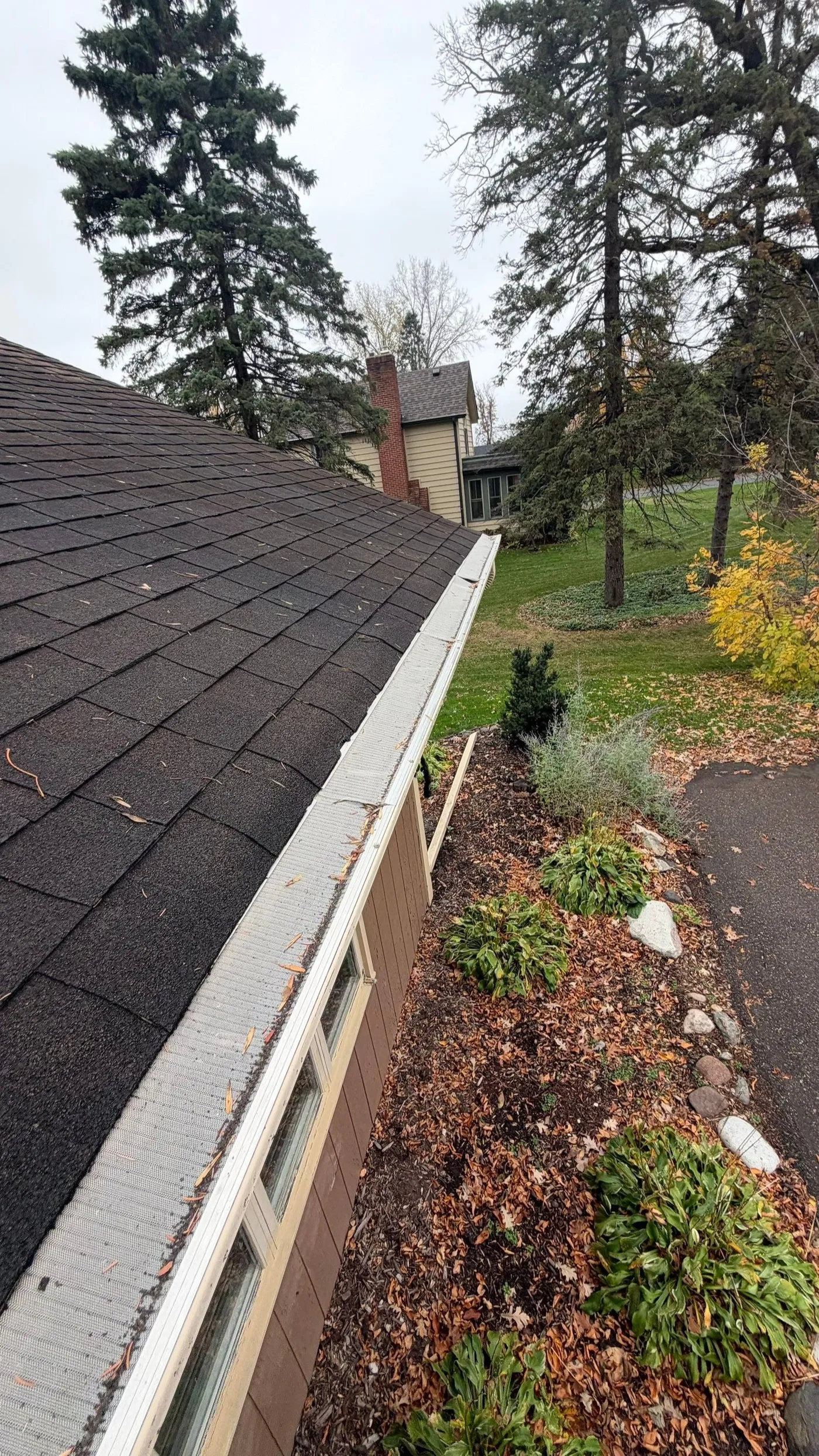
Stand back far enough to see the whole roof plane and scan it with binoculars on a bright, overcast day. Look for missing tabs, shingles that sit higher than their neighbors, horizontal crease lines, and dark bare patches.
A creased shingle is one the wind lifted and folded back. It may lie flat again and look fine, but the fold breaks the seal strip that holds it down. In a winter wind it can let go completely. From the ground, a crease shows up as a straight line across a tab that doesn't match the shingle's pattern.
Why does chimney and pipe flashing matter so much before winter?
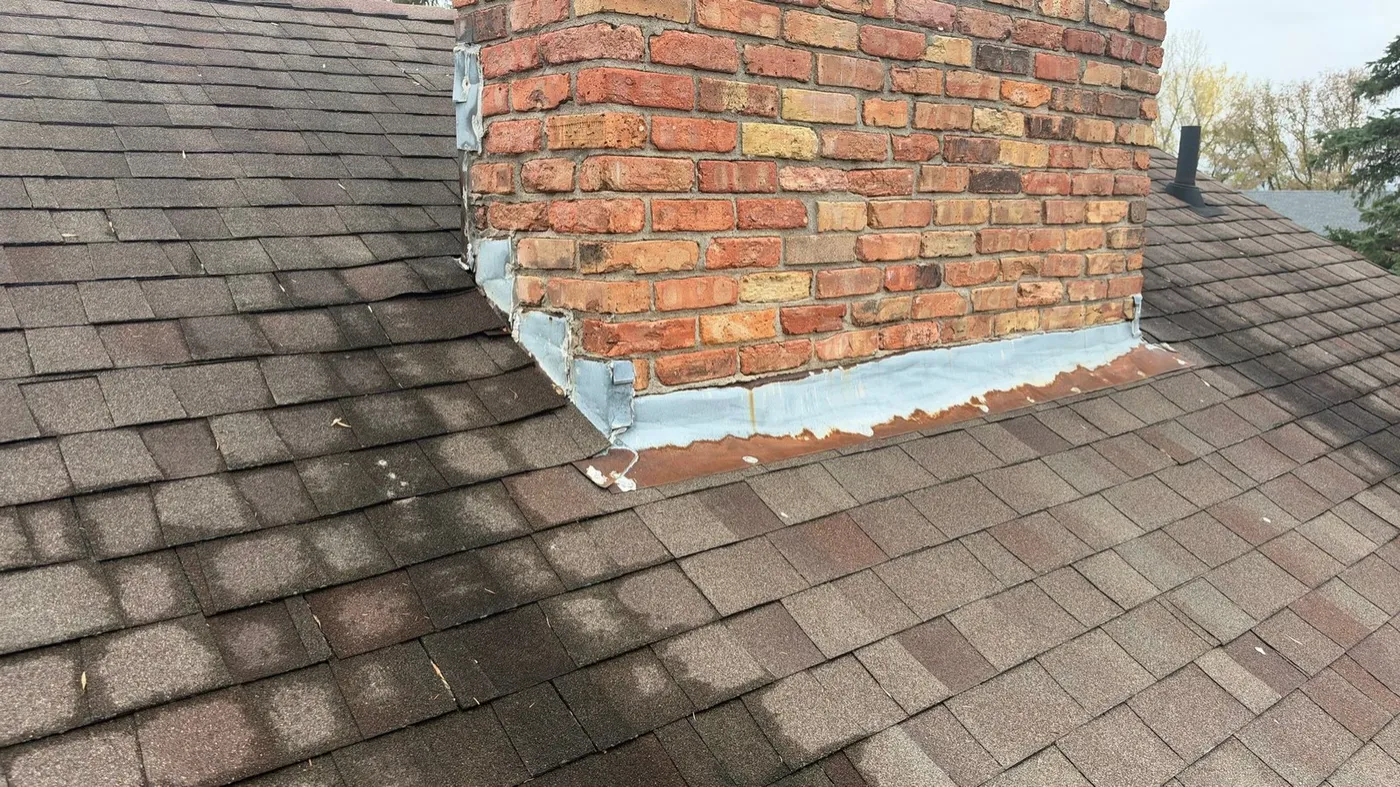
Flashing is the metal or rubber that seals the joint where something meets the roof. These joints are where melting snow sits longest, so a small gap that barely drips in a summer rain can leak for weeks in a freeze-thaw cycle.
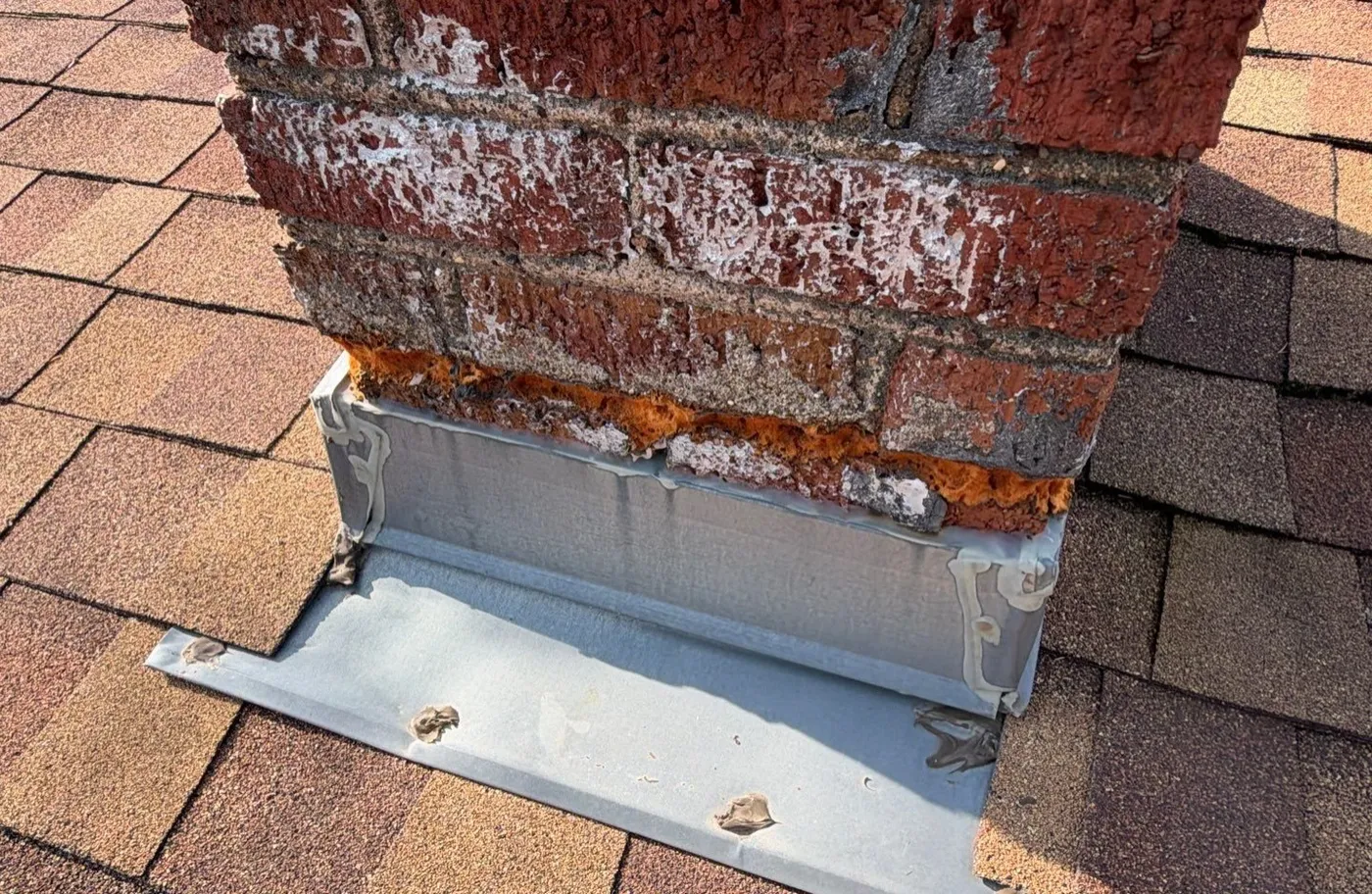
Chimneys are the most common trouble spot. The flashing at the base is supposed to tuck under the shingles on the uphill side and lap over them downhill, with a second piece (counter-flashing) set into the mortar joints. When that metal has been patched over and over with tar or caulk, it usually means the original seal has failed and someone has been chasing it.
Plumbing vent pipes usually come through the roof in a rubber boot. Sun and cold crack that rubber over time. A split boot lets water run straight down the pipe into the attic, and you often notice it first as a ceiling stain in a bathroom.
How do you get gutters and downspouts ready for a Minnesota winter?
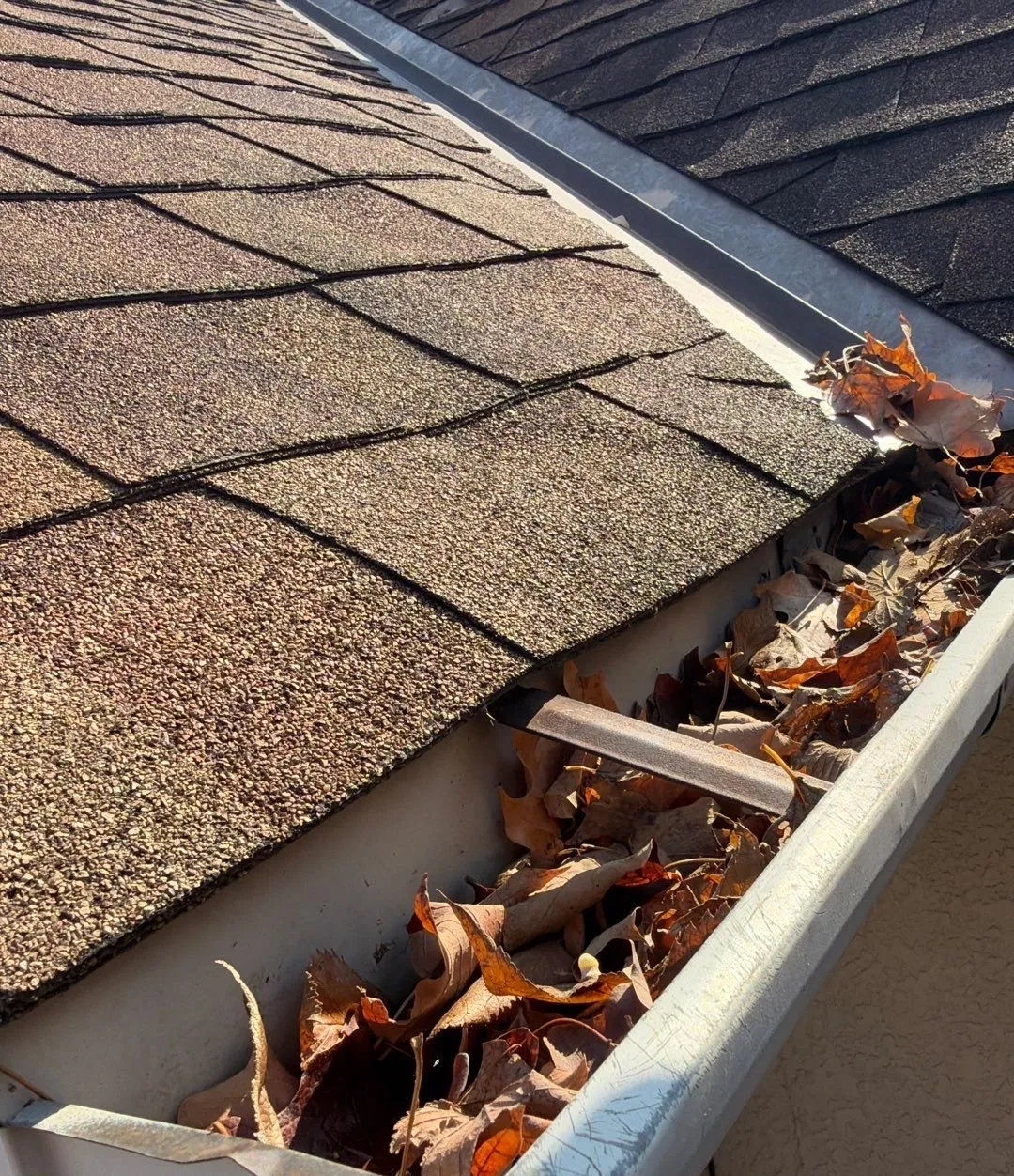
Get them clear before they freeze, make sure every downspout has an extension that carries water at least 4 feet from the foundation, and look for leaking seams and sagging runs. A gutter full of leaves in November becomes a gutter full of ice in December.
In the Twin Cities, the timing matters. Oaks and maples often drop their last leaves after the first cold snaps, so a gutter cleaned in early October may be full again by mid-November. The last clearing should happen after the trees are bare but before overnight temperatures stay below freezing.
A one-story gutter can often be cleared from a sturdy step ladder on level ground. Anything higher is a job for a pro or a gutter service. Gutter guards help but don't make gutters maintenance-free; leaves still sit on top and in the joints.
From underneath, check the seams and corners. Rust streaks, dark drip lines, or old sealant that has pulled away mean the joint leaks. In winter, a leaking seam drips onto the same spot every day and can build an icicle column or a patch of ice on your steps.
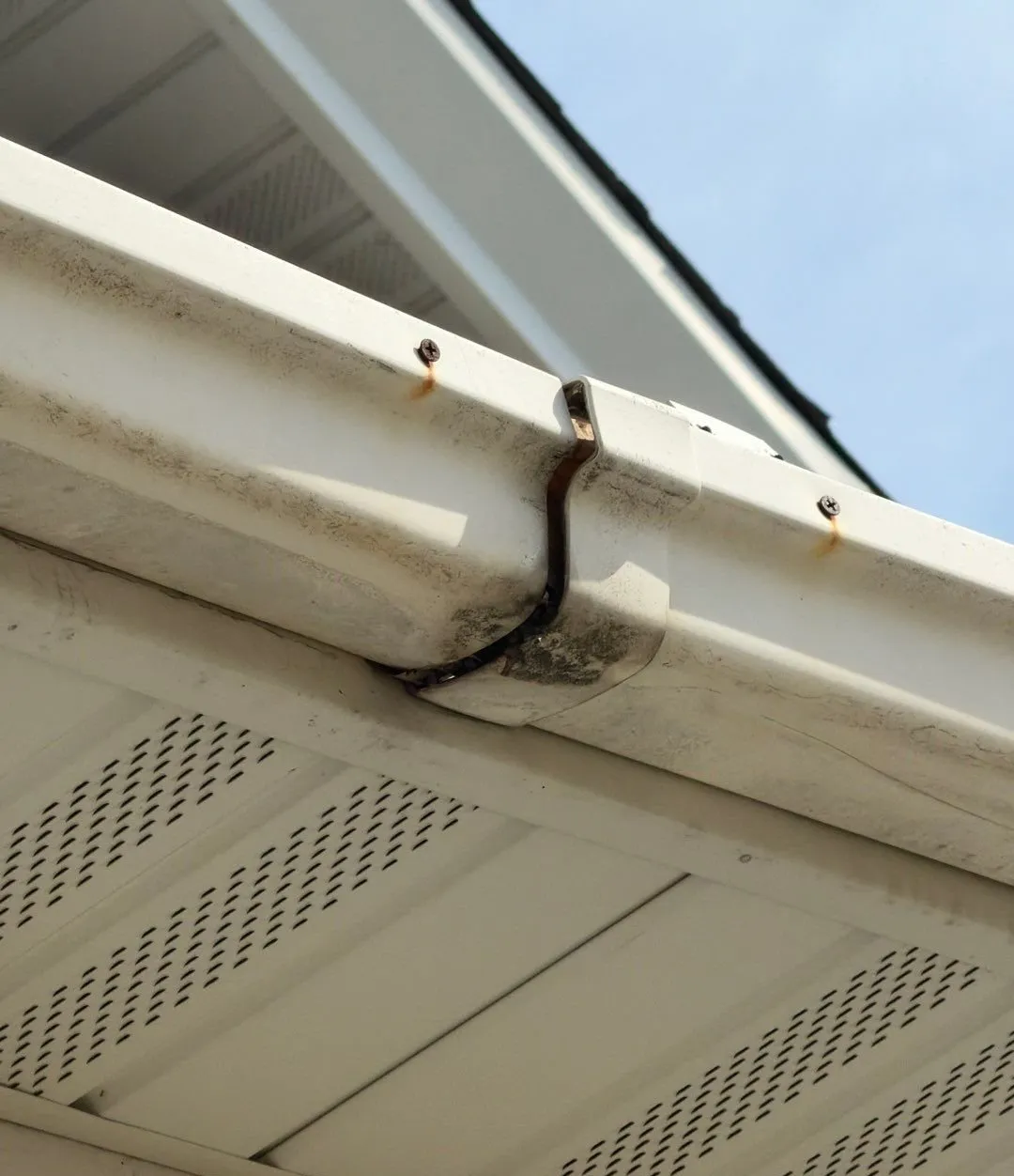
Clean gutters do not prevent ice dams on their own. They help meltwater drain when the roof edge is above freezing, but the real cause of ice dams sits one level up, in the attic. If you have had ice dams before, our ice dam removal page explains how we take them off with steam and what stops them from coming back.
Not sure what your roof looks like up close?
We photograph every part of the roof, flashing and gutters and show you what we found before the snow covers it.
Schedule a pre-winter roof inspectionWhat should you check in the attic before it gets cold?
Check that the insulation is deep and even, that warm air isn't leaking up from the house, that bathroom fans duct all the way outside, and that insulation isn't blocking the soffit vents at the eaves. These four things decide whether your roof stays cold enough to avoid ice dams.
How much attic insulation does a Minnesota home need?
The U.S. Department of Energy recommends R49 to R60 for an uninsulated attic in climate zones 6 and 7, which cover Minnesota, and R38 to R49 more where an attic already has 3 to 4 inches. The Minnesota Department of Commerce notes that R49 is the code minimum for new buildings and that most Minnesota attics can benefit from more.
Why air seal before adding insulation?
Insulation slows heat, but it doesn't stop air. Warm, moist air leaking around light fixtures, plumbing stacks, chimneys and the attic hatch carries heat and moisture straight to the roof deck. Dark, dirty patches in fluffy insulation are a common sign that air is moving through it.
Where does your bathroom fan actually vent?
Follow the duct from the fan housing. It should run to a roof cap or a vented opening in the soffit or wall, not stop in the attic or just point at a vent. A fan that dumps shower steam into the attic is one of the most common causes of winter attic moisture. If you have already seen frost or drips up there, read our guide to attic frost and "raining" attics.
What if your roof took hail this year?
Get it documented before snow covers it. Hail marks on shingles, gutters, vents and siding are much easier to photograph in fall than in spring, after a winter of ice and thaw muddies the picture.
If a storm hit your neighborhood, walk the house and look at soft metals first: dents in gutters, downspouts, vent caps and window wraps are often visible from the ground. Our Free Roof & Storm Report lets you check your address for this year's hail and wind before you decide anything.
Repair King is a contractor. We inspect, photograph and document conditions consistent with hail or wind, and we provide estimates. Coverage decisions belong to you and your insurer. The storm damage guide walks through the steps in order.
What else on the outside of the house needs attention before snow?
Trim tree limbs that hang over the roof, close gaps in exterior caulk and siding, and look at skylights from the inside. Each one is a small fix in fall and a bigger one in February.
Trees. Branches that rub shingles wear them down, and limbs loaded with heavy, wet snow can break onto the roof. Leave limb removal near the house to a tree service.
Caulk and siding. Walk the perimeter and look at where trim meets siding, around windows and doors, and where pipes and wires enter. Open joints let wind-driven snow and cold air in. Low, reachable caulk lines are a reasonable weekend task while it's still above about 40°F; check the temperature range on the tube. Loose or cracked siding pieces are worth a call to a siding contractor.
Skylights. Stains on the drywall around the skylight well usually mean a flashing issue outside, though heavy condensation can look similar. If you can't tell which, an inspection can sort it out. See our windows and skylights page.
What about heat cables, frozen pipes and flat roofs?
Each has its own guide. Heat cables can help in trouble spots but don't fix the cause of ice dams, pipes need protection before the first deep cold, and flat roofs need a snow-load plan.
- Thinking about heat tape? Read do heat cables stop ice dams before you buy.
- Pipes in exterior walls or a cold garage? Read what to do if a pipe freezes or bursts.
- Own a flat or low-slope roof? See when to remove snow from a flat roof.
- Have more questions? Our top 20 homeowner questions covers the basics.
When is it too late to do pre-winter roof work in Minnesota?
There's no single cutoff date, but once gutters freeze and snow stays on the roof, inspections get less complete and many repairs become temporary until spring. In the Twin Cities that usually means doing it in early to mid-November.
Shingle sealant strips need warmth to bond, and roofing manufacturers generally have cold-weather application rules, so a shingle replaced in December may not seal down until spring. Emergency repairs still happen all winter. Planned repairs go better before the cold settles in.
Get your roof checked before the snow sticks
We photograph your shingles, flashing, vents and gutters and walk you through what we found.
Questions people also ask
When should I clean my gutters before winter in Minnesota?
After the last leaves fall and before nighttime temperatures stay below freezing, which in the Twin Cities is often early to mid-November. Oaks can hold leaves late, so a gutter cleaned in early October may need a second pass.
Can I check my roof for damage without climbing on it?
Yes. Use binoculars from the yard to look for missing, lifted or creased shingles and loose flashing, and check the attic from the hatch for stains or daylight. Leave anything that requires a ladder or roof access to a professional.
Does cleaning gutters prevent ice dams?
Not by itself. University of Minnesota Extension explains that ice dams come from heat escaping the house and warming the upper roof. Clean gutters help drainage, but air sealing and insulation address the cause.
How far should downspouts extend from the house?
University of Minnesota Extension recommends that extensions discharge water at least 4 feet beyond the wall, with the ground sloping away from the foundation at least 1 inch per foot for 6 feet.
Can roof repairs be done in a Minnesota winter?
Emergency repairs and tarping can be done in winter. Planned shingle and flashing repairs go better in fall, because shingle sealant needs warmth to bond and snow makes a full inspection harder.
Should I get a hail inspection before winter?
If hail hit your area this year, fall is a good time to get conditions photographed before snow and ice cover them. For hail, plan on one year from the storm date and check the Suit Against Us section of your policy.
Sources
- Dealing with and preventing ice dams (University of Minnesota Extension)
- Moisture in basements: causes and solutions (University of Minnesota Extension)
- Consumer Guide to Home Insulation (U.S. Department of Energy)
- Attic Insulation (Minnesota Department of Commerce)
- Air Sealing Existing Attics (U.S. Department of Energy Building Science Education)
- Look at Exhaust Fans for Venting to Outside (Building America Solution Center (PNNL / U.S. DOE))
- Minnesota Statutes 65A.26 (Minnesota Office of the Revisor of Statutes)
Repair King is a licensed contractor, not an insurance company, public adjuster or attorney. We inspect, document and repair. Coverage decisions belong to your insurer, so read your own policy and ask your agent.


