

Ice dam removal with steam, not hammers.
Ice dams back water up under your shingles and into your walls. Repair King melts them off with low-pressure steam, so nothing gets chipped, gouged or blasted, and then shows you what's causing them and how to stop it.
 Winter Division
Why do ice dams form?
Ice dams form when heat from the house warms the upper roof and melts the snow, and that water refreezes when it reaches the cold roof edge. Each thaw and freeze makes the ridge of ice taller, until water has nowhere to go but under the shingles.
Heat escapes
Warm air leaks into the attic through gaps, thin insulation and poor ventilation, and heats the roof deck.
Snow melts from below
Even on a sub-freezing day, the warm deck melts the bottom of the snowpack. Water runs down the roof.
It refreezes at the eave
The overhang sits outside the heated walls and stays cold. The water freezes there and the dam grows.
Warning signs you can see from the ground.
You don't need to climb a ladder to spot an ice dam. Walk around the house and look at the roof edge and gutters.
Stay clear of large icicles. They're heavy and sharp and can fall without warning onto walkways, doorways and cars.
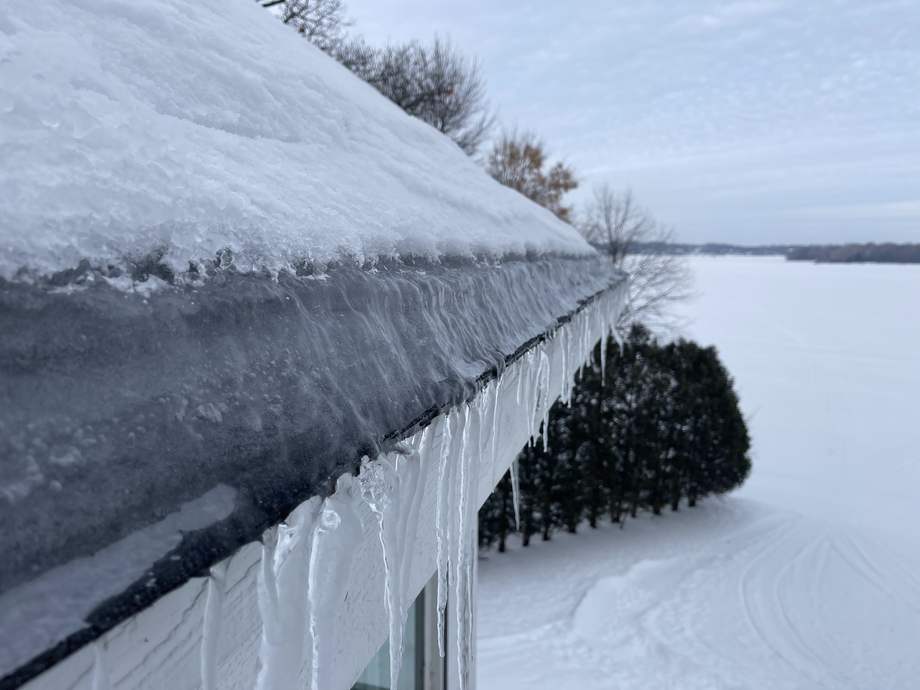 An ice "speed bump" over the gutter
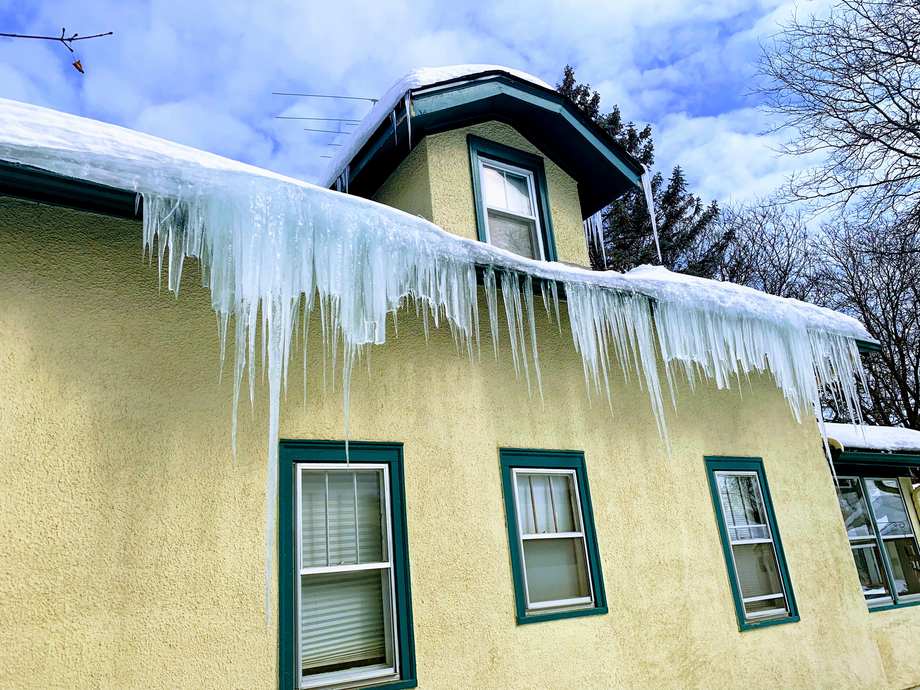
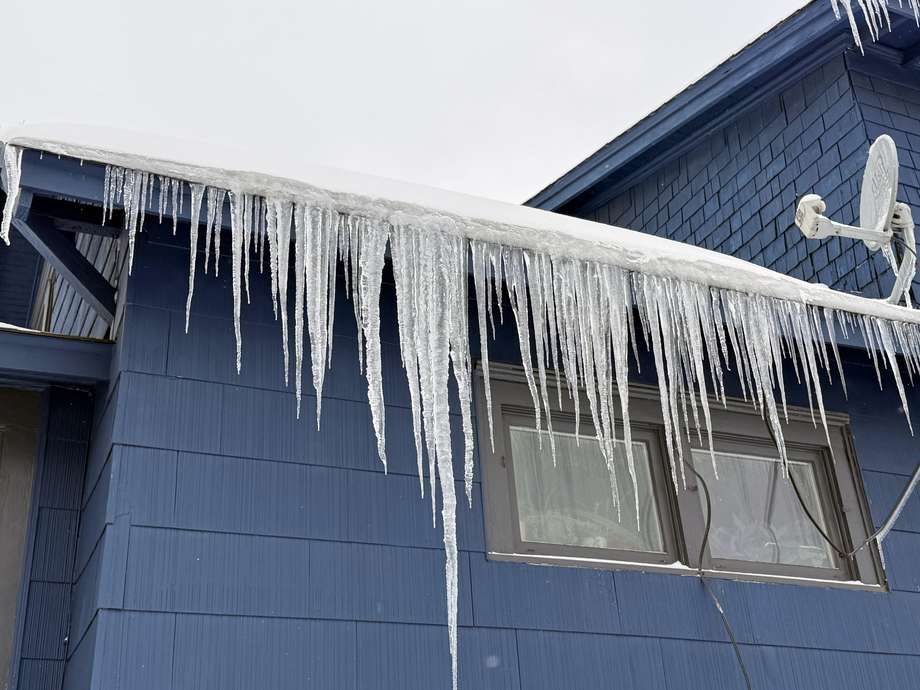 Icicles along the whole eave
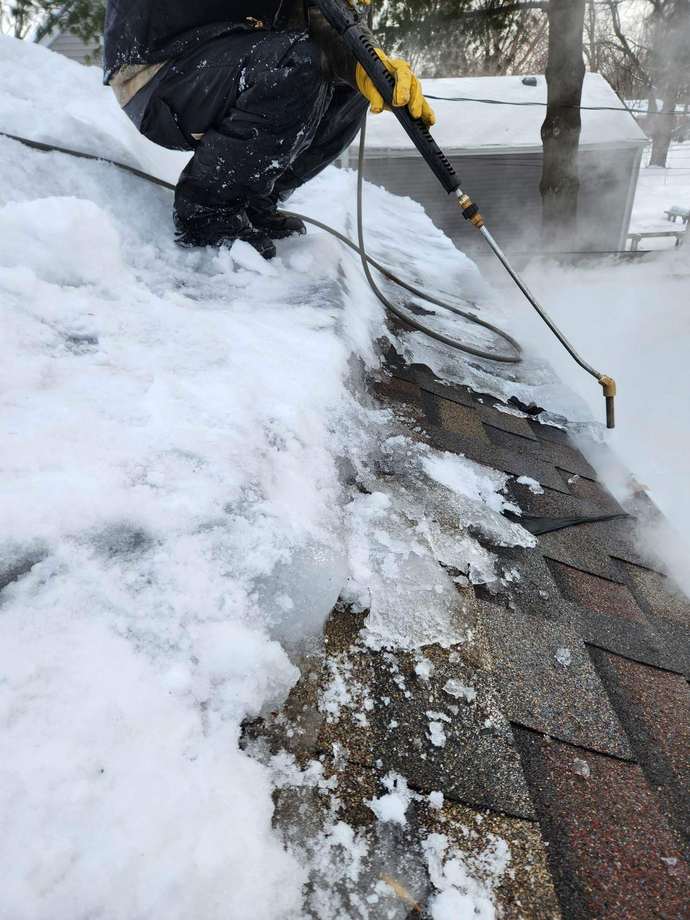 Steam melts, the shingles stay intact
Why steam is the right way to remove an ice dam.
Low-pressure steam melts through the ice with heat, not force. The ice releases from the shingles and comes off in sections, so the roof under it isn't cut, cracked or stripped of granules.
| Method | What it does | Risk to the roof |
|---|---|---|
| Low-pressure steam | Melts the ice with heat and releases it from the shingles. | Built to leave shingles intact |
| Hammers & shovels | Breaks the ice by force, right against the shingles. | Gouges and cracks shingles, can void warranties |
| Pressure washer | Cuts ice with high-pressure water. | Strips granules, can drive water under shingles |
| Salt & de-icer pucks | Slowly melts a narrow channel. | Slow and partial; rock salt corrodes metal |
Our ice dam removal process.
Every job follows the same order: look first, set up safely, steam the ice off, open the drainage paths and record everything.
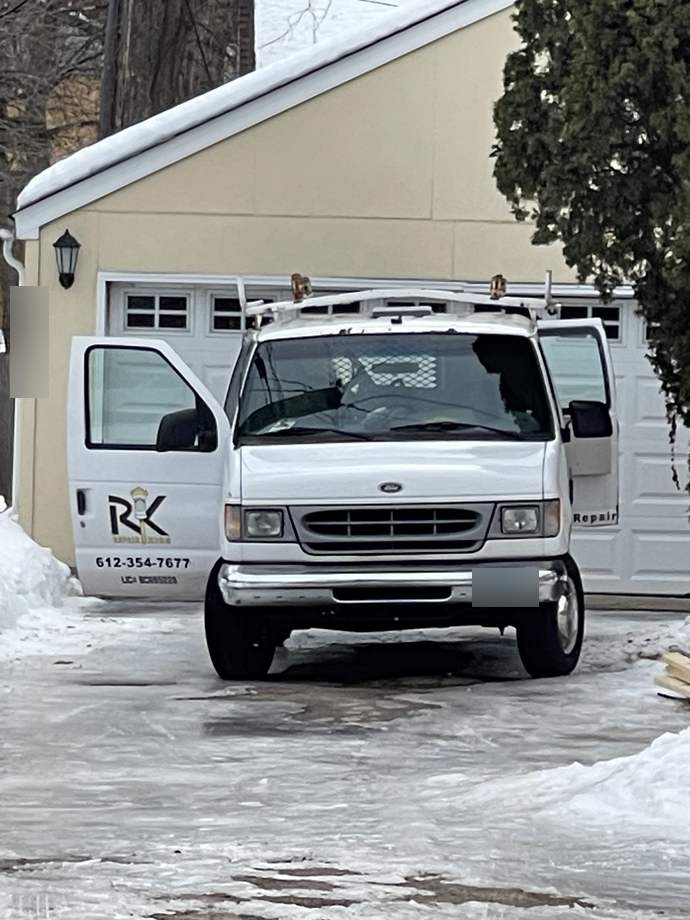
Walk-around & photos
We look at the whole roof edge, gutters and soffits, and take dated photos before anything is touched.
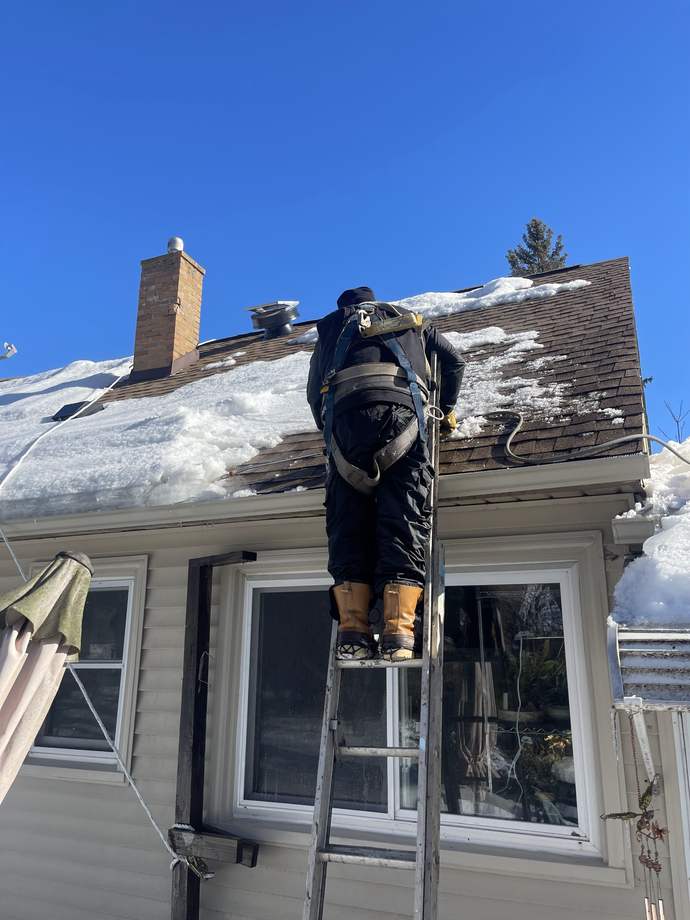
Safe setup
Ladders are set and crew are harnessed before anyone steps onto a snow-covered roof.
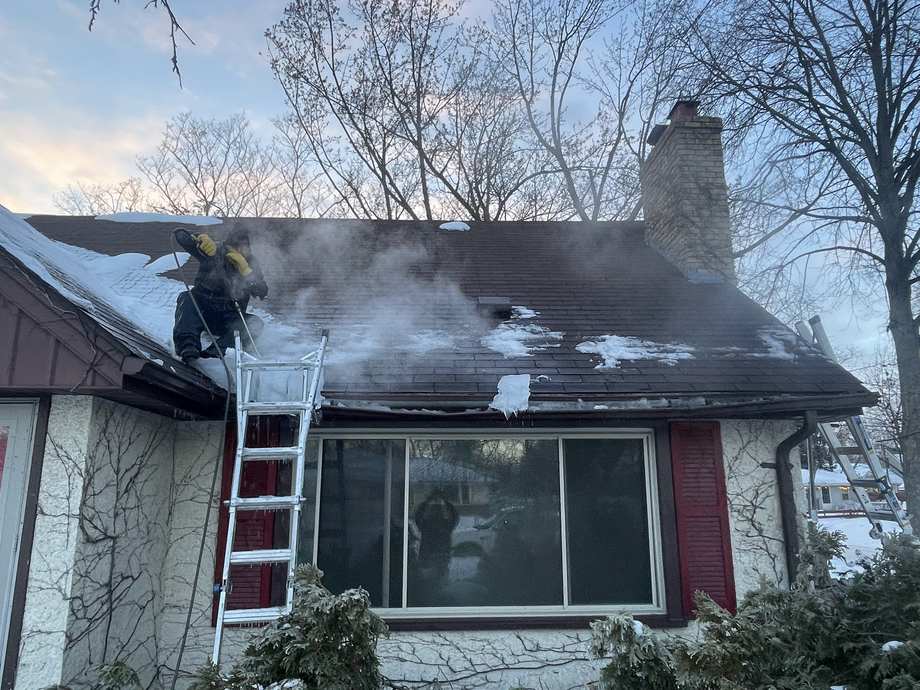
Steam the dam
Low-pressure steam melts through the ice so it can be lifted off in sections, working with the roof, not against it.
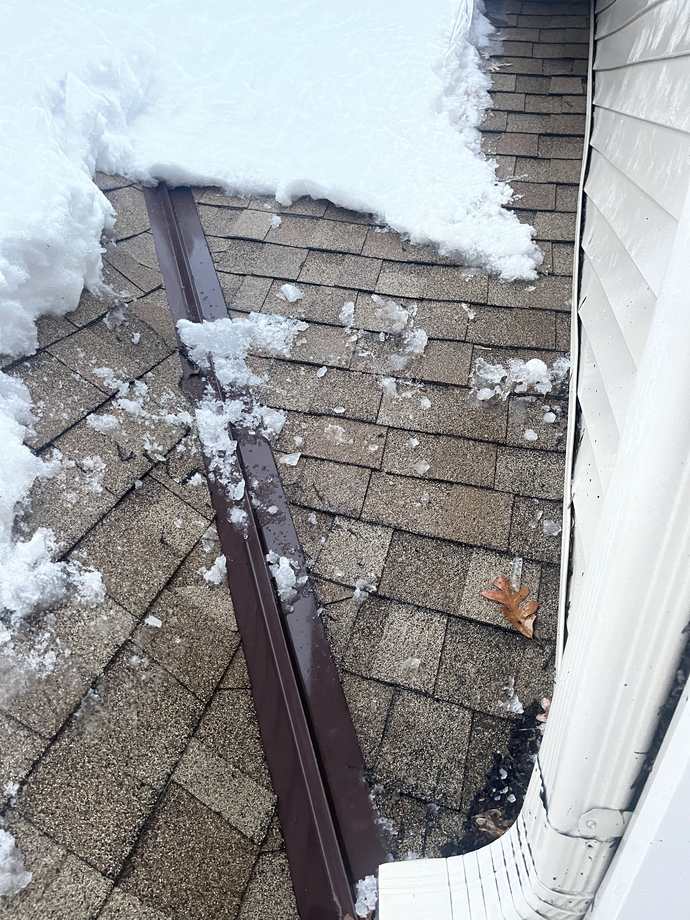
Open the drainage path
We clear the eaves, valleys and gutter openings so meltwater can get off the roof.
Dated photo record & the long-term fix
You get before and after photos for your records, plus our read on what caused the dam: insulation, ventilation, air leaks or the roof itself.
10 ice dam mistakes homeowners make.
Most ice dam damage comes from small things that are easy to miss. These are the ones we see every winter.
Ignoring the gutters until spring
Clogged gutters hold meltwater at the roof edge, where it freezes and builds the dam higher.
Letting warm air leak into the attic
Every unsealed gap around lights, vents and hatches melts snow from underneath.
Poor attic ventilation
When attic air can't move, the roof deck warms unevenly. Uneven melting is what feeds an ice dam.
Thin or tired insulation
Too little insulation turns the whole roof into a warm plate. You pay for the lost heat and the damage.
Letting heavy snow sit on the roof
A deep snowpack means more meltwater, more refreezing and more chances for a leak.
Misusing the roof rake, or skipping it
Used right, a rake takes away the fuel. Scraped down to the shingles, it strips granules and the dam still forms.
Counting on heat cable to fix everything
Cable can keep a drain path open when it's installed right. It can't out-heat a heat-loss problem.
Chipping ice with shovels or hammers
Chipping gouges and cracks shingles, can void manufacturer warranties and leaves hidden damage.
Waiting for a leak inside before acting
Water can work under the shingles for weeks before it shows up on a ceiling or wall.
Skipping a pre-winter roof check
Exposed nails, loose shingles, airflow problems, thin insulation and small sealing failures are easy to miss and easy to fix in the fall.
Acting early costs far less than repairing the damage later.
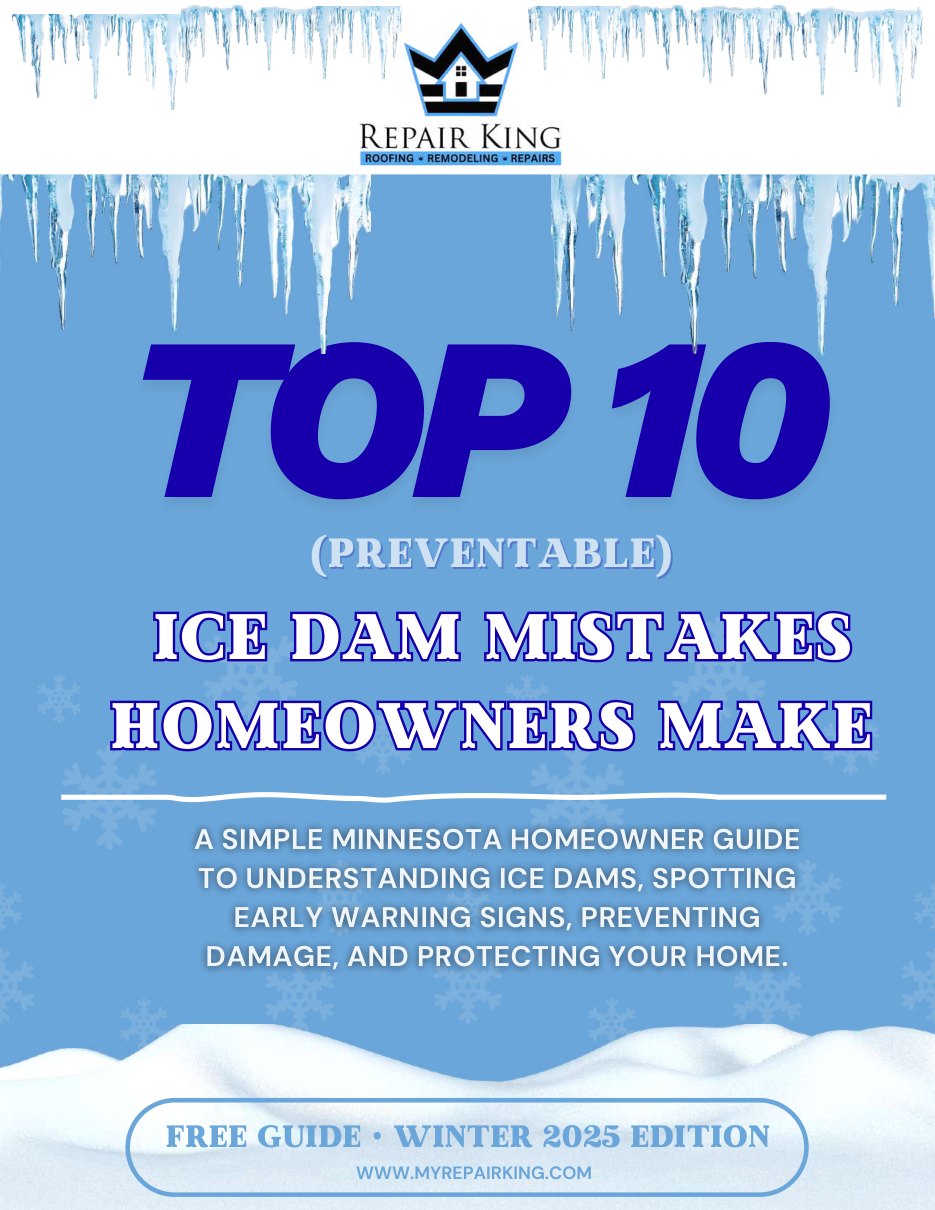 Free PDF
The Top 10 Preventable Ice Dam Mistakes.
Nine pages, written for Minnesota winters. Keep it on the fridge or send it to a neighbor.
- How an ice dam forms, in one picture
- Warning signs you can see from the ground
- The 10 mistakes that turn ice into leaks
- When to call a pro, and what never to do yourself
Ice dam right now? Call or text (612) 354-7677.
The hidden damage ice dams cause.
The worst of it usually happens out of sight, as ice melts under the snow and water backs up under the shingles.
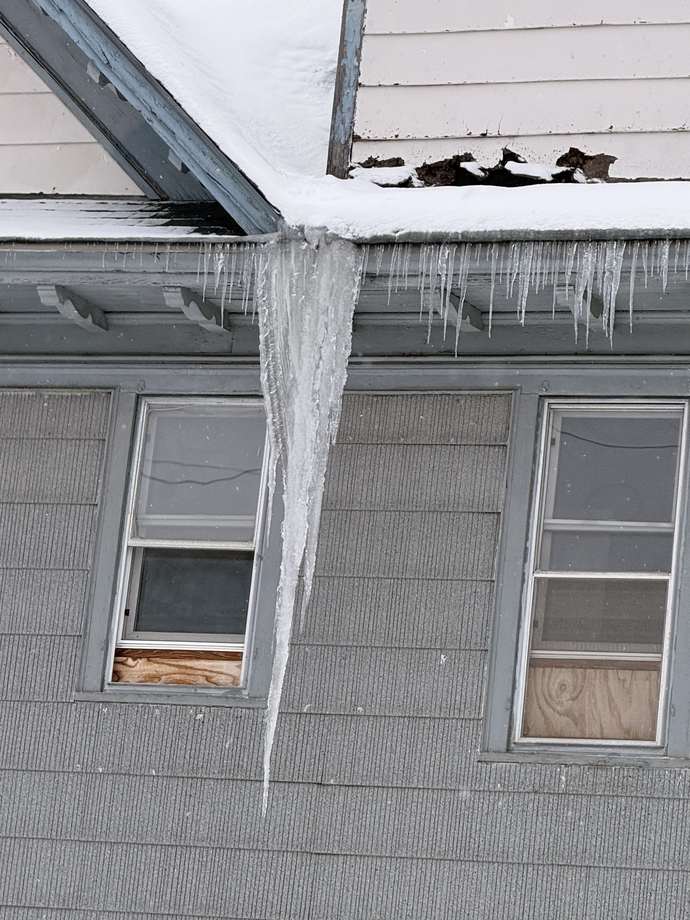 Ice load at the eave
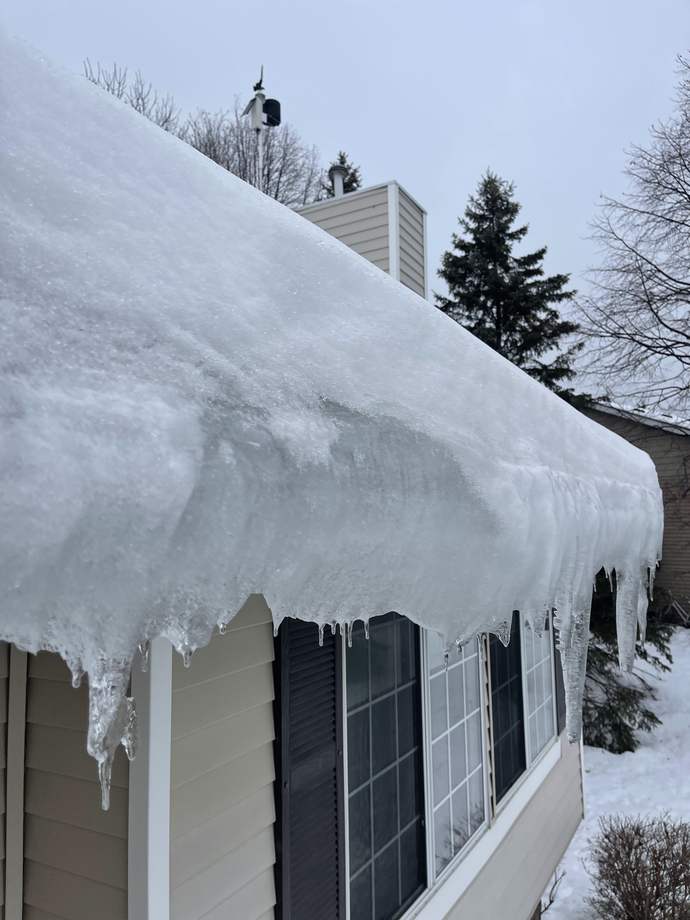 Ice pushing past the eave
Ice dams can lead to
- Roof leaks and wet roof decking
- Soffit and fascia rot
- Gutters pulled loose or collapsed
- Wet, flattened insulation
- Mold in the attic and walls
- Stained ceilings, walls and trim
- Water near light fixtures and wiring
Worst part? The damage usually starts as the ice melts underneath the snow, often weeks before a stain appears inside.
How to stop ice dams from coming back.
Steaming removes the ice. Keeping the roof deck cold is what stops the next one.
Air sealing, insulation & ventilation
Seal the attic air leaks, bring insulation up to a proper depth and keep air moving from the soffit vents to the ridge. A cold roof deck doesn't melt snow from below, so there's no water to refreeze at the eave.
Ice & water shield at the eaves
A self-adhering membrane under the shingles along the eaves seals around nails and resists water that backs up behind ice. It's the backstop when an ice dam does form.
Heat cables: pros & cons
Heat cables are a targeted tool for trouble spots.
From the field.
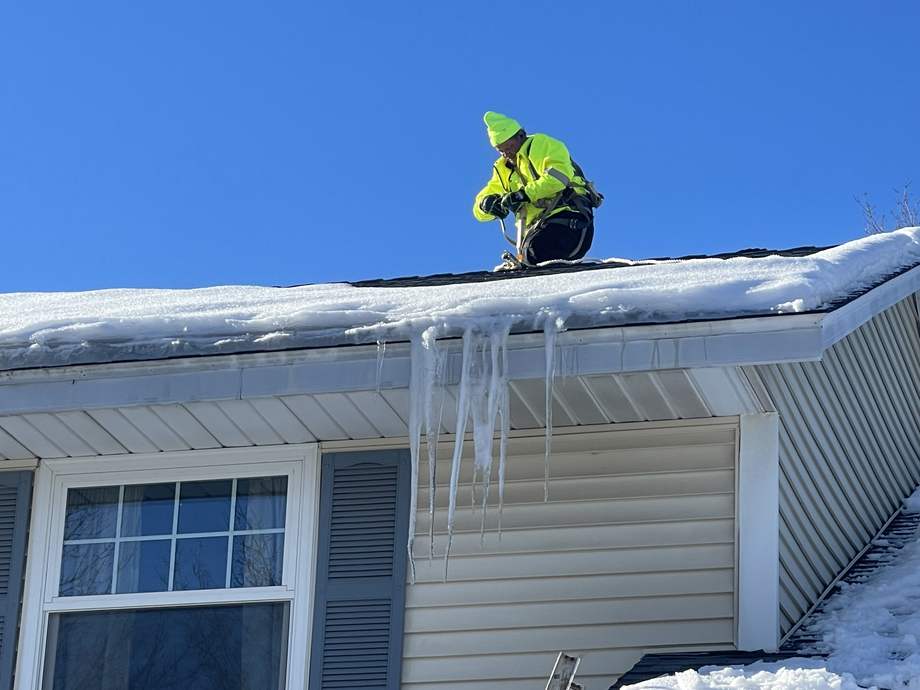
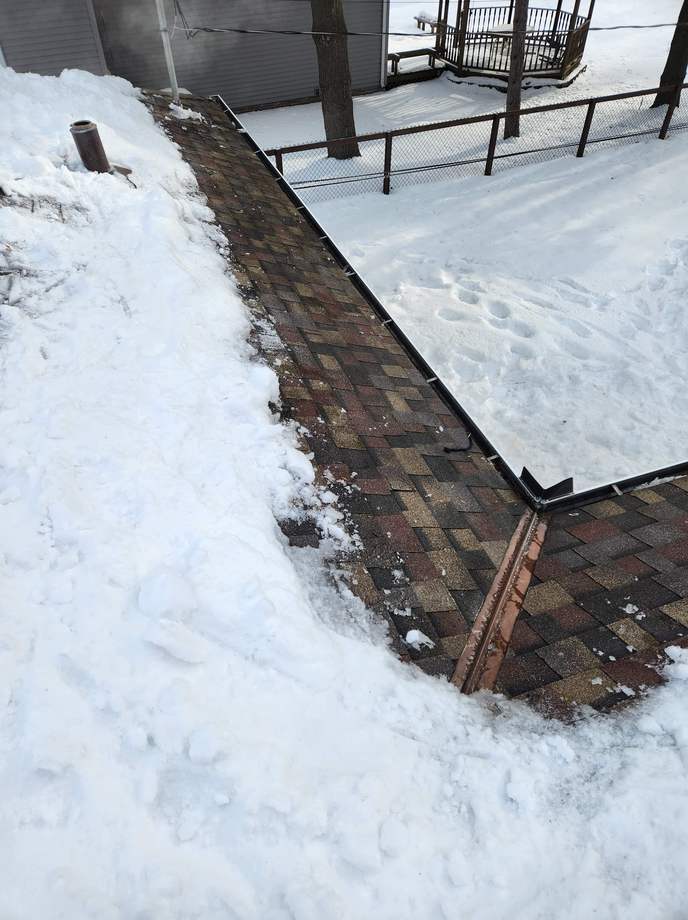
Photos from Repair King ice dam calls around the Twin Cities.
Ice dam removal FAQs.
What is an ice dam?
An ice dam is a ridge of ice that forms along the roof edge and blocks melting snow from draining off. Water pools behind it and can work its way under the shingles, into the roof deck, the walls and the ceilings below.
How do you remove an ice dam without damaging the roof?
We use low-pressure steam. The heat melts through the ice so it can be lifted off in sections without anyone hammering or scraping the shingles. We then open drainage channels along the eaves and valleys so meltwater can get off the roof.
Why not use a hammer, a shovel or a pressure washer?
Because they damage the roof you're trying to protect. Chipping gouges and cracks shingles, and high-pressure water strips granules and can drive water under the shingles. Low-pressure steam melts the ice instead of cutting it.
Are big icicles a sign of an ice dam?
Often, yes. Heavy icicles, especially ones hanging behind the gutter or out of the soffit, a hard ridge of ice above the gutter, and gutters packed solid with ice are the most common signs you can see from the ground.
Do calcium chloride pucks or salt work?
They can melt a narrow channel through the ice, but they're slow and only clear a small path. Rock salt is corrosive to metal gutters and flashing, and runoff from any de-icer can harm plants below. Don't use rock salt on the roof.
Should I rake snow off my roof?
Raking can help if you do it from the ground with a roof rake made for the job and leave a thin layer of snow on the shingles. Scraping down to bare shingles damages them. Never climb onto an icy roof.
Do heat cables stop ice dams?
Heat cables can keep a drainage path open along the eaves and gutters when they're installed correctly, but they don't fix the reason the dam forms. The long-term fix is stopping heat from reaching the roof deck with air sealing, insulation and ventilation.
How do I prevent ice dams for good?
Keep the roof deck cold. That means sealing attic air leaks, bringing insulation up to a proper depth and making sure the attic is ventilated from the soffits to the ridge. When the roof is replaced, ice and water shield belongs at the eaves.
Do you document ice dam damage?
Yes. We photo-document ice dam damage with dated photos for your records, before and after the work, so you have a clear record of what we found and what we did.
Let's take a look at it.
Call or text (612) 354-7677, or send the form below. A photo of the roof edge from the ground helps us see what you're dealing with.
Book an ice dam inspection
Tell us what you see from the ground. We photo-document what we find, with dated photos for your records.
You'll never have to wonder what's happening.
The #1 complaint about contractors is "they stopped calling me back." Our system texts and emails you at every step, from the moment you book to the final walkthrough.
Appointment confirmed
Text and email confirmation the moment you book, plus a reminder before we arrive.
"You're booked for Tue 10 AM ✓"On our way
A heads-up text when your inspector or crew is headed to your home. No waiting around.
"On our way, 20 min out"Photos of everything
You see what we see: a photo report of every finding, yours to keep.
"Your photo report is ready"Every stage, updated
Materials ordered, crew scheduled, install day, final walkthrough. You hear about each step as it happens.
"Materials delivered for Thursday"A real person answers
Questions? Call or text and talk to our team, not a phone tree.
"Got it, we'll check and text you back"Informed at every step. That's the Repair King standard.
Ice building up at the eaves? Let's take a look.
Low-pressure steam, a dated photo record and a straight answer on the long-term fix.