

Why Is There Frost or Water Dripping in My Attic in Winter? Is My Roof Leaking?
Water dripping from the ceiling on a thaw day in a Minnesota winter is often melting attic frost: warm, moist house air leaks into the attic and freezes on the roof deck, then melts all at once. A true roof leak follows rain or snowmelt at one spot, while an ice dam leak shows up at the eaves.
It's a sunny January afternoon, the thermometer finally climbed past freezing, and there's a brown drip spot on the bedroom ceiling. Maybe a drop is hanging off the light fixture. Nothing fell from the sky today, so the first thought is: is the roof leaking?
Often, no. In a Minnesota winter, that water very often started inside the house as warm, humid air, froze on the underside of the roof deck as frost, and is now melting. This article helps you tell which one you have and who actually fixes it.
Why is there frost in my attic in winter?
Attic frost forms when warm, moist air from the living space leaks into a cold attic and the moisture freezes on the coldest surfaces: the underside of the roof sheathing and the nail tips poking through it. The fix is usually stopping the air leaks, not replacing shingles.
Your house makes moisture every day: showers, cooking, breathing, humidifiers. In winter that humid air rises and pushes out through any gap in the top-floor ceiling. Once it reaches a below-freezing attic, it has nowhere to go but onto the wood.
Is it attic frost, a roof leak, or an ice dam leak?
Timing and location give it away. Frost melt shows up on thaw days, often across wide areas and after cold snaps, even with no snow melting on the roof. A roof leak tracks rain or melting snow at one spot. An ice dam leak shows up near exterior walls and eaves, with a ridge of ice on the roof edge.
| What you notice | Attic frost melting | Roof leak | Ice dam leak |
|---|---|---|---|
| When it drips | Warm or sunny day after a long cold stretch | During or right after rain or active snowmelt, any season | Winter thaw cycles while snow sits on the roof |
| Where on the ceiling | Scattered spots, often mid-ceiling, near bath fans, light fixtures or the attic hatch | Usually one area below a penetration, valley or damaged section | Along exterior walls, window heads and ceiling edges near the eaves |
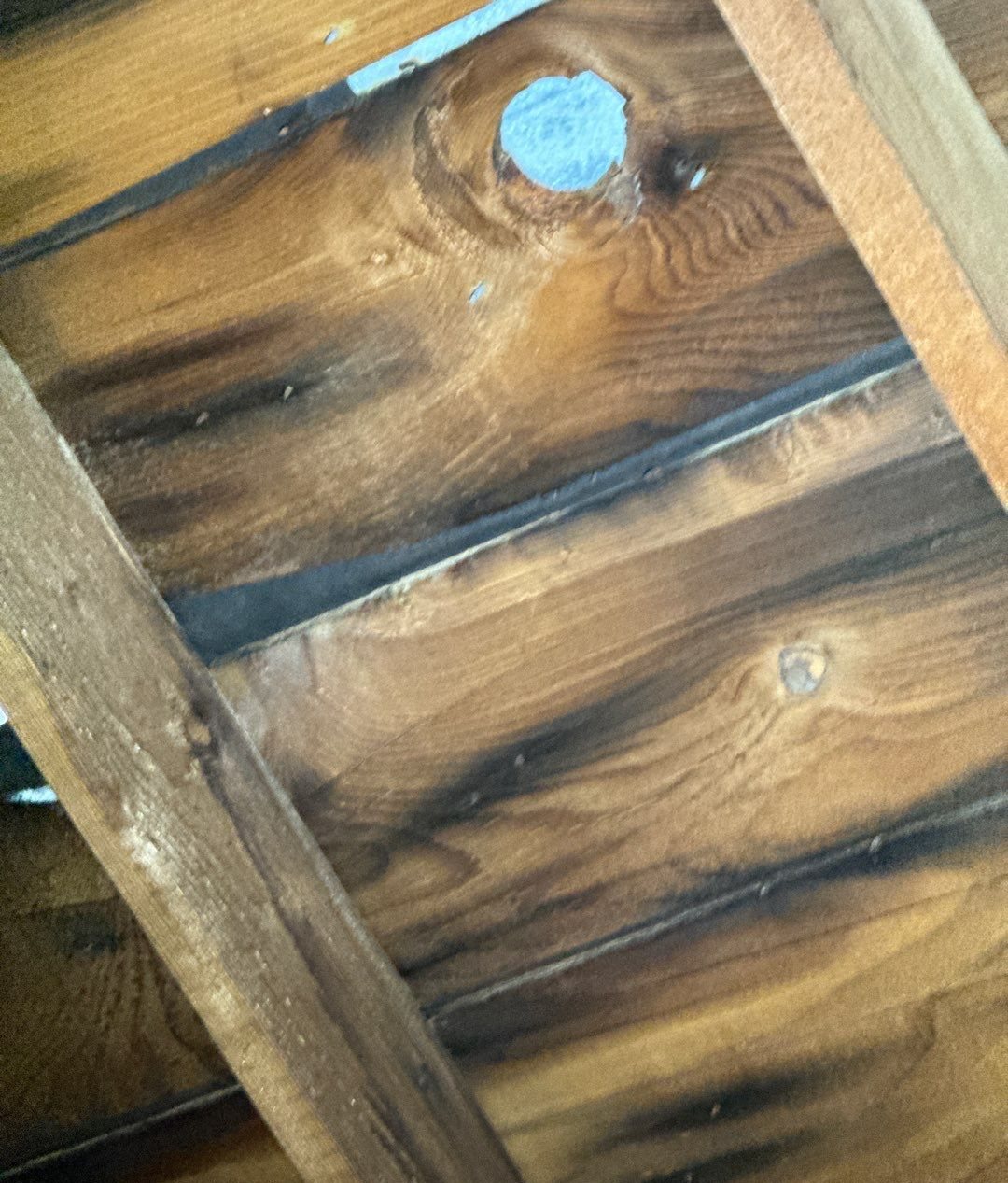
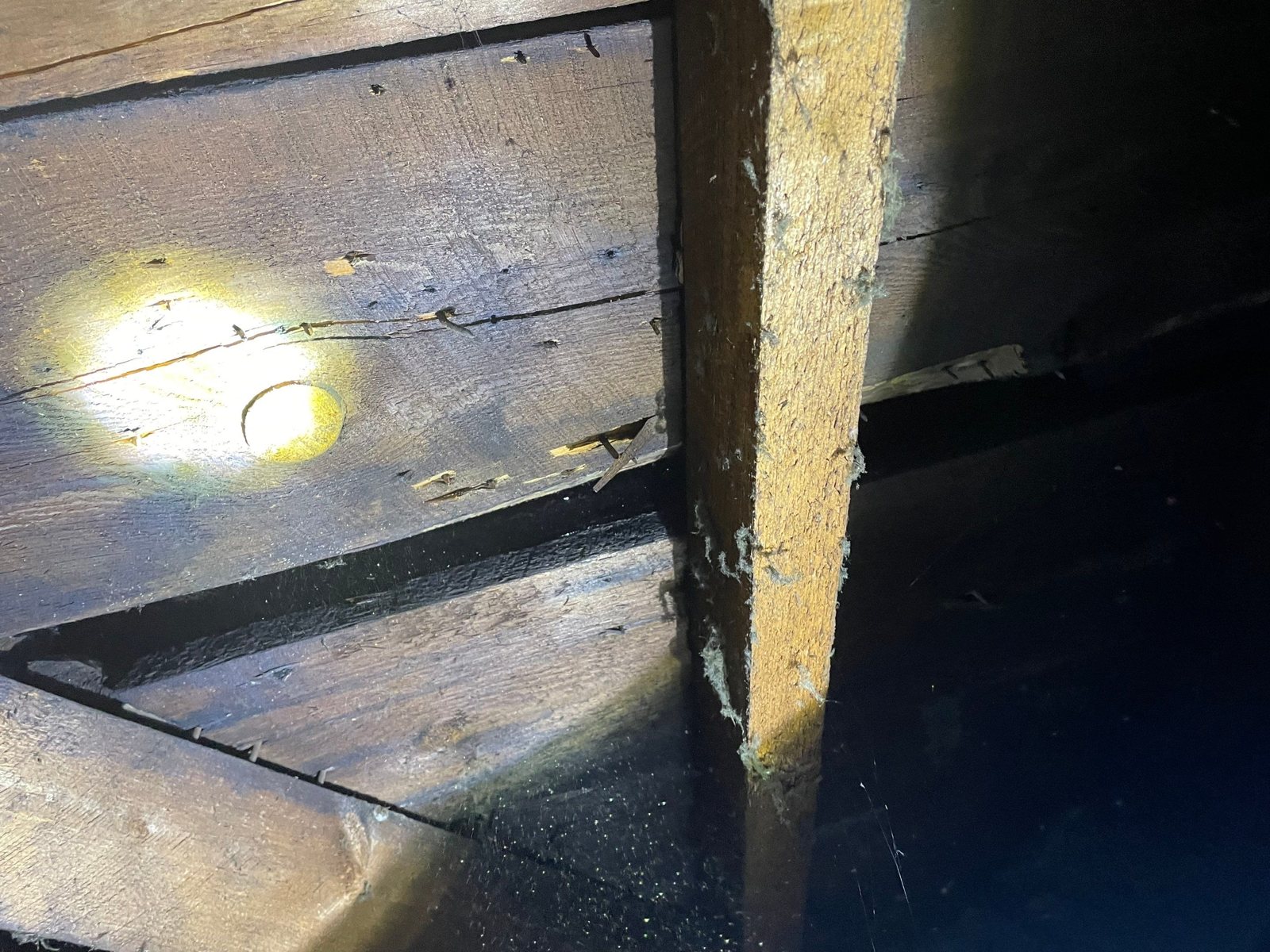
| What you see in the attic | White frost on sheathing and nail tips; wet insulation below; dark staining on the wood over time | A wet track or stain running down from one point on the deck | Wetness down low at the eave end of the attic |
| What you see outside | Often nothing unusual | Missing or damaged shingles, flashing problems | Thick ice ridge at the roof edge, icicles |
| Summer? | Stops | Continues with rain | Stops |
You can have more than one. The same warm-air leaks that frost an attic also melt roof snow, which is why frost and ice dams show up on the same houses. For the ice dam side, including steam removal and prevention tips, see our ice dam removal page.
Why does it "rain" in my attic during a thaw?
Through a long cold stretch, frost keeps building on the underside of the roof deck. When the sun or a warm day heats the roof, all of it melts at once and drips onto the insulation and ceiling drywall below.
That's why the stain shows up on a nice day and not during a storm. The water was delivered weeks earlier, a little at a time, as vapor. Nail tips are the coldest metal in the attic, so frost often gathers on them first, and they drip in neat rows lined up with the rafters.
What causes warm, moist air to get into the attic?
The usual culprits are bath fans vented into the attic instead of outdoors, recessed can lights, an unsealed attic hatch, gaps around plumbing, wiring and chimneys, thin insulation, and ventilation blocked at the soffits.
Bath fans venting into the attic
This is the big one. A shower's worth of steam gets blown straight onto the roof deck. Sometimes the duct was never connected, fell off, or ends just under the roof vent instead of going through it.
Can lights, the attic hatch and other holes
Older recessed lights, the attic hatch, top plates of interior walls, plumbing stacks, wiring holes, and chases around chimneys and ducts all leak. In many older Twin Cities homes, the ceiling was never built as an airtight layer at all. Ductwork running through the attic can add more.
Low insulation and blocked soffit vents
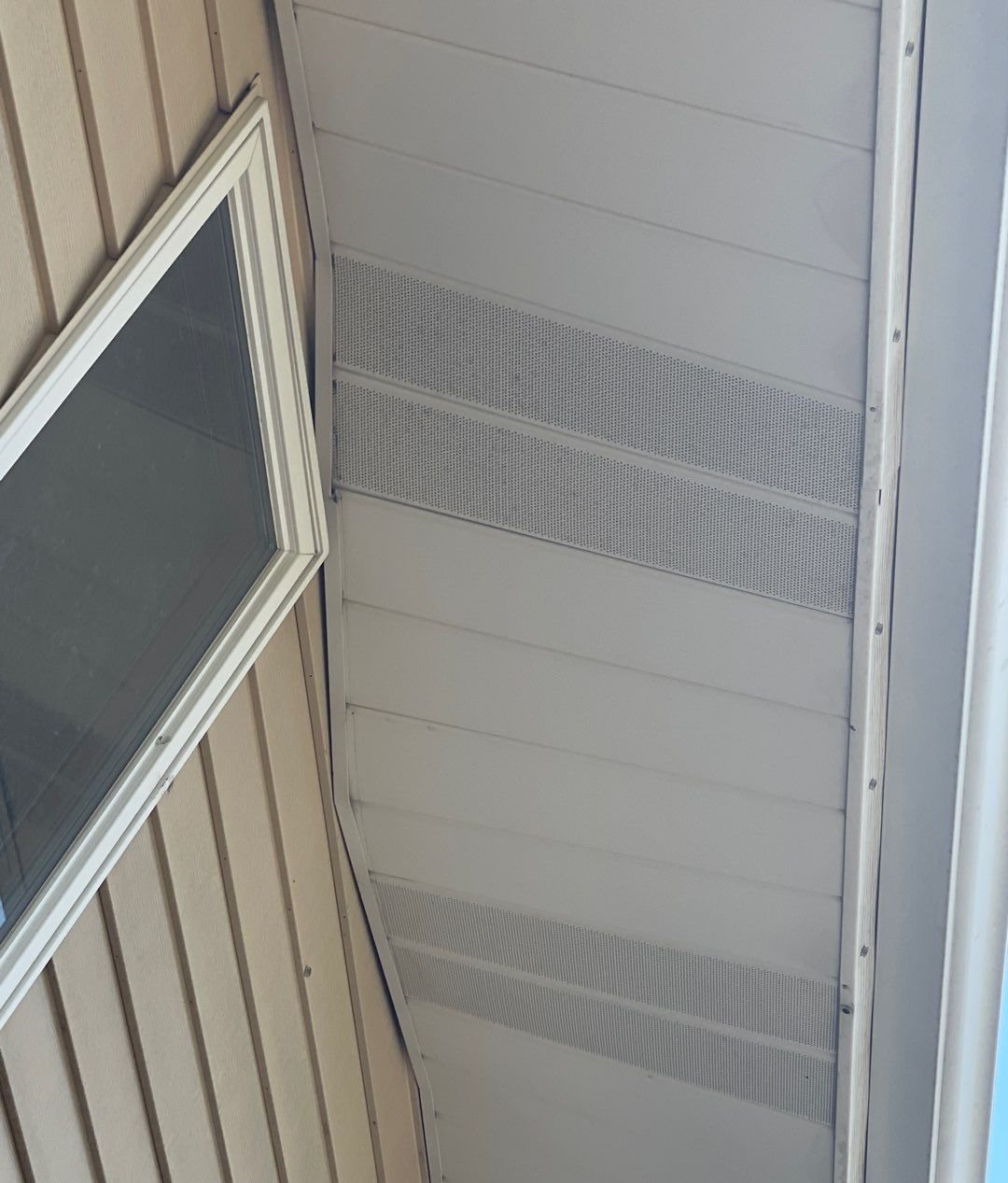
Insulation slows heat, but it does not stop air. Blocked soffits matter because intake air enters low at the eaves and exits high near the ridge. Insulation pushed against the eaves can choke that path.
Too much indoor humidity
More moisture indoors means more to deposit in the attic. UMN Extension says relative humidity needs to stay low in cold winter conditions to prevent condensation and damage to the house structure, and recommends sealing openings that let warm, moist air into walls, ceilings and the attic.
What can I safely check myself?
Most of it you can check from the living space, the attic hatch, and the ground. Don't go on a snowy roof, and only step on framing in the attic.
- Note the weather. Write down the date, temperature and whether it rained or snow was melting. That pattern alone often points to frost or a leak.
- Look up through the hatch with a flashlight. White frost on the sheathing and nail tips is the tell. Dark staining on the boards, especially above bathrooms, is a clue from past winters.
- Find the bath fan duct. Follow it from the fan. It should connect firmly to a roof or wall vent cap, not end in the insulation.
- Check the hatch. Frost or staining around the hatch opening, or a hatch with no weatherstripping or insulation on top, means it leaks.
- Check indoor humidity. Condensation or ice building up on windows means it's likely high.
- Look at the eaves from the ground. Soffit vents painted over or blocked, and a heavy ice ridge at the edge, tell you a lot.
- Only step on joists or trusses; drywall ceilings won't hold you.
- Watch for exposed nails overhead and live wiring.
- Don't dig through old insulation if it may be vermiculite (gray-brown, pebbly). DOE lists vermiculite as a reason not to proceed with DIY attic work.
- Don't scrape frost off the deck; it just drops water into the insulation.
Not sure if it's frost or a leak?
We'll look at the roof and the attic side and photo-document what we find.
Schedule a Roof & Attic InspectionWho fixes attic frost: a roofer or an insulation contractor?
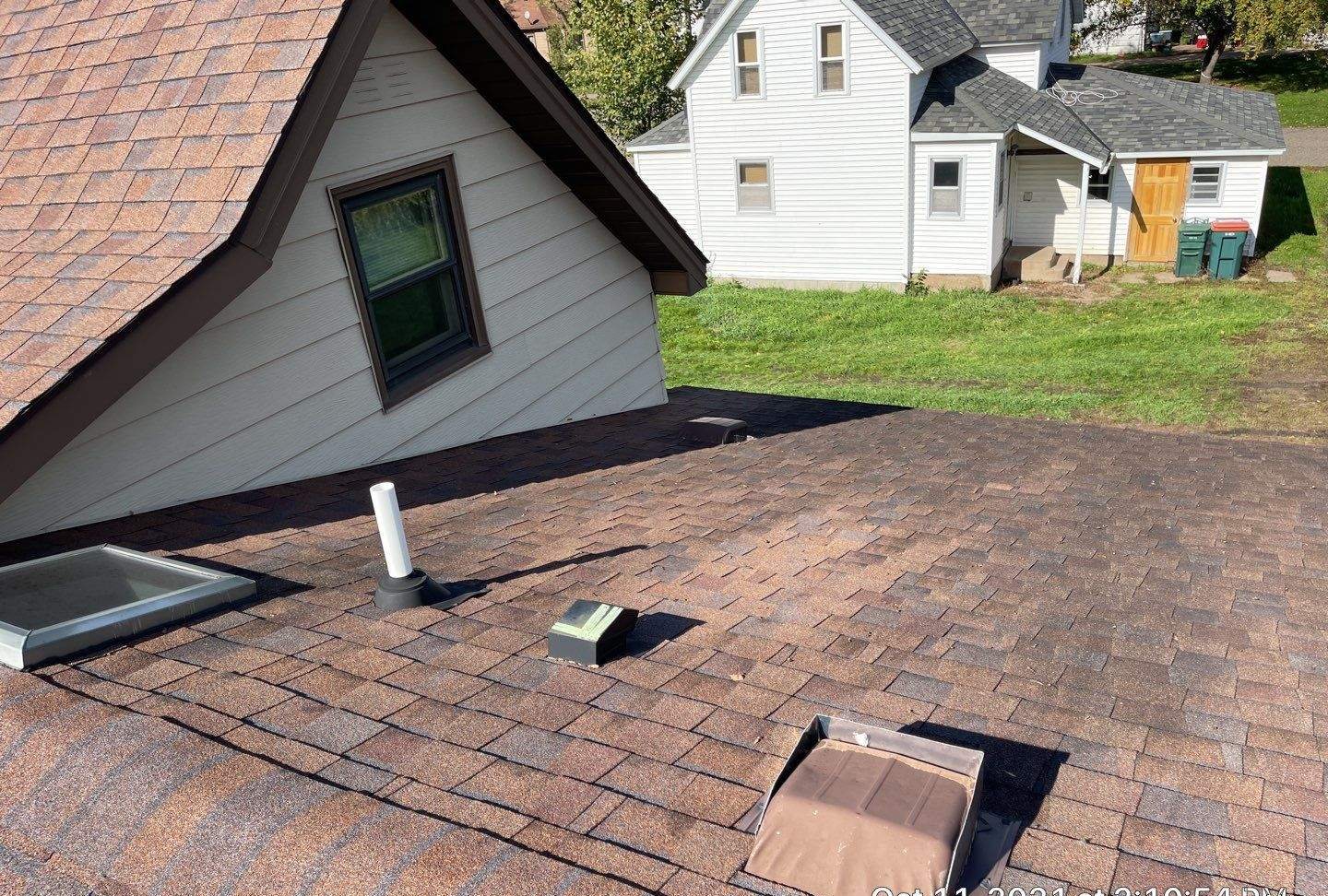
Often both have a part. The air sealing and insulation work stops the moisture at the source. The roofer's side is the roof itself: ruling out a true leak, checking the vents on the roof, and fixing bath fan terminations, flashing or damaged decking.
| Problem | Typically handled by |
|---|---|
| Shingle, flashing, pipe boot or valley leak | Roofer |
| Roof vents, ridge vent, bath fan roof cap | Roofer |
| Damaged or rotted roof sheathing | Roofer (during repair or replacement) |
| Sealing can lights, top plates, hatch and bypasses | Insulation / air-sealing contractor or energy auditor |
| Adding insulation, baffles at the soffits | Insulation contractor |
| Bath fan ducting and fan sizing | Roofer, HVAC or electrical, depending on the job |
Can attic frost damage my roof?
Year after year, yes. Repeated wetting stains and weakens sheathing, soaks insulation, and stains ceilings. A single mild winter of light frost is less serious than a bath fan dumping into the attic for a decade.
If decking has to be replaced during a reroof, that's the time to fix what's driving the moisture, so the new deck doesn't get the same treatment. See roof replacement or, for a single spot, roof repair.
Find out what's really dripping
We check the roof and the attic side and photo-document what we find, so you know whether you need a roofer, air sealing, or both.
Questions people also ask
Is a little frost in the attic normal in Minnesota?
A light frost on the coldest nail tips during a deep cold snap isn't unusual, but it tells you moisture is getting up there. Heavy frost, wet insulation or ceiling stains mean there is a significant air leak or a bath fan venting into the attic.
Will adding roof vents stop attic frost?
Not by itself. Ventilation helps carry moisture out, but the Minnesota Department of Commerce and Building Science Corporation both point to stopping warm air leaks as the main fix.
Should I run a dehumidifier or lower my humidifier setting?
Lowering indoor humidity reduces how much moisture can reach the attic. UMN Extension says winter relative humidity needs to stay low to prevent condensation. Window condensation is a practical sign it's too high.
Can my bath fan cause the dripping?
Yes, it's one of the most common causes. DOE guidance says bath fans must exhaust to the outside; a fan blowing into the attic puts shower moisture straight onto the roof deck.
Sources
- BSD-102: Understanding Attic Ventilation (Building Science Corporation)
- Got ice dams? Learn what to do and how to prevent them (Minnesota Department of Commerce)
- Controlling moisture problems in your home (University of Minnesota Extension)
- Dealing with and preventing ice dams (University of Minnesota Extension)
- Measure Guideline: Guide to Attic Air Sealing (U.S. Department of Energy)
- Install Exhaust Fan Flex Duct (Bath Fan Only) (U.S. Department of Energy)
Repair King is a licensed contractor, not an insurance company, public adjuster or attorney. We inspect, document and repair. Coverage decisions belong to your insurer, so read your own policy and ask your agent.


