

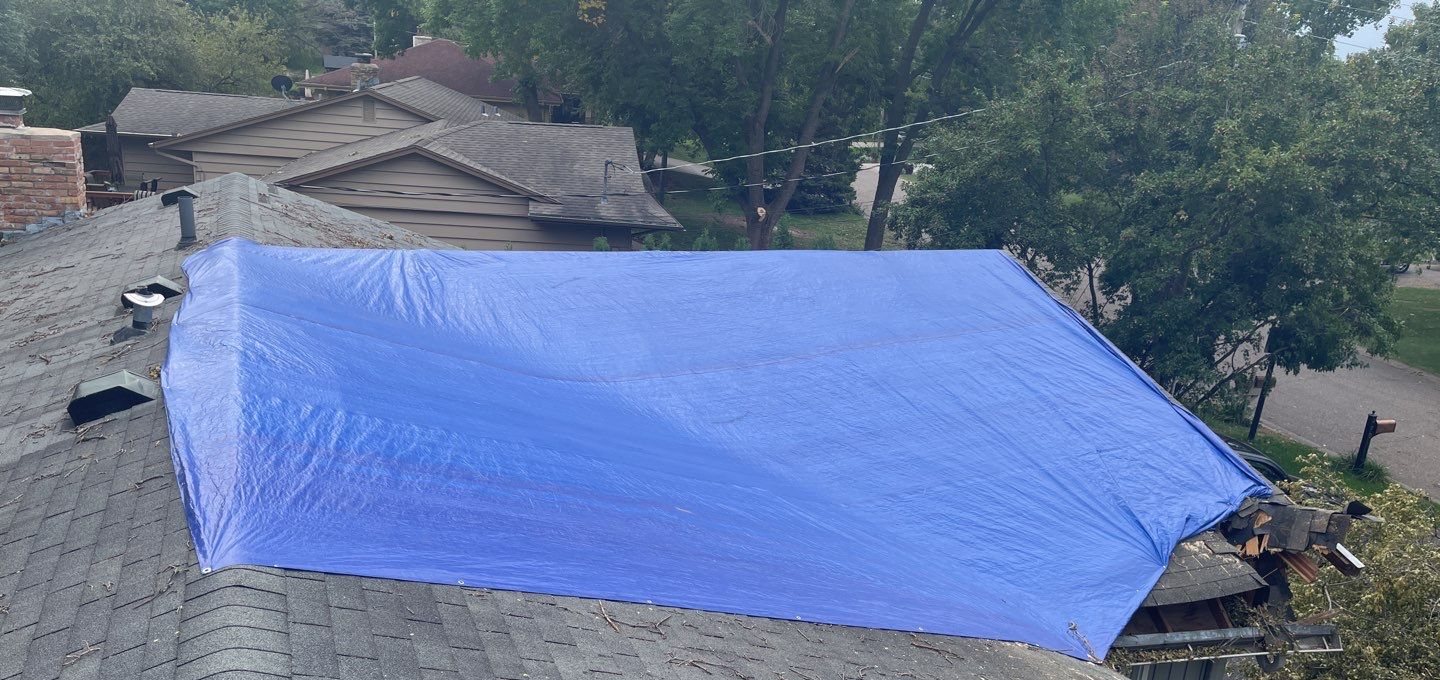
Storm damaged your roof? What to do in the first 24 hours, and when to tarp it
In the first few hours, stay safe, catch the water and photograph everything from the ground and from inside. Tarping comes next, in daylight on a dry roof, and is usually a job for a crew with proper ladders and fall protection.
It's 10 p.m. The wind finally quit, the power is flickering, and there's a brown stain spreading across the bedroom ceiling. Maybe a limb from the neighbor's silver maple is lying across your garage roof. Maybe you only hear dripping.
Here's the short answer. For the first few hours, your job is to stay safe, catch the water and photograph everything, from the ground and from inside. Tarping comes next, once it's light, dry and safe to be on the roof, and in most cases it should be done by a crew with ladders and fall protection, not by you at midnight.
What should I do first when a storm damages my roof?
Get people away from anything that's sagging, sparking or wet near electrical fixtures, then look at the house from the outside before you go back in. Water damage can wait an hour. An injury can't be undone.
Walk the outside first, in daylight if you can, with a flashlight if you can't. Look for power or service lines on the ground or tangled in a tree. Look for a limb or trunk that is still resting on the roof. Smell for gas.
If a tree is still on the house, treat the rooms under it as off limits. A trunk that looks stable can shift when it rains, when the wind picks up again, or when someone starts cutting. Close the doors to those rooms and stay out until a tree crew and a contractor have looked at it.
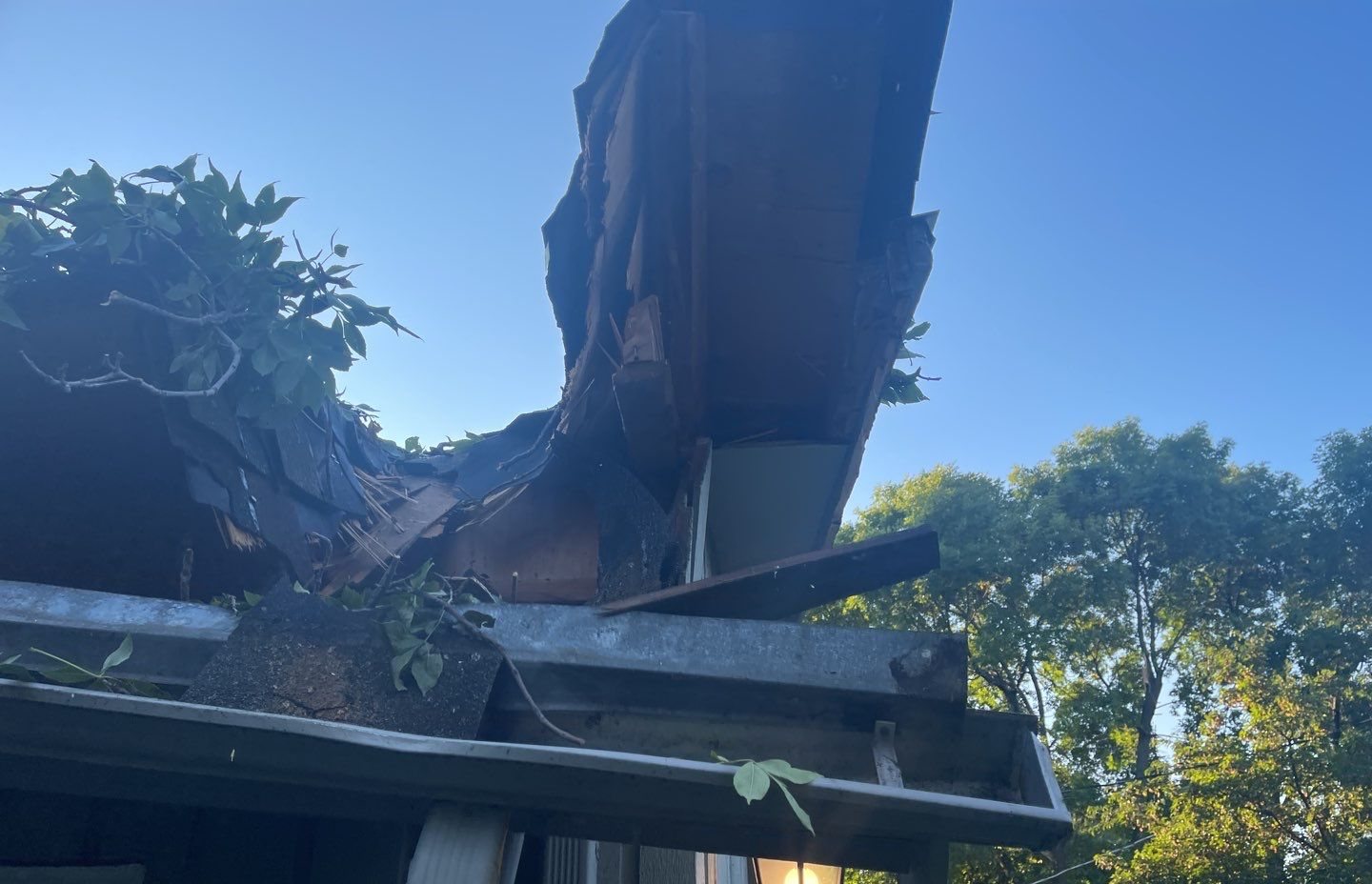
How do I stop a roof leak from inside the house?
Catch the water, move what you can, and relieve a bulging ceiling only the careful way. Nothing you do inside stops the leak itself. It just limits how far the water travels.
- Catch it. Buckets, totes and stockpots under every drip. Put a towel in the bottom so the splashing doesn't spread water across the floor.
- Move it. Electronics, rugs, paperwork and furniture out of the wet area. Plastic sheeting or a shower curtain over what's too heavy to move.
- Kill the power to wet fixtures. If water is coming through a light fixture or running near outlets, turn that circuit off at the panel, as long as you can reach the panel without standing in water.
- Check the attic, if it's safe to get to. A flashlight look from the hatch often shows where the water is entering. Don't walk on the drywall between joists.
Should I poke a hole in a bulging ceiling?
The Red Cross says a sagging ceiling is wet, heavy and dangerous. Its advice is to wear eye protection, stand away from the damaged area, and use a long stick to poke holes starting at the outside of the bulge so the water drains slowly.
If the sag is bigger than a bucket can handle, or the ceiling is already cracking, leave the room and shut the door. Drywall that wet usually needs replacing anyway.
A leak in a rental unit adds a few more steps for the landlord. We cover those in what to do when a tenant reports a roof leak.
What should I photograph before the roof is tarped?
Photograph everything before anything gets moved, covered or cleaned up: wide shots of the house, close-ups of the damage, the ceiling stains, and the date. Once a tarp goes on, the damage underneath is hidden until the permanent repair.
Minnesota's Commerce Department, which regulates insurers here, puts it plainly in its disaster guide: take pictures or video before you start cleaning up, and keep receipts for the materials you buy.
Use this as a shot list. Phones stamp the date into the file, which is what you want.
- All four sides of the house from the street or yard, including the roof line.
- The tree, limb or debris where it landed, before anyone cuts it up.
- Any broken gutters, fascia, windows or siding near the impact.
- Every interior stain, drip and bulge, with something in the frame for scale.
- The attic, from the hatch, if water is visible on the decking or insulation.
- Damaged belongings before you move or throw anything out.
- Video of active dripping. A ten-second clip shows more than a still.
- Receipts for tarps, buckets, fans or anything else you buy that night.
- After tarping: the tarp from the ground and up close, and the invoice for the work.
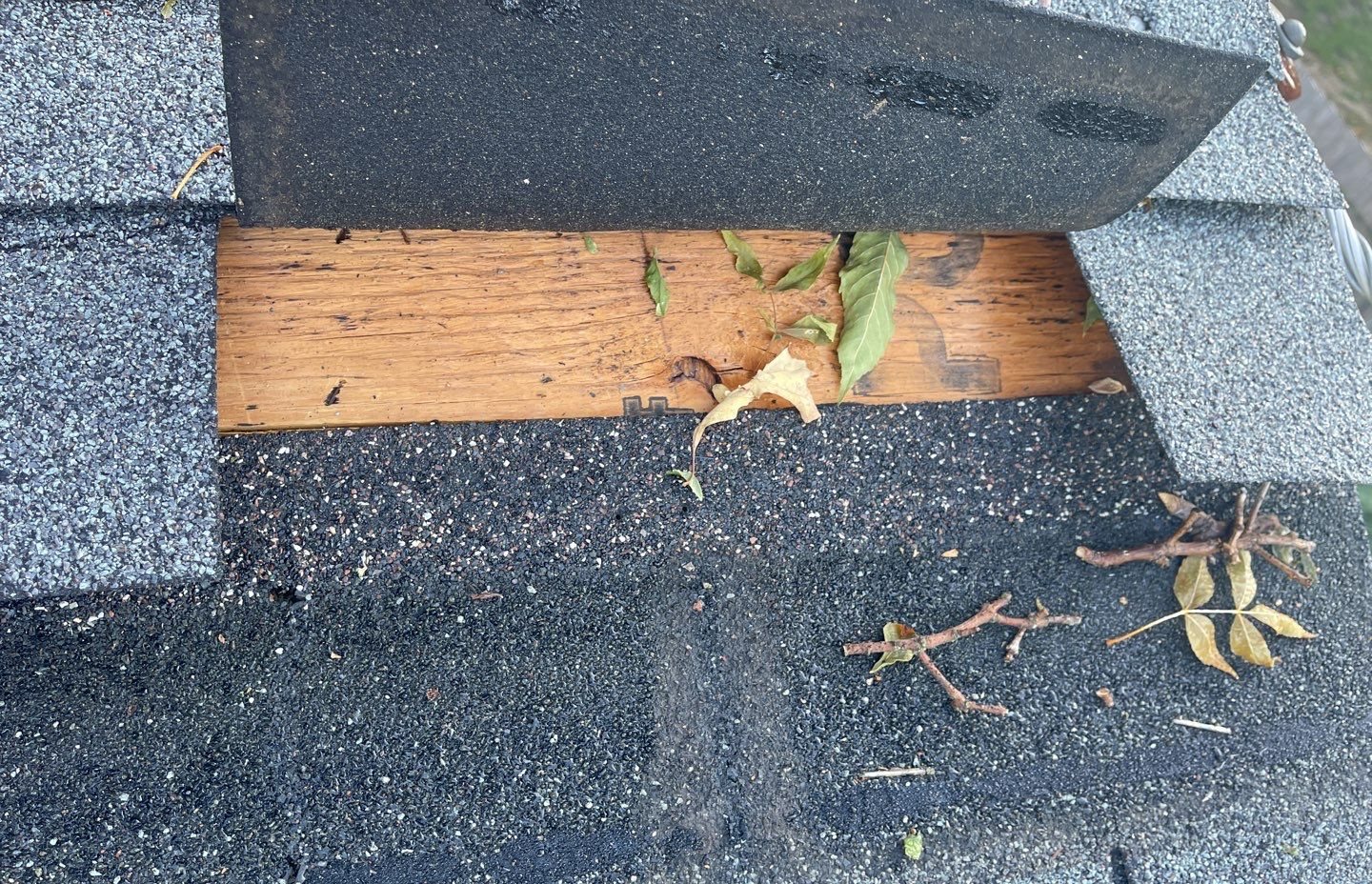
Keep the photos in one album and don't edit or crop them. If you're unsure whether wind or hail was even in your area, check your address in the free Roof & Storm Report. Our storm damage guide covers the claim side in more detail.
Does my insurance policy expect me to tarp the roof?
Minnesota's standard fire policy language says that after a loss the insured shall "protect the property from further damage." What that means for your specific claim is a question for your policy and your insurer, not your contractor.
We're a contractor. We don't interpret coverage or speak for an insurer. What we can do is secure the opening, photograph the conditions before and after, and give you an invoice that shows exactly what temporary work was done and when. Read your own policy's "duties after loss" section, and call your agent or insurer with coverage questions.
Should I tarp my own roof after a storm?
Usually no. A wet, storm-damaged roof is slippery, the decking may be weakened under the shingles, and debris can hide holes. Tarping is a daylight job for people with proper ladders and fall protection.
If you do decide to cover a small area on a low, dry, walkable roof, at least know what a good tarp looks like. That's the next section.
What does a proper roof tarp job look like?
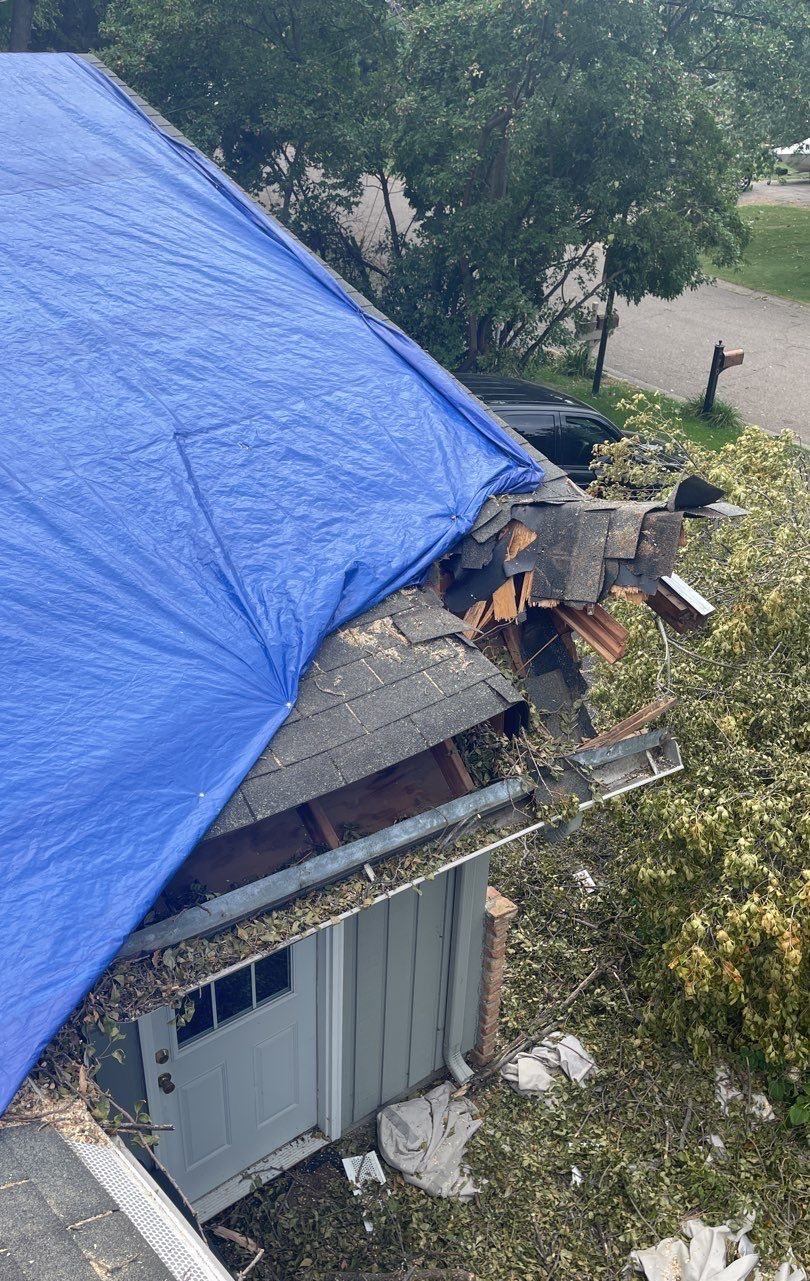
A good tarp covers well past the damage, runs up and over the ridge so water can't get behind it, and is held down by wood strips fastened through the tarp rather than by a few nails through the grommets. A tarp that only covers the hole will leak at its top edge or blow off.
| What you see | Usually a good sign | Usually a problem |
|---|---|---|
| Top edge | Runs over the ridge onto the other side | Stops partway up the slope, so water runs under it |
| Coverage | Several feet past the damage on every side | Barely covers the hole |
| Hold-down | Wood strips fastened along the edges | A few nails through grommets, or loose bricks and rocks |
| Surface | Taut, sheds water toward the gutter | Baggy, flapping or holding a pond of water |
| Eaves and broken edges | Wrapped and closed off | Open, so wind can get under it |
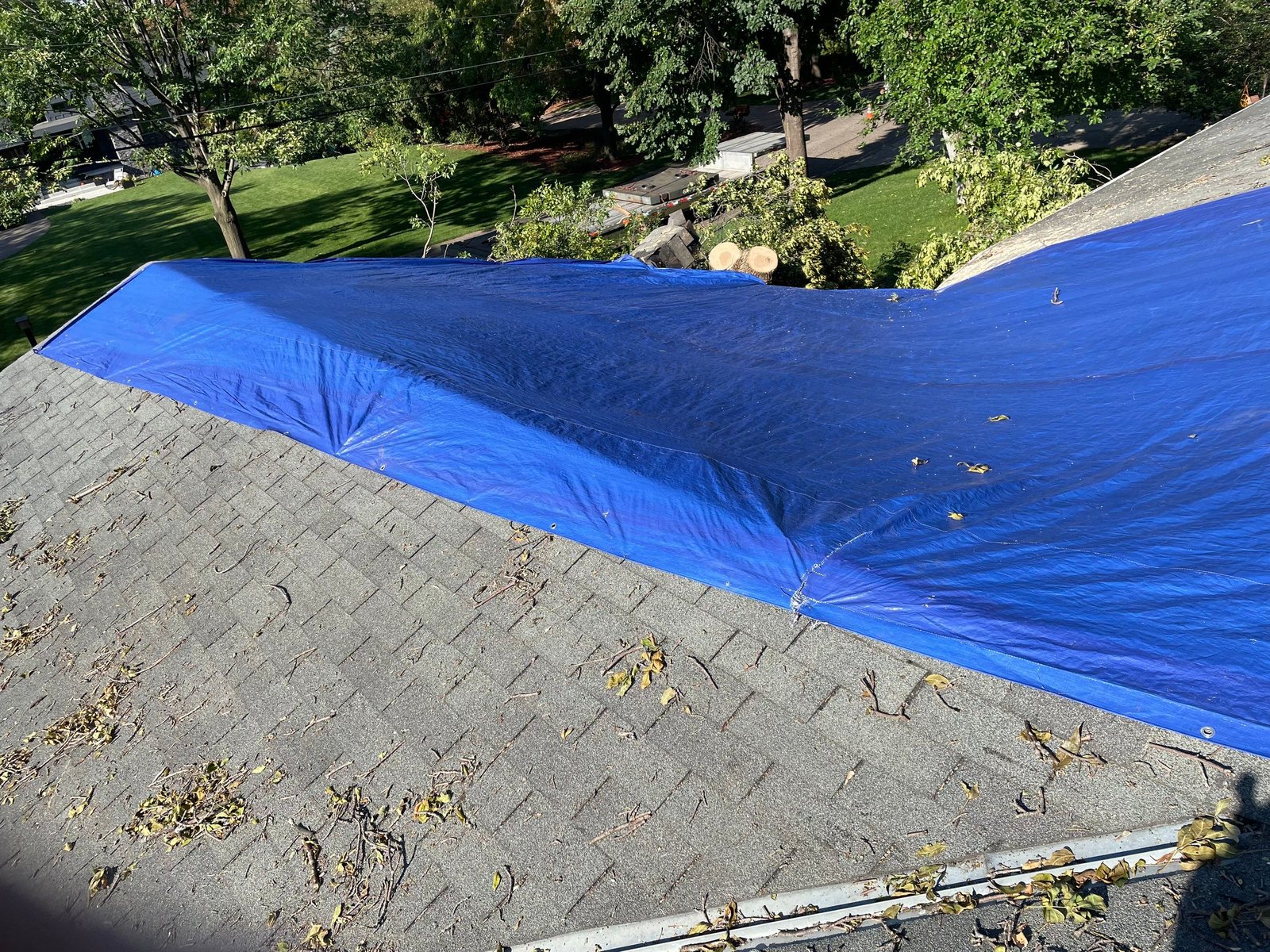
Every fastener through a tarp is a new hole in the roof. That's expected. It's why the permanent repair should include the shingles under the tarp, not just the spot that was hit.
How long will a roof tarp last in Minnesota?
Treat any tarp as a stopgap measured in weeks, not seasons. The Blue Roof sheeting the federal program uses is designed to last 30 days, and FEMA recommends arranging permanent repairs within that window.
Minnesota adds its own wear. Spring and summer storms bring repeat wind. Fall brings leaves and limbs that collect on the tarp. Check it after every windy day, from the ground, and call if an edge is lifting or flapping.
What about snow, ice and a tarp in winter?
If the winter leak is coming from ice at the eaves rather than storm damage, a tarp won't fix it. That's an ice dam, and steam is the safe way to open a channel. See ice dam removal. If a pipe let go instead, start with what to do when a pipe bursts.
Water coming in right now?
We provide emergency tarping and board-up across the Twin Cities, with photos before and after.
Get emergency roof helpWhat happens after the roof is tarped?
Once the house is dry inside, the next steps are a full roof inspection, a written scope for the permanent repair, and drying out anything that got wet. Don't let the tarp become the roof.
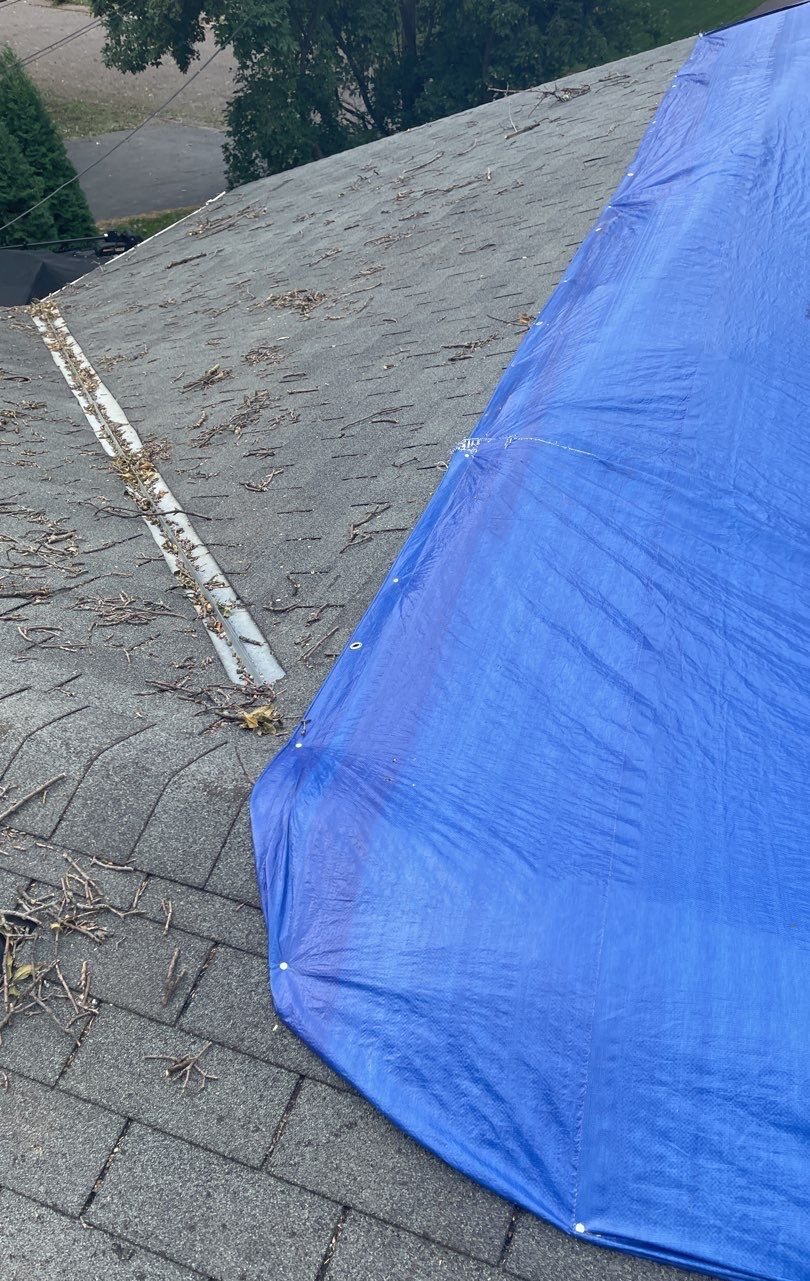
Damage from a limb strike or wind is rarely just the hole you can see. Shingles a few courses away can be torn loose, and wind can unseal shingles without blowing them off. Our post on creased and lifted shingles explains what to look for.
Interior drywall and insulation that got soaked need to dry or come out. If the water damage inside is the bigger problem, our fire and water restoration team handles that side.
And if your question is "was this storm even big enough to damage my roof," send us a photo of the damage. We'll tell you what we see and whether it needs an inspection.
Roof opened up in a storm?
We tarp, board up and photograph the damage, then plan the permanent repair.
Questions people also ask
Can I put a tarp on my roof in the rain?
It's not a good idea. Wet shingles and a wet tarp are slippery, and storm-damaged decking can be weaker than it looks. Catch the water inside and photograph it, then tarp once it's dry and light out.
Is a tarp with bricks or sandbags on it good enough?
For a few hours, maybe. Loose weights slide off in Minnesota wind. Federal Blue Roof installs use wood strips fastened to the roof with nails or screws to hold the sheeting down.
Should I throw out wet drywall, insulation and belongings right away?
Photograph them first. Minnesota's Commerce Department advises not throwing damaged items away until the adjuster has had a chance to see them, other than perishable food.
Who removes the tree before the roof is tarped?
A tree service handles cutting and lifting the trunk. The roof is tarped once the weight is off, since tarping under a tree still on the house isn't safe.
Will a tarp cause more damage to my roof?
Fasteners through a tarp make small holes, and a loose tarp can scuff shingles in wind. That's why the permanent repair should include the area that was under the tarp.
Sources
- 65A.01 Standard fire insurance policy (Minnesota Revisor of Statutes)
- Disaster Response Guide (Minnesota Department of Commerce)
- The difference between FEMA tarps and USACE Blue Roofs (FEMA)
- Operation Blue Roof frequently asked questions (FEMA)
- Tips for returning home safely after a disaster (FEMA)
- Checking your home's structure (American Red Cross)
Repair King is a licensed contractor, not an insurance company, public adjuster or attorney. We inspect, document and repair. Coverage decisions belong to your insurer, so read your own policy and ask your agent.


