

Can Wind Damage a Roof Without Blowing Shingles Off?
Most people walk the yard after a windstorm, count the shingles on the grass, and call it done. None in the yard? Then the roof must be fine.
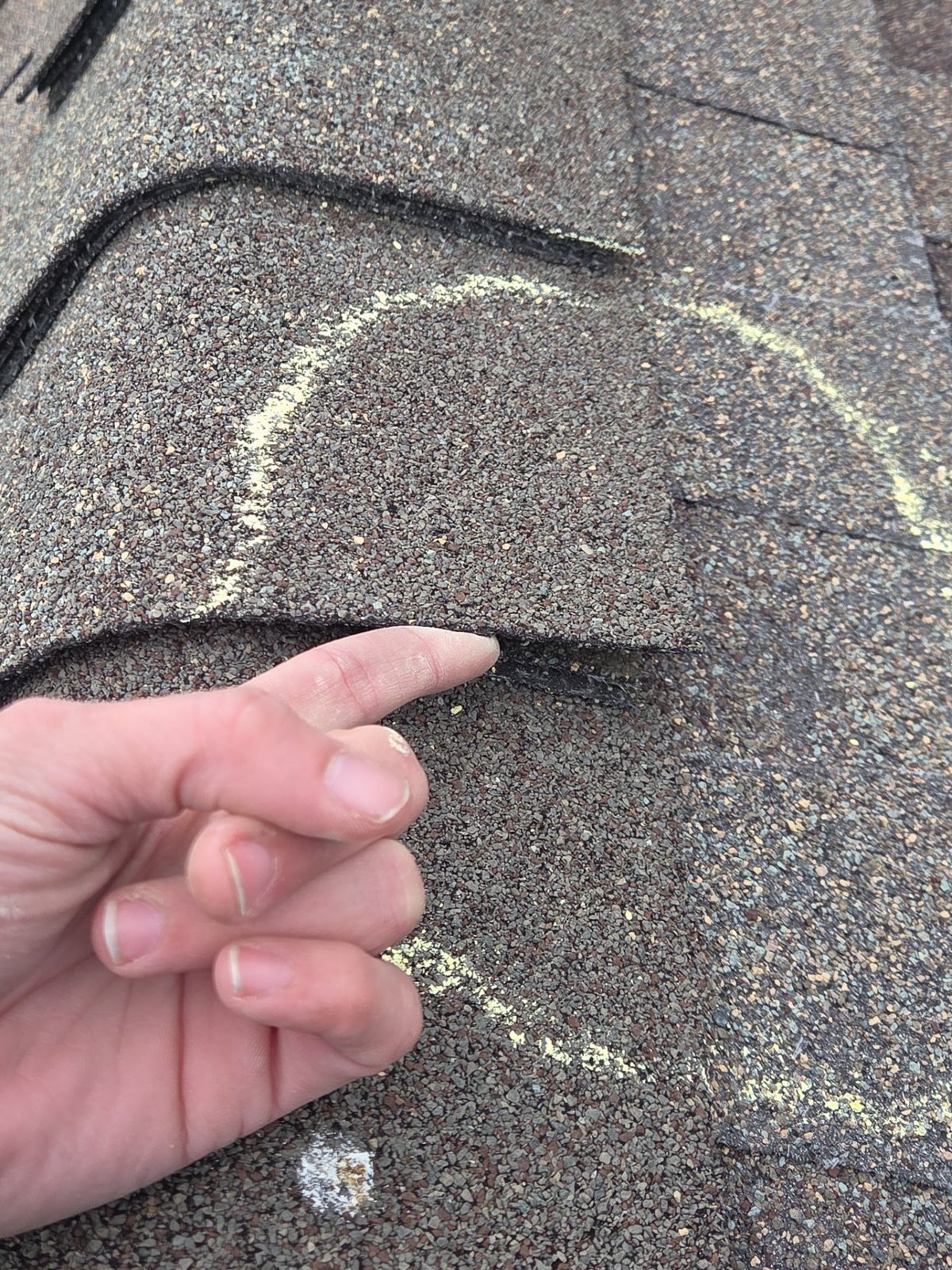
That's the myth. Wind does a lot of its damage without tearing anything loose. A shingle can lift, bend back on itself, and settle flat again, and from the driveway it looks like nothing happened. The damage is in the fold and in the broken seal underneath.
Can wind damage a roof without blowing shingles off?
Yes. Wind can break the seal strip under a shingle and bend it upward hard enough to leave a permanent crease, and that shingle often falls back into place. It stays on the roof, but it no longer resists the next storm or sheds water the way it was built to.
Missing shingles are just the easy damage to see. For every shingle that leaves, there are often others that lifted and came back down.
What is a creased shingle?
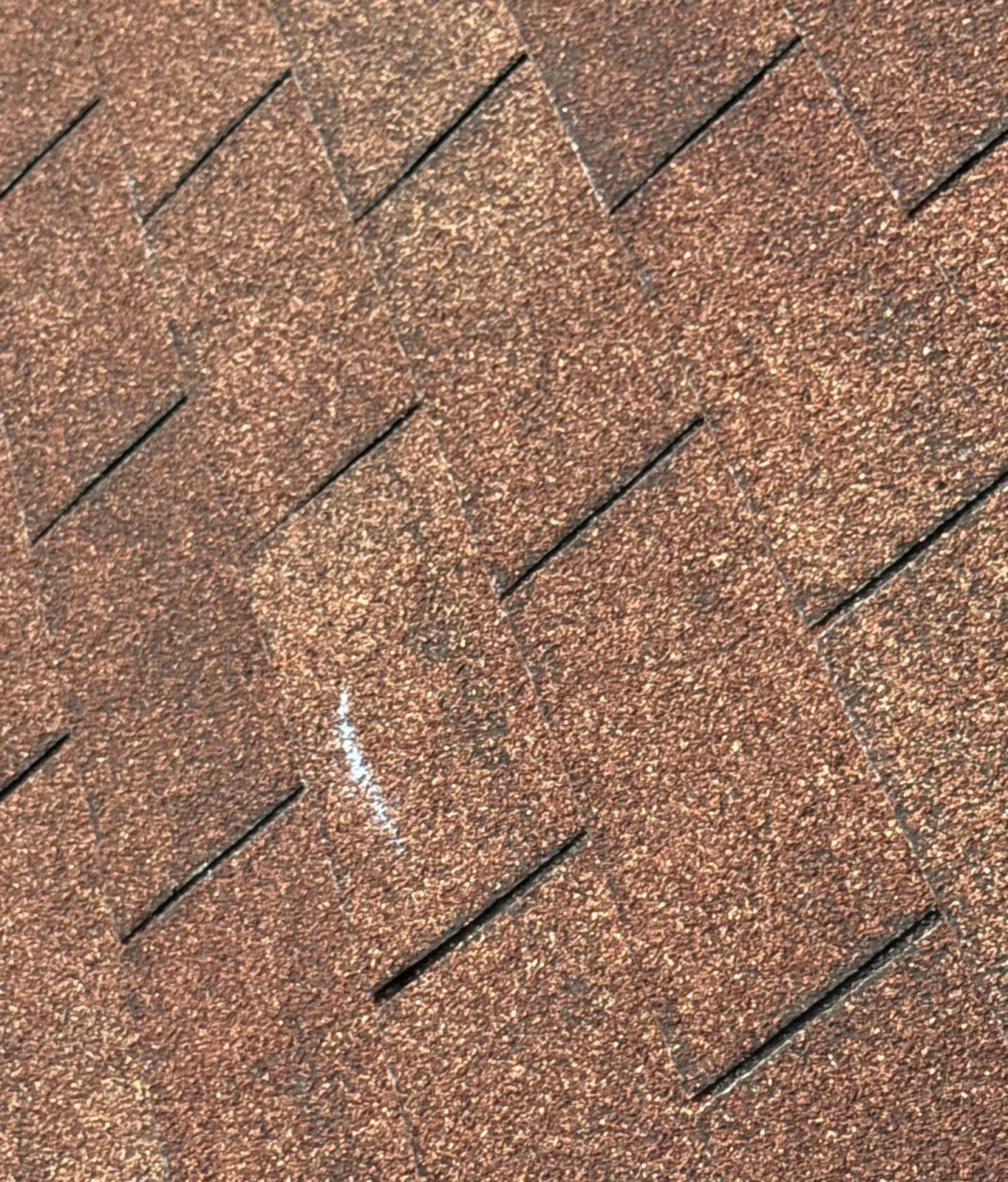
A creased shingle has a straight fold line across it, usually near the top of the exposed part, where wind lifted it and bent it back. The fold cracks the asphalt mat, and the crack doesn't go away when the shingle lies flat again.
Think of bending a credit card back and forth. It looks flat when you let go, but there's a white line where it gave. Shingles do the same thing. On a lot of roofs the crease runs right along the line where the shingle is nailed or sealed, because that is where it hinges when it lifts.
Look closely and you'll often see a horizontal line of disturbed or missing granules. Sometimes it's a hairline you can only find by running your hand over it.
Why does the seal strip matter so much?
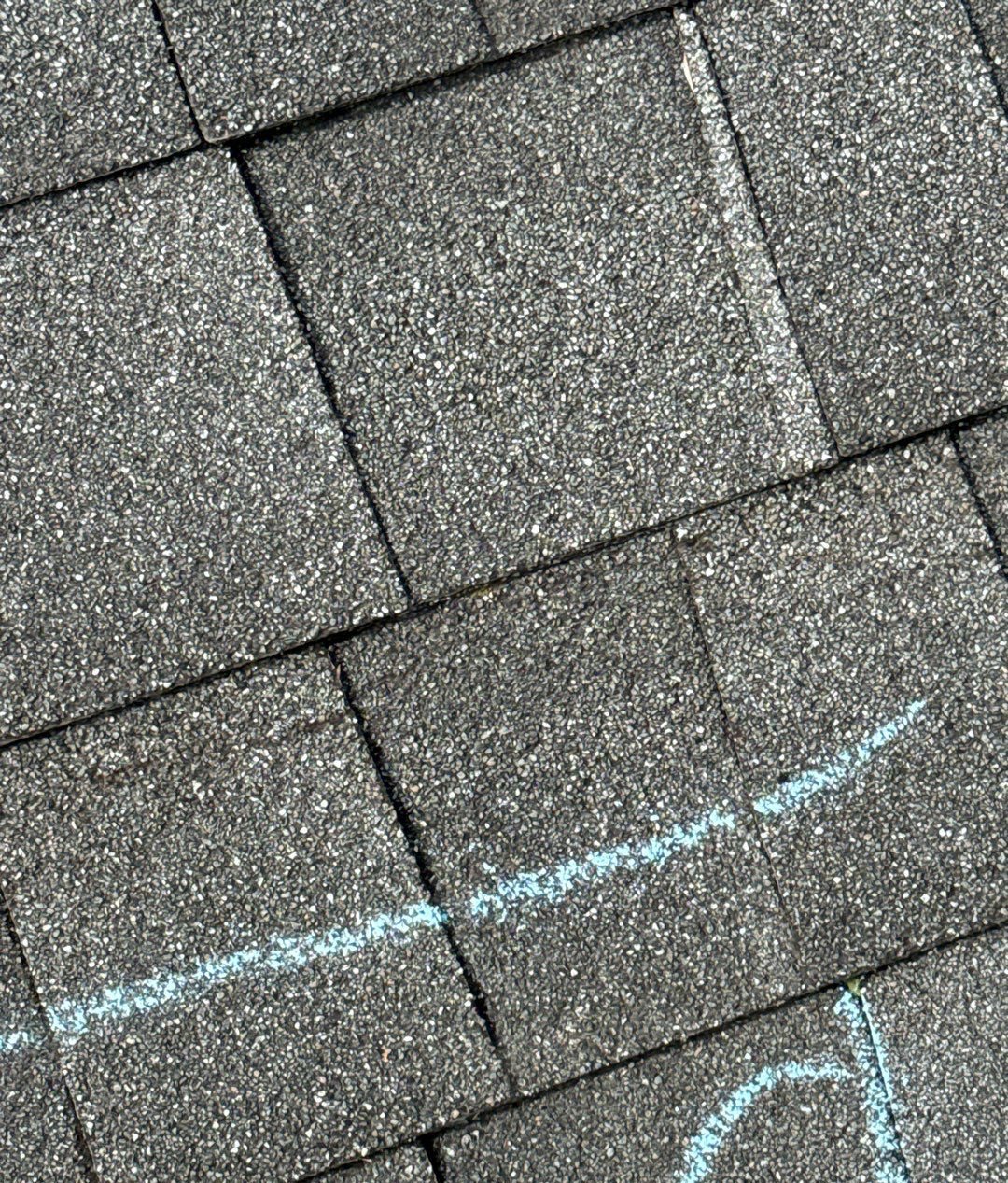
The seal strip is a band of adhesive that bonds each shingle to the one below it. That bond is a big part of how an asphalt shingle roof resists wind. Once it breaks, the shingle can flap in every storm after that.
GAF's application instructions say the same thing about its shingles: the sealant bonds them "when exposed to sun and warm temperatures." That's worth knowing in Minnesota. A roof put on late in the fall may not fully seal until the weather warms up.
What does an unsealed shingle look like?
It might have no crease at all. The tab lifts easily by hand with no resistance, and the adhesive strip underneath is clean or stringy instead of bonded. Sometimes you'll find dirt or granules stuck to the sealant, which means it's been open for a while.
If the shingle lays back down flat, is it still damaged?
Often yes. A tab that lays flat can still have a cracked fold line and a broken seal. It looks normal from the ground, but it can lift again in the next wind and let water run under it.
This is the part that confuses people most. The crease is a structural break in the mat. Once it cracks, the tab tends to hinge at that line from then on, a little like a door that now has a hinge. Water can also wick in through the crack.
You can't glue a crease back together. Re-sealing a tab that isn't creased is sometimes a reasonable repair. A creased one usually needs to be replaced.
What do ASTM D3161 and D7158 wind ratings actually mean?
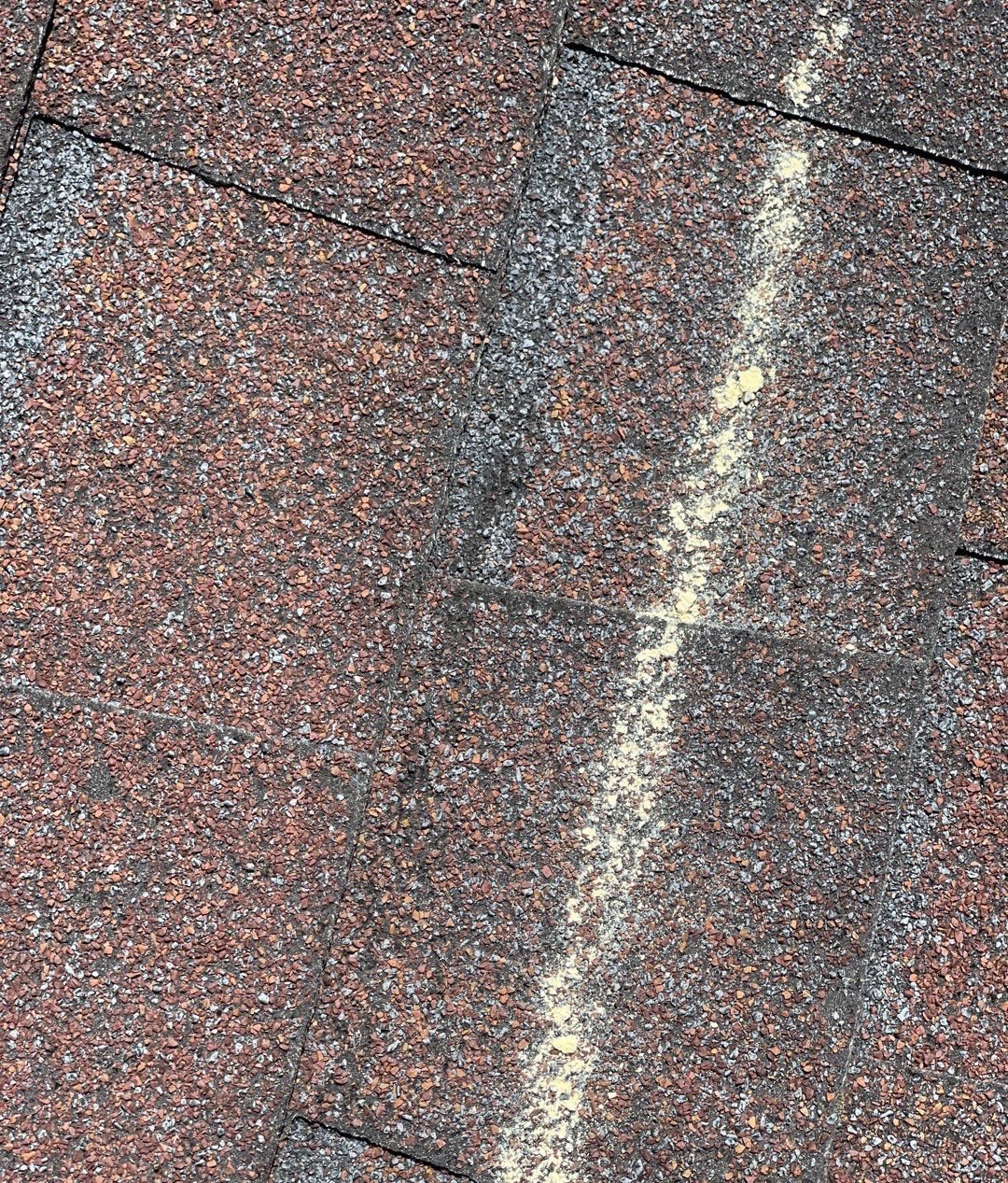
They are lab test classifications printed on the shingle wrapper. D3161 uses a fan test (Class F is 110 mph). D7158 measures uplift resistance and is classed D, G, or H by design wind speed. They tell you what a shingle was built to handle, not whether yours survived a real storm.
| Standard | Class | Associated wind speed |
|---|---|---|
| ASTM D3161 (fan-induced) | Class F | 110 mph |
| ASTM D7158 (uplift resistance) | Class D | Basic wind speed ≤ 116 mph (3-sec gust) |
| ASTM D7158 | Class G | ≤ 155 mph |
| ASTM D7158 | Class H | ≤ 194 mph |
So why would a shingle rated for "110 mph" fail in a 70 mph storm? A few reasons, none of them mysterious:
- The rating assumes the shingle is sealed. An unsealed or aged shingle doesn't perform like a new, bonded one in the lab.
- Gusts vary a lot across one roof. Edges, corners, and ridges get hit harder than the middle of a slope.
- Installation matters. Nail placement and number of nails change how a shingle holds.
- Years of heat, cold, and freeze-thaw cycles make asphalt more brittle, so it creases more easily.
How strong are Minnesota straight-line winds and derechos?
Strong enough. The National Weather Service calls 58 mph gusts severe, and Minnesota derechos have brought widespread 50–70 mph straight-line winds with pockets near 100 mph. That's well into the range where shingles lift and crease.
A derecho is a long-lived, widespread windstorm from a fast-moving line of thunderstorms. NOAA's Storm Prediction Center says one may be classified as a derecho when the wind damage swath runs at least 250 miles, with gusts of at least 58 mph along it and several well-separated gusts of 75 mph or more. That's why derecho damage gets described as "straight-line wind damage" rather than tornado damage.
Hail often gets the headlines in the Twin Cities, but the same summer storms bring the wind. Our storm history page and the Free Roof & Storm Report can show what hit near your address.
Did last night's wind hit your street?
Check your address for reported hail and wind before you climb anything.
Check your address for hail & windWhat wind damage can I spot from the ground?
From the ground, look for missing shingles, shingles that look lifted or wavy, debris on the roof, dark lines across a slope, and damage to gutters, soffits, and siding. Anything subtler, especially creases and broken seals, usually needs someone on the roof.
| You can often see from the ground | Usually needs a ladder and hands on the shingle |
|---|---|
| Missing shingles or bare spots | Creases along the fold line |
| Shingles lying in the yard or gutter | Broken or torn seal strips |
| Tabs visibly sticking up or rippling | Tabs that lift freely by hand |
| Loose ridge cap or lifted edges at the eaves | Pulled or backed-out nails |
| Bent gutters, loose soffit, damaged siding | Granule loss along a crease line |
Binoculars help. Scan the edges, the rakes, and the ridge first, since those catch the most wind.
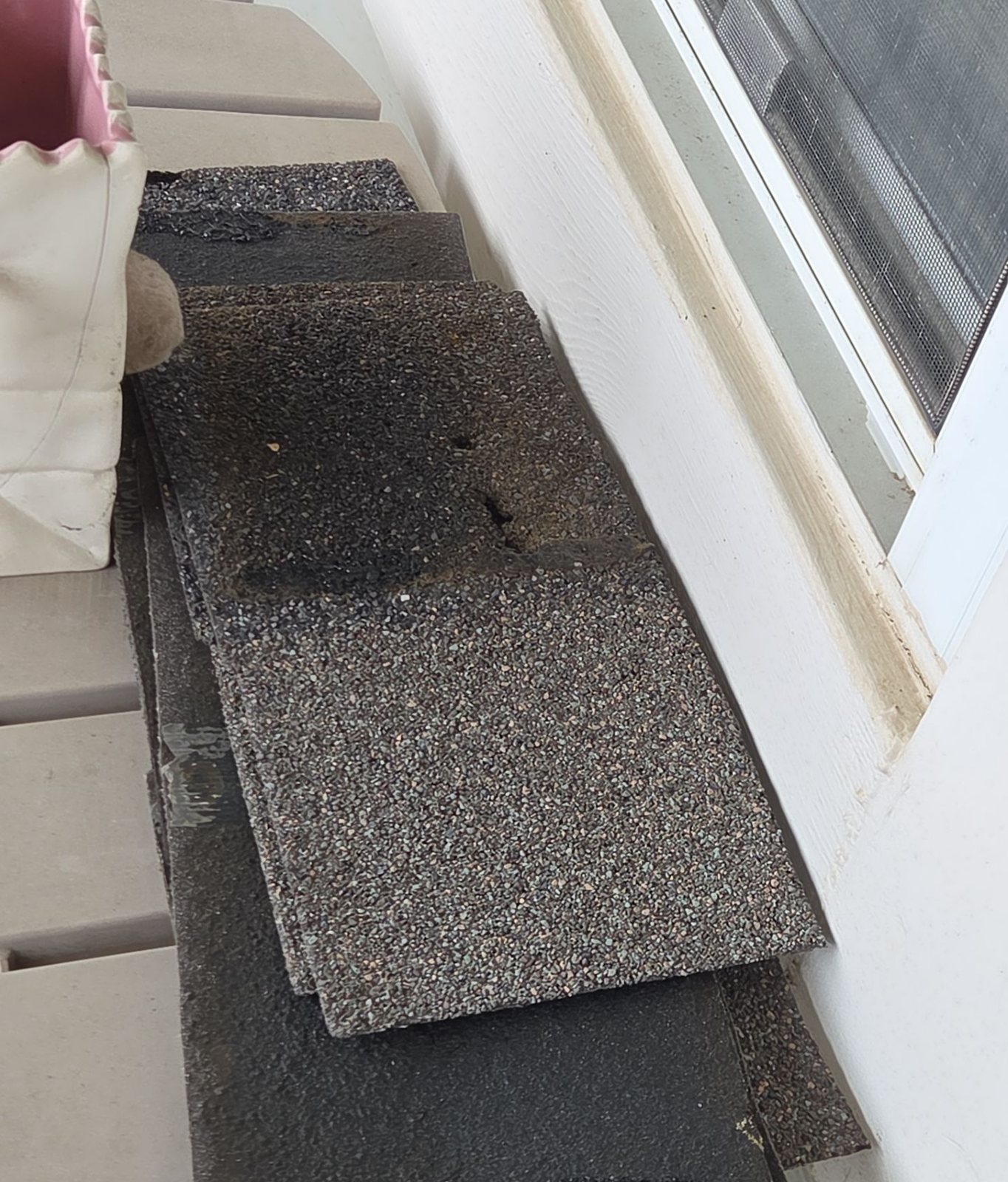
What does good wind damage documentation look like?
Good documentation shows each damaged shingle up close, marked and photographed, plus wider shots showing where it is on the roof, each slope, and the storm date. It records what was observed, like creased, unsealed, or missing, and doesn't claim what an insurer will decide.
- Record the storm date. Note the date and time of the wind event. Pull the reported wind or hail for your address from the storm report.
- Photograph each slope. An overview of every elevation, so each close-up can be placed on the roof.
- Mark and shoot each damaged shingle. A chalk line along the crease, then a close-up and a mid-range shot.
- Note the type of damage. Creased, unsealed, torn seal, missing, or lifted, kept separate from any hail marks.
- Count and locate. How many, on which slope, near which edge.
- Include collateral damage. Gutters, soffits, siding, fences, and anything the wind moved.
If you file a claim, the adjuster and your policy decide coverage. We document damage consistent with wind or hail, estimate the repair, and can meet the adjuster on site to go over the construction details. How claims work in general is covered on our insurance claims page and the storm damage guide.
Should a creased shingle be repaired or is the roof replaced?
It depends on how many shingles are damaged, how old the roof is, and whether matching shingles are available. A few creased tabs on a newer roof can often be replaced one at a time. Widespread creasing on an older, brittle roof is a different conversation.
Older shingles can crack when you lift them to swap out a neighbor, so a small repair can grow. That's something to decide with photos in hand. See roof repair and roof replacement for how we approach each.
Find out what wind and hail hit your address
Our free Roof & Storm Report shows reported storms near your home so you know whether a closer look makes sense.
Questions people also ask
Can I just glue down a creased shingle?
Sealing a lifted tab that isn't creased is sometimes a reasonable repair. A crease is a crack in the shingle mat, and adhesive doesn't fix the crack, so creased shingles are usually replaced.
Does a high wind rating mean my roof can't be damaged?
No. Ratings like ASTM D3161 Class F or D7158 Class H come from lab tests on properly sealed shingles. Age, installation, unsealed tabs, and gusty edges and corners all affect how a real roof holds up.
Why are my new shingles lifting in the wind?
Shingle sealant is heat activated. Manufacturers note that sealing can be delayed on cold-weather installs until the sun warms the roof. If tabs on a newer roof lift easily, have the installer check them.
How do I know if wind or hail damaged my roof?
They leave different marks. Hail leaves impact spots, and wind leaves creases, torn seals, and missing shingles. A photo-documented inspection records each one separately, and checking the storm report for your address shows what was reported nearby.
Is it safe to check for creases myself?
Stay off the roof. Use binoculars from the ground and leave the ladder work to someone with fall protection. Lifting tabs by hand can also break seals that are still holding.
Sources
- Cold Weather Shingle Installation Technical Bulletin (Owens Corning)
- Timberline Prestique Application Instructions (GAF)
- Using ASTM D7158 Where Standard Conditions Do Not Apply (Asphalt Roofing Manufacturers Association)
- Pinnacle Pristine certification (ASTM D3161 Class F 110 mph) (PRI Construction Materials Technologies)
- Facts About Derechos (NOAA Storm Prediction Center)
- May 12th, 2022 Derecho Summary (NWS Twin Cities)
- About the SPC (severe thunderstorm definition) (NOAA Storm Prediction Center)
Repair King is a licensed contractor, not an insurance company, public adjuster or attorney. We inspect, document and repair. Coverage decisions belong to your insurer, so read your own policy and ask your agent.


