

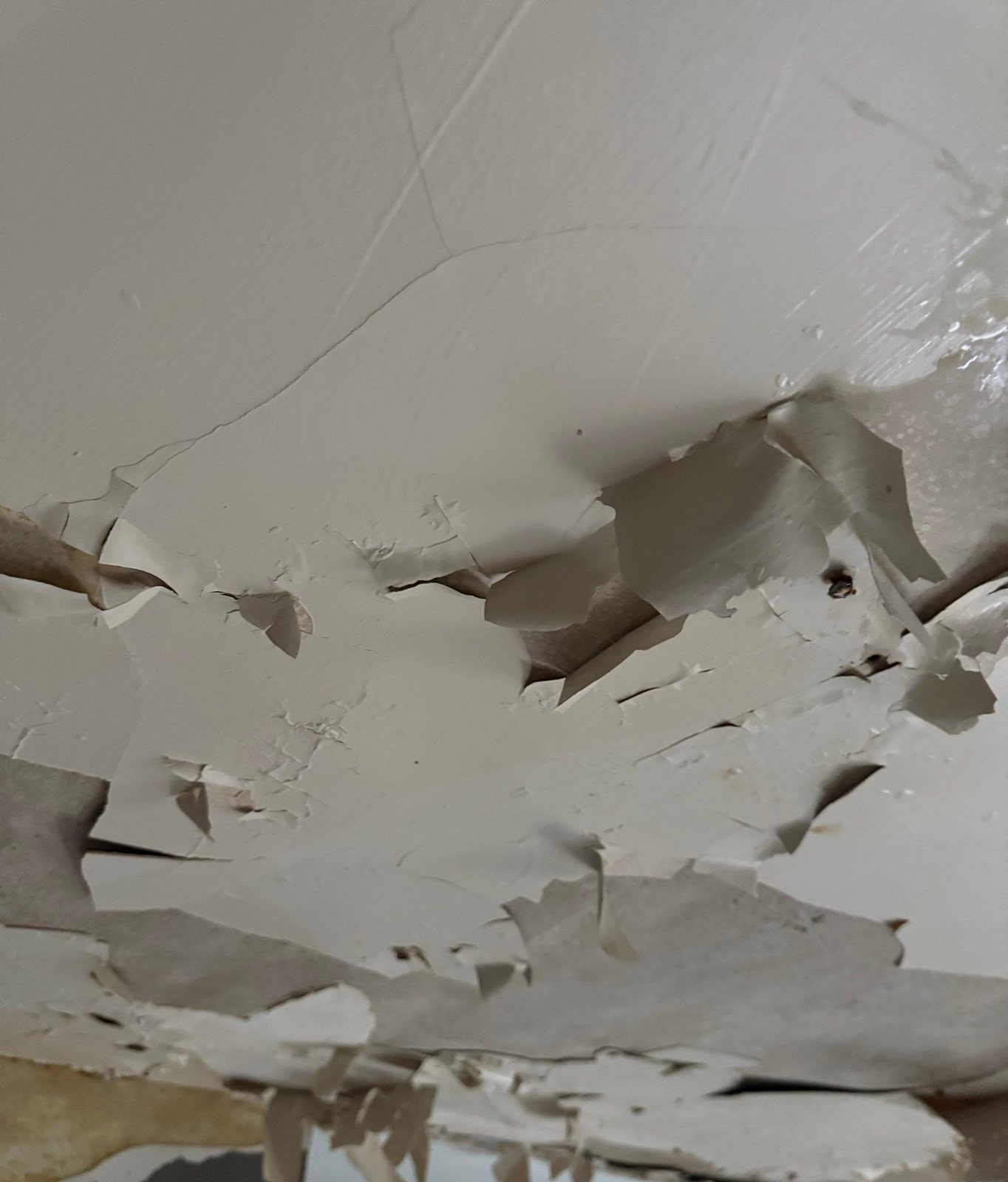
My tenant reported a roof leak: what does a Minnesota landlord need to do?
Triage the leak in writing, protect the unit and get the roof covered the same day if water is active, then find the real source and fix it. Minnesota's 504B.161 requires landlords to keep rentals in reasonable repair, so document every step.
The text usually shows up at a bad time: "water coming through the bedroom ceiling." No photo, no detail, just a problem that now belongs to you. This is a general scenario, not one of our jobs, but anyone who owns or manages rentals in Minnesota gets some version of it.
What you do in the next hour decides how big this gets. Here's the playbook for one leak call, from the first reply to making sure the same unit doesn't text you again next spring.
What should I ask a tenant who reports a roof leak?
Ask where the water is, how fast it's coming, and whether it's near anything electrical. Then ask for a photo or short video. Those answers tell you if this is a same-day emergency or a scheduled repair.
Send the questions right away, in writing. A text thread is fine, and it becomes part of your record later.
- Is water actively dripping right now, or is it a stain that showed up?
- Is it near a light fixture, ceiling fan, smoke detector, or outlet?
- Is the ceiling sagging, bulging, or cracking around the wet spot?
- Which room and which wall? Top floor or lower unit?
- When did it start? During rain, or on a sunny day after snow?
- Can you send a photo of the ceiling and one of the floor below it?
That "sunny day after snow" question matters more than people think. In a Minnesota winter, a leak that shows up on a thawing afternoon points you toward ice dams, not a hole in the roof.
Is a roof leak in a rental an emergency?
Treat it as one if water is actively coming in, touching electrical, or making a ceiling sag. A dry stain that hasn't grown can usually wait for a scheduled inspection within days, not weeks.
| What the tenant reports | Likely next step |
|---|---|
| Steady drip, water on floor, or near lights/outlets | Same-day response: protect the unit, cut power to the area if needed, get the roof covered |
| Ceiling bulging or cracking | Same-day: clear the room, get someone on site |
| Drip only during heavy rain, stopped now | Buckets and towels now, roof inspection before the next rain |
| Old-looking stain, dry to the touch | Schedule an inspection; ask the tenant to report any change |
| Water only on thaw days in winter | Check for ice dams and gutter ice first |
How do I stop the water until the roof can be fixed?
Inside, catch the water and protect the tenant's things. Outside, get the roof covered with a tarp or a temporary patch by someone who can safely work on it, then plan the permanent repair.
- Inside first. Buckets, towels, plastic over furniture. Move beds and electronics out from under the spot.
- Take the pictures before anything moves. Ceiling, floor, and the tenant's affected items, with the date.
- Get the roof covered. A tarp or temporary seal stops more water from getting into insulation and the ceiling below. This is not a job for a tenant or for anyone on an icy or wet roof without proper equipment.
- Find the real source. The tarp buys time. It doesn't tell you what failed.
- Schedule the permanent repair and tell the tenant when it's happening.
Repair King does 24/7 emergency roof tarping and leak response in the Twin Cities. If the leak is from ice, our steam ice dam removal takes the ice off without chipping at the shingles.
What does Minnesota law say about a landlord's duty to repair a roof leak?
Minnesota's covenants of habitability, Minn. Stat. 504B.161, require residential landlords to keep the premises fit for use and in reasonable repair during the lease, and the parties can't waive those duties. A leaking roof falls squarely into "keep it in repair" territory for most owners.
The same statute allows a landlord and tenant to agree that the tenant handles specified repairs, but only in a conspicuous writing supported by adequate consideration. Even then, it can't relieve the landlord of maintaining common areas. A roof over several units is hard to call anything else.
Can a Minnesota tenant put rent in escrow over an unrepaired leak?
Yes, in certain situations. Minn. Stat. 504B.385 lets a tenant deposit rent with the court administrator when a violation exists and hasn't been fixed after the required notice period.
The practical takeaway: a written leak report starts a clock worth paying attention to. Fast, documented action is simply good management.
Do I have to give notice before entering the unit to check the leak?
Normally a Minnesota landlord must make a good-faith effort to give at least 24 hours' notice, between 8 a.m. and 8 p.m. But 504B.211 allows entry without notice when immediate entry is needed to prevent injury to people or property from maintenance conditions.
We're a contractor, not a law firm. The statutes above are quoted, not interpreted. For your specific lease, a disputed repair, or an escrow filing, check with a Minnesota landlord-tenant attorney.
Why is the leak showing up in a different spot than the roof damage?
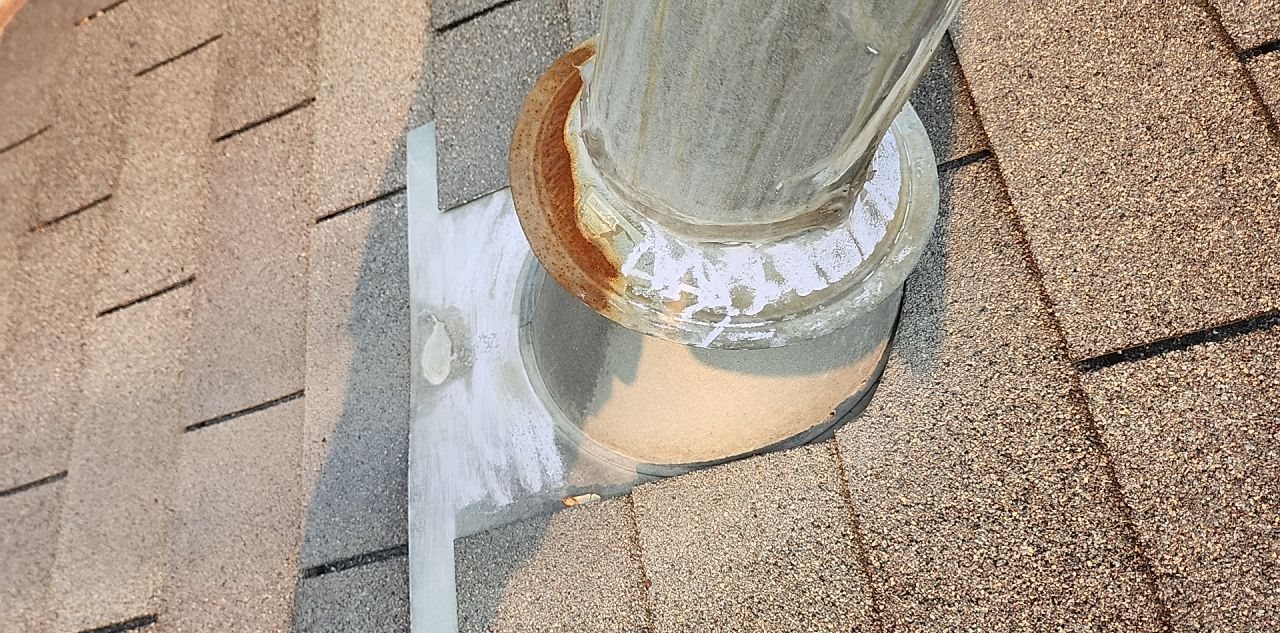
Water travels. It enters at a flashing, a pipe boot, or an ice dam, runs along roof decking or framing, and drips wherever it finds a low point, sometimes several feet or a whole room away.
That's why patching the shingles right above the stain so often fails. On rentals, these are the usual suspects:
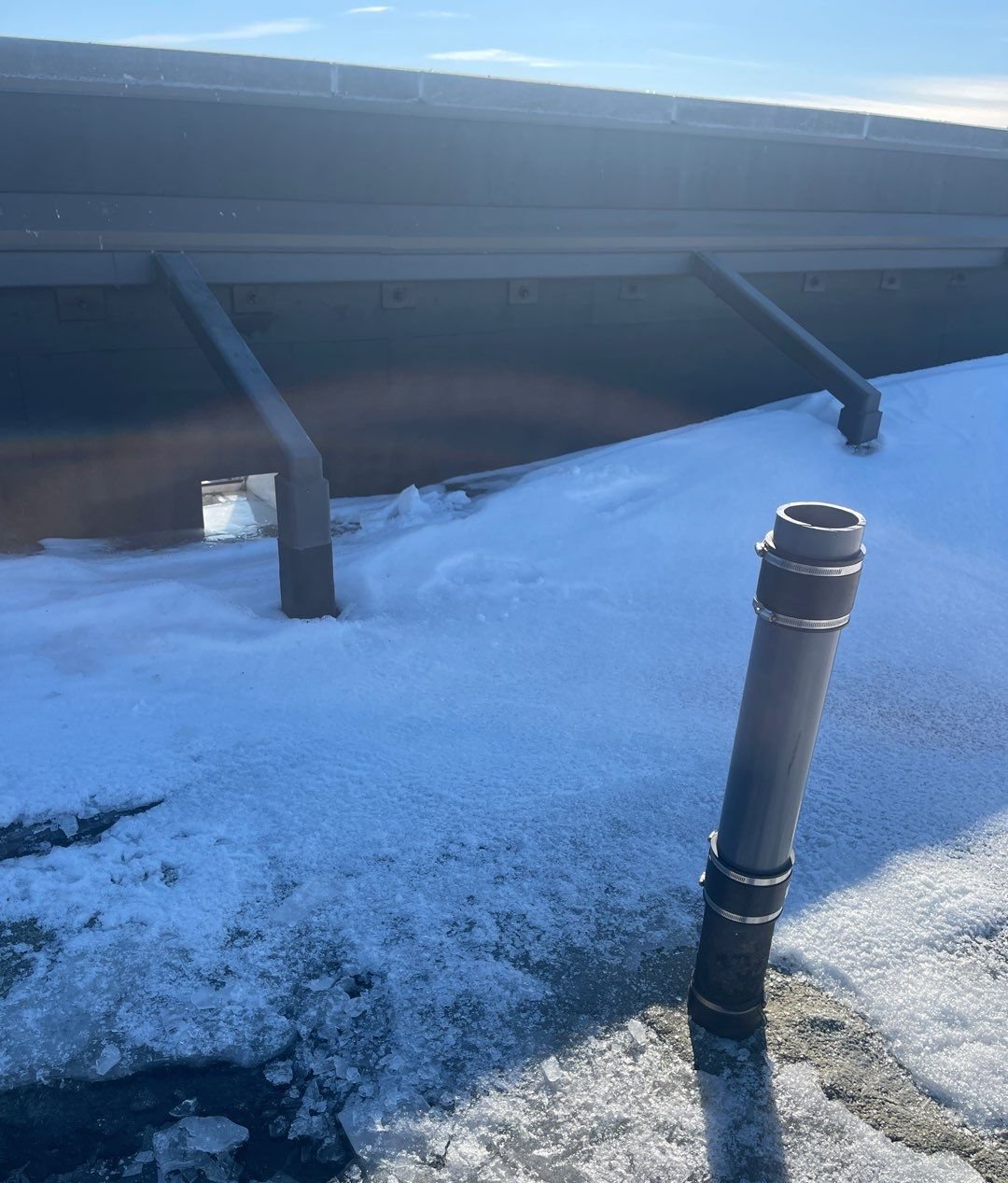
- Plumbing vent pipe boots (the rubber collar around the pipe). The rubber cracks with age and sun.
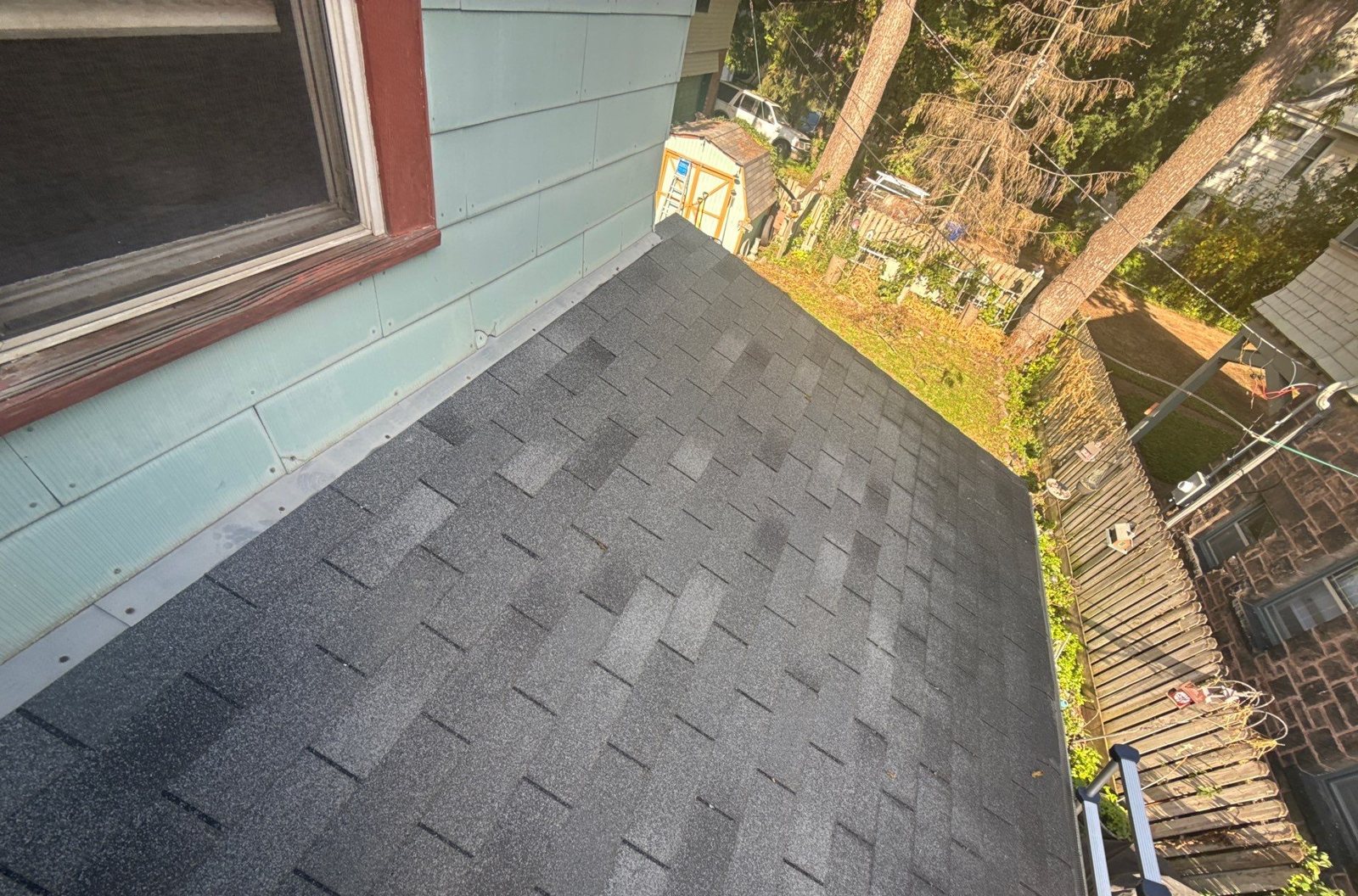
- Roof-to-wall and step flashing where a roof meets a dormer or a taller wall.
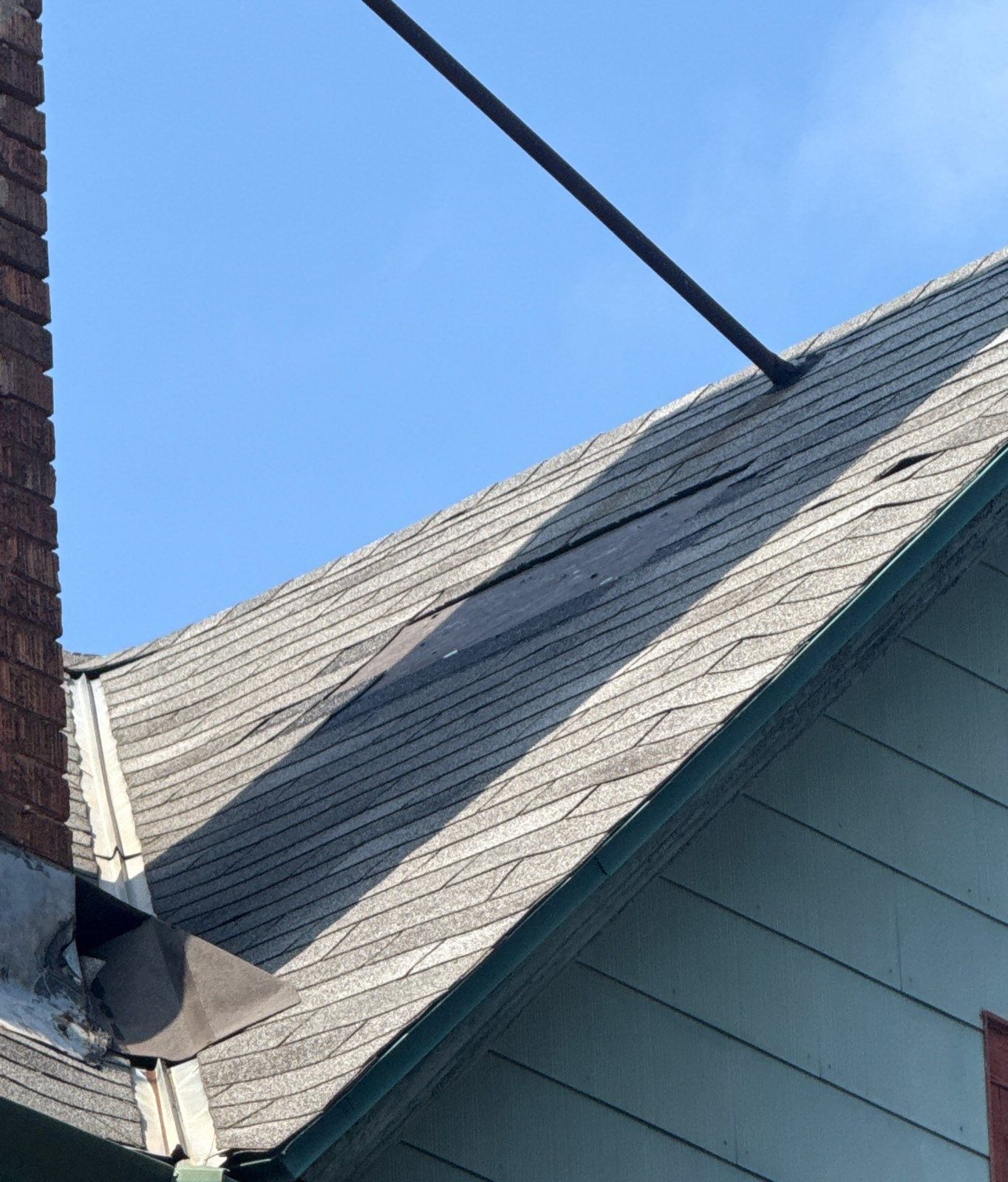
- Chimney flashing on older Twin Cities duplexes and fourplexes.
- Ice dams in winter, backing meltwater up under the shingles at the eaves.
- Clogged or iced gutters pushing water back behind the fascia.
- Skylights and roof vents.
What should a landlord document after a tenant reports a leak?
Keep a dated log of every contact, photos of the inside damage and the roof condition, and copies of every repair invoice. That record protects you with owners, with your insurer, and if a repair timeline is ever questioned.
| Record | What to capture |
|---|---|
| Tenant report | Screenshot of the text or email, with date and time |
| Your response | When you replied, what you told the tenant, when someone arrived |
| Interior photos | Ceiling, walls, floor, and tenant belongings, before cleanup |
| Roof findings | Photos of the source area and what was done temporarily |
| Entry notices | Copy of any notice or written disclosure left in the unit |
| Permanent repair | Invoice, scope, date completed, after photos |
| Follow-up | Date you checked back with the tenant after the next rain |
If the leak lines up with a recent storm, the documentation matters even more. Our photo-documented inspections describe what we see as damage consistent with hail or wind, or as wear, and your insurer decides coverage from there. You can also check recent storm activity at the address with the free Roof & Storm Report.
Got a leak call right now?
We'll find where the water is actually getting in and send you photos you can forward to the owner.
Request a leak inspectionShould I repair the leak or replace the roof?
A single failed boot, flashing section, or small damaged area is usually a repair. Repeat leaks in different spots, widespread worn shingles, or a roof near the end of its life point toward a bigger project.
On rentals, the decision is also about calls. Every repeat leak costs a response, a tenant relationship, and interior repairs. See our roof repair and roof replacement pages for how we scope each, and flat roofing for low-slope apartment buildings.
How do I keep the same unit from calling about a leak again?
Get the roof inspected on a schedule, not just after a complaint. Most repeat leaks come from small details like sealant, boots, and flashing, which are cheap to catch early.
- Inspect each building's roof at least once a year and after major hail or wind.
- Check boots, flashing, and sealant before winter.
- Clean gutters in fall so they aren't full of ice by January.
- Watch for ice dams after big snows and deal with them early.
- Ask tenants to report ceiling stains the day they notice them.
- Keep every inspection report in the building file.
That's what a Repair King maintenance agreement is built for: scheduled visits, honest advice on what needs fixing now and what can wait, and a photo record per building. If you manage a larger portfolio, our property manager storm response page covers what happens across all your buildings after a storm.
Put your buildings on a maintenance plan
Scheduled roof checks and a photo record per building, so fewer tenant texts ever get sent.
Questions people also ask
How fast does a Minnesota landlord have to fix a roof leak?
Minn. Stat. 504B.161 requires keeping the premises in reasonable repair but doesn't give a single hour count for leaks. Under 504B.385, a tenant can use rent escrow for many violations not corrected within 14 days of written notice. Active leaks should get same-day protection regardless; check with an attorney for your situation.
Can I make my tenant responsible for roof repairs in the lease?
504B.161 allows specified tenant repair agreements only in a conspicuous writing with adequate consideration, and it can't waive the habitability covenants or the landlord's duty to maintain common areas. Ask a Minnesota attorney before writing that into a lease.
Who pays for a tenant's belongings damaged by a roof leak?
That depends on the policies involved, usually the owner's property policy and the tenant's renters policy. We document the roof condition and interior damage with photos; the insurers decide coverage.
Should the tenant put a bucket under the leak or poke the ceiling?
A bucket and towels, yes. Poking a bulging ceiling or standing under it, no. Keep people clear of the area and get someone qualified on site.
Why does my rental's ceiling only leak when snow melts?
That pattern usually points to an ice dam at the eaves pushing meltwater under the shingles, or ice-filled gutters. See our ice dam removal page for how steam removal works.
Sources
- 504B.161 Covenants by landlord or licensor (Minnesota Revisor of Statutes)
- 504B.385 Rent escrow (Minnesota Revisor of Statutes)
- 504B.211 Residential tenant's right to privacy (Minnesota Revisor of Statutes)
- 504B.001 Definitions (subd. 14 Violation) (Minnesota Revisor of Statutes)
Repair King is a licensed contractor, not an insurance company, public adjuster or attorney. We inspect, document and repair. Coverage decisions belong to your insurer, so read your own policy and ask your agent.


