

How to tell hail damage from normal wear on a Minnesota roof (photo guide)
Hail leaves random, roughly round hits on shingles, usually with a soft bruise underneath and matching dents on vents and gutters. Normal wear is even, slope-wide granule loss with no matching metal damage.
The storm notice is on the door. A few days later you pull the downspout extension and a little pile of dark sand slides out into your palm. Those are shingle granules, and now you're wondering if the storm did that or if the roof is just getting old.
You can't tell from the granules alone, because aging roofs and hail both shed them. The answer is on the shingles and the soft metals: hail leaves random, roughly round hits (often with a soft, bruised spot underneath) and dents in vents and gutters, while wear tends to be even, slope-by-slope, and shows up without matching dents anywhere else.
What does hail damage look like on shingles compared to normal wear?
Hail damage on asphalt shingles is a roughly round spot where granules were knocked off and the mat underneath was cracked or bruised, scattered randomly across the slope. Normal wear is gradual granule loss spread fairly evenly, worst where the sun and runoff hit hardest.
The engineers at Haag, a forensic firm that has studied hail on roofing for decades, group hail damage to shingles into broken edges, bruises, punctures and torn edges. A bruise is the one people miss. The top can look like a few granules are gone, but the mat inside is broken.
That's also why a photo from the ground or a drone can't settle it. An inspector has to put hands on the shingle.
Hail vs. blistering vs. age vs. scuffs: how do they compare?
Look at four things: the shape of the mark, how the marks are spread across the roof, where they show up, and what's under them. Hail is random and leaves a bruise or fracture. Blisters, aging and scuffs each leave a different pattern.
| Mark | Shape | Pattern on the roof | Where it shows up | What's under it |
|---|---|---|---|---|
| Hail impact (bruise) | Roughly round or oval spot of missing or crushed granules; can be bigger than a quarter with larger hail | Random, scattered, more on the slopes facing the storm | Field of the shingle, edges, ridge caps; matching dents on vents, gutters and other soft metals | Soft spot or cracked mat when pressed; asphalt may be exposed |
| Blister (open or closed) | Small raised bubble, or a small crater where it popped; Haag says usually 1/4 inch or less | Clusters or a "rash" across one area or the whole roof | Often worse on hotter slopes and over hot attics | Hard, pitted spot down toward the mat; no dent, no soft spot from an impact |
| Age / weathering granule loss | No distinct spots; shingle looks thin, shiny or blotchy | Even, gradual, slope-wide | Worst on sun-exposed slopes and where water runs off | Firm mat; asphalt gets brittle with age |
| Mechanical / foot scuff | Smears, scrapes, edge scuffs, tool marks | Lines, paths or groups, not random | Around ladders, vents, satellite dishes, valleys, walk paths | Granules rubbed or pushed aside; no bruise |
What does hail damage look like up close?
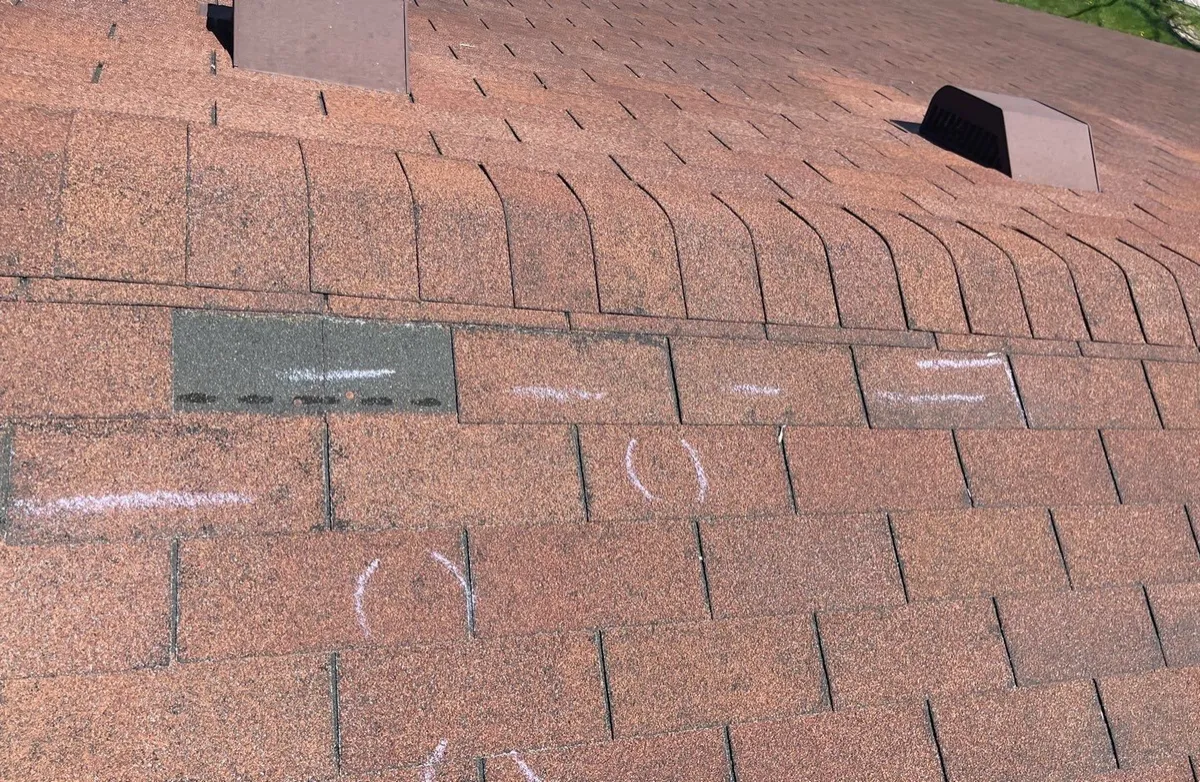
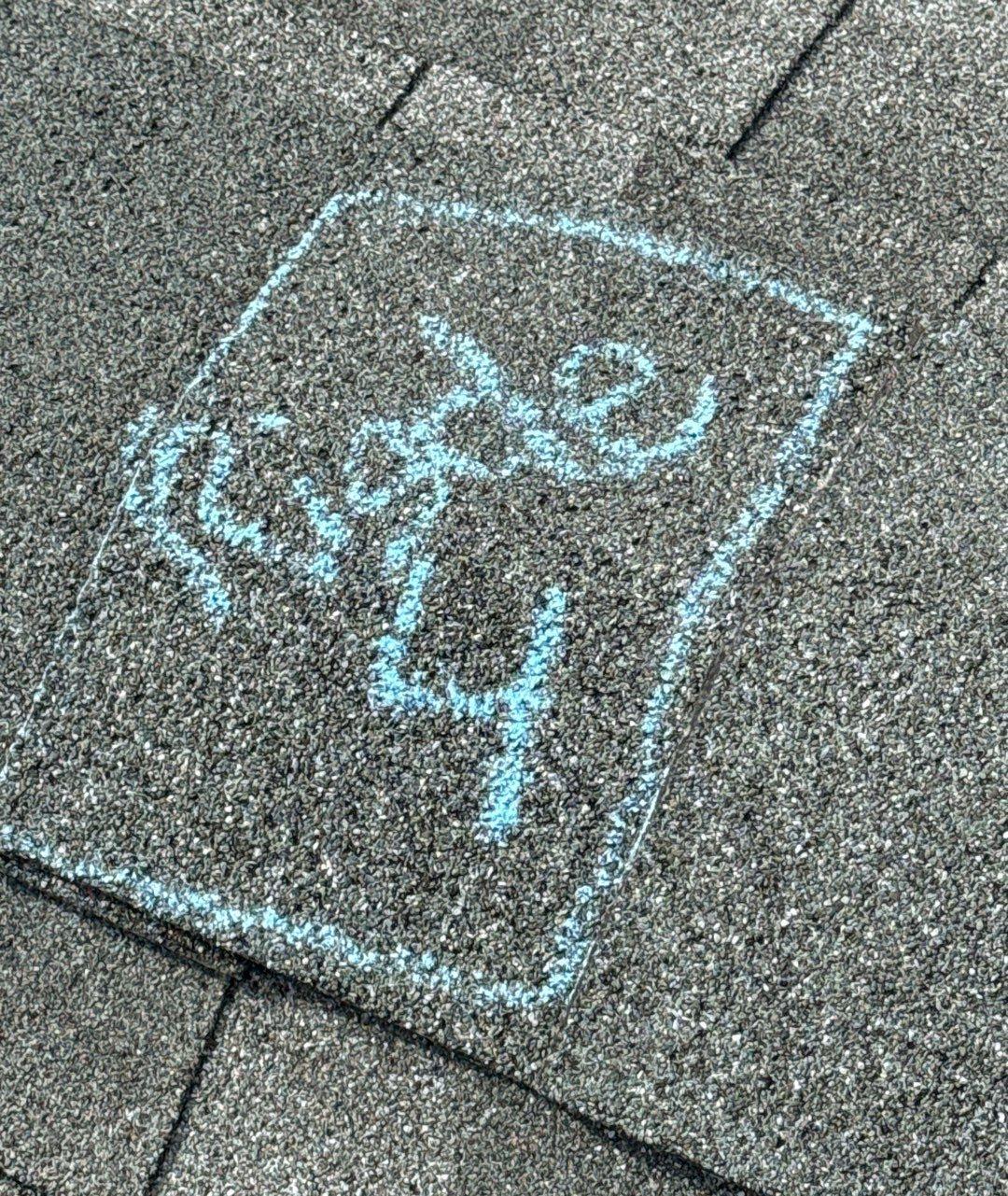
When we chalk a roof, each circle marks a spot where granules are knocked loose and the shingle gives a little when pressed. The circles don't line up. They're scattered, like the hail was. The photo at the top of this article is a real example from one of our inspections.
How is blistering different from hail?
Blisters are small, they come in groups, and they're hard to the touch. A popped blister leaves a little pit with clean edges. Nothing around it is dented.
What does normal granule loss from age look like?
Wear is gradual and fairly even. Whole slopes look faded or thin, the south and west slopes usually look worse than the north, and you don't find matching dents on the metal.
A few granules in the gutter are common on many roofs, and Haag notes that as shingles age, chunks of granules can flake away from the mat. Seeing granules at the downspout tells you the roof is shedding. It doesn't tell you why.
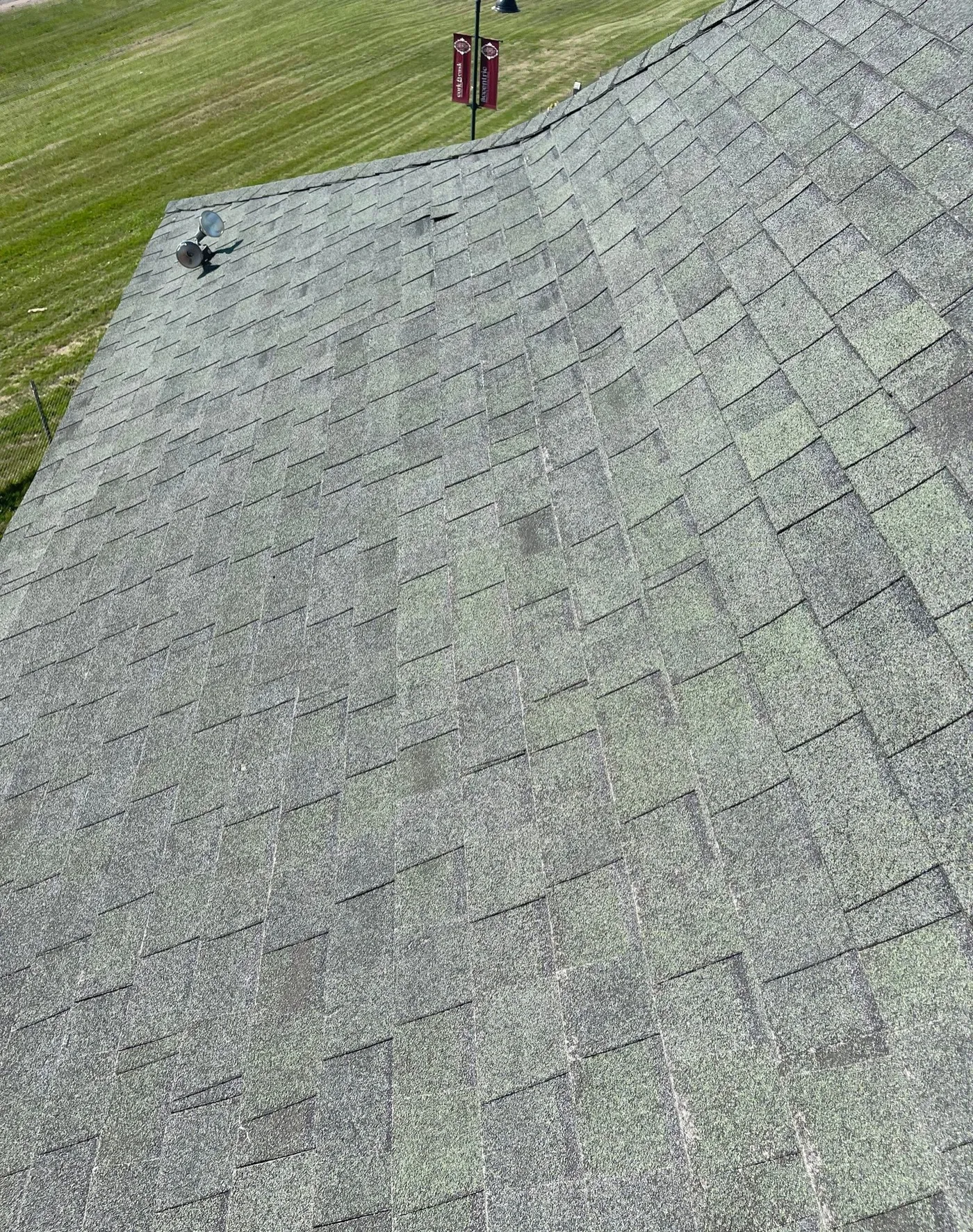
If the shingles also crack when lifted, read whether brittle shingles can be repaired before anyone tries a spot fix.
Can old shingles and hail damage be on the same roof?
Yes, and that's very common. An aging roof can have blisters and worn slopes and still have fresh hail hits on top of them. The job is to separate the two and document each one honestly.
Which other signs on the house point to hail?
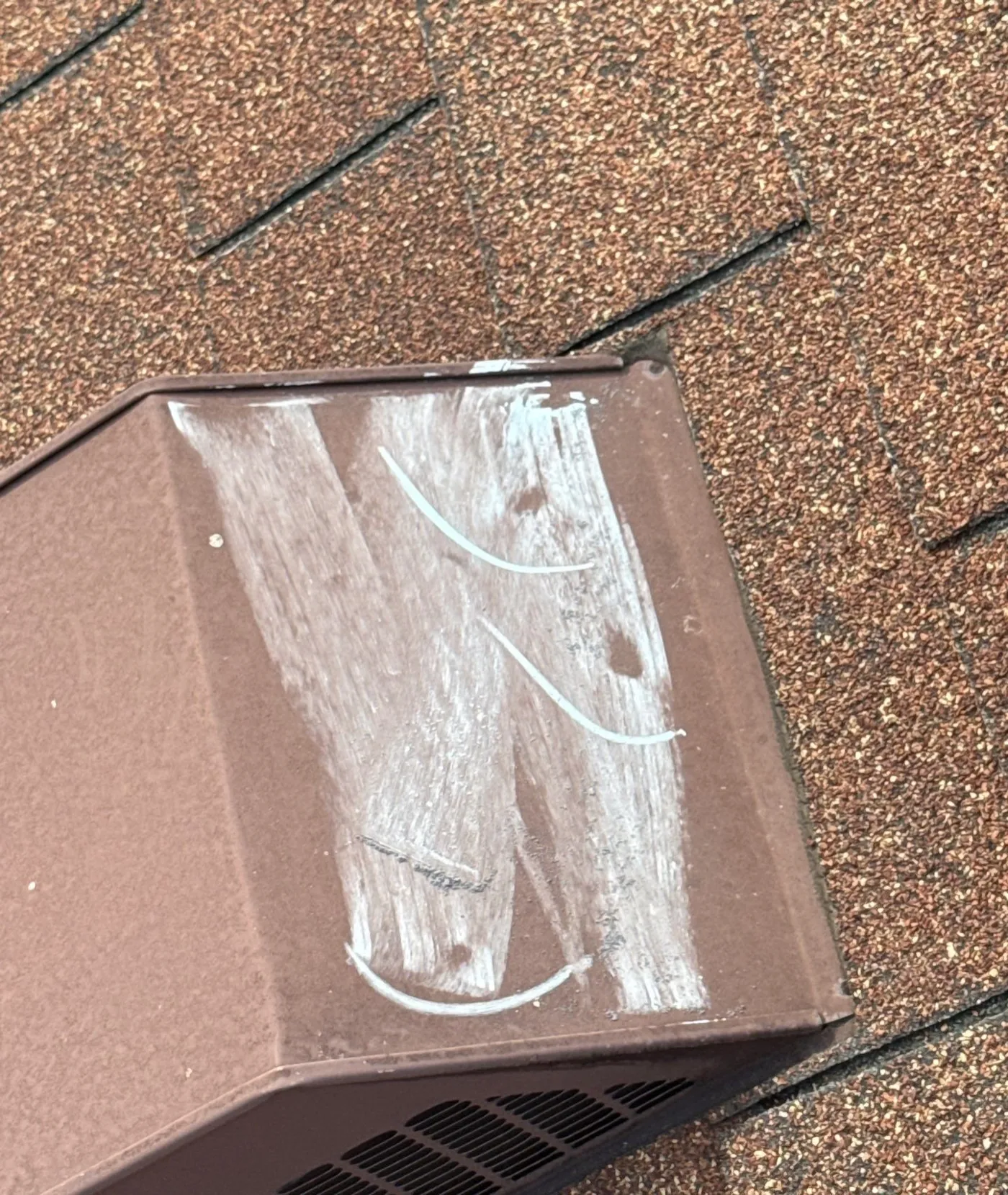
Soft metals. Dents in roof vents, gutters, downspouts, window wraps and flashing, plus chips or spatter marks on siding and painted surfaces, show that hail actually hit that house. Wear and blisters don't dent metal.
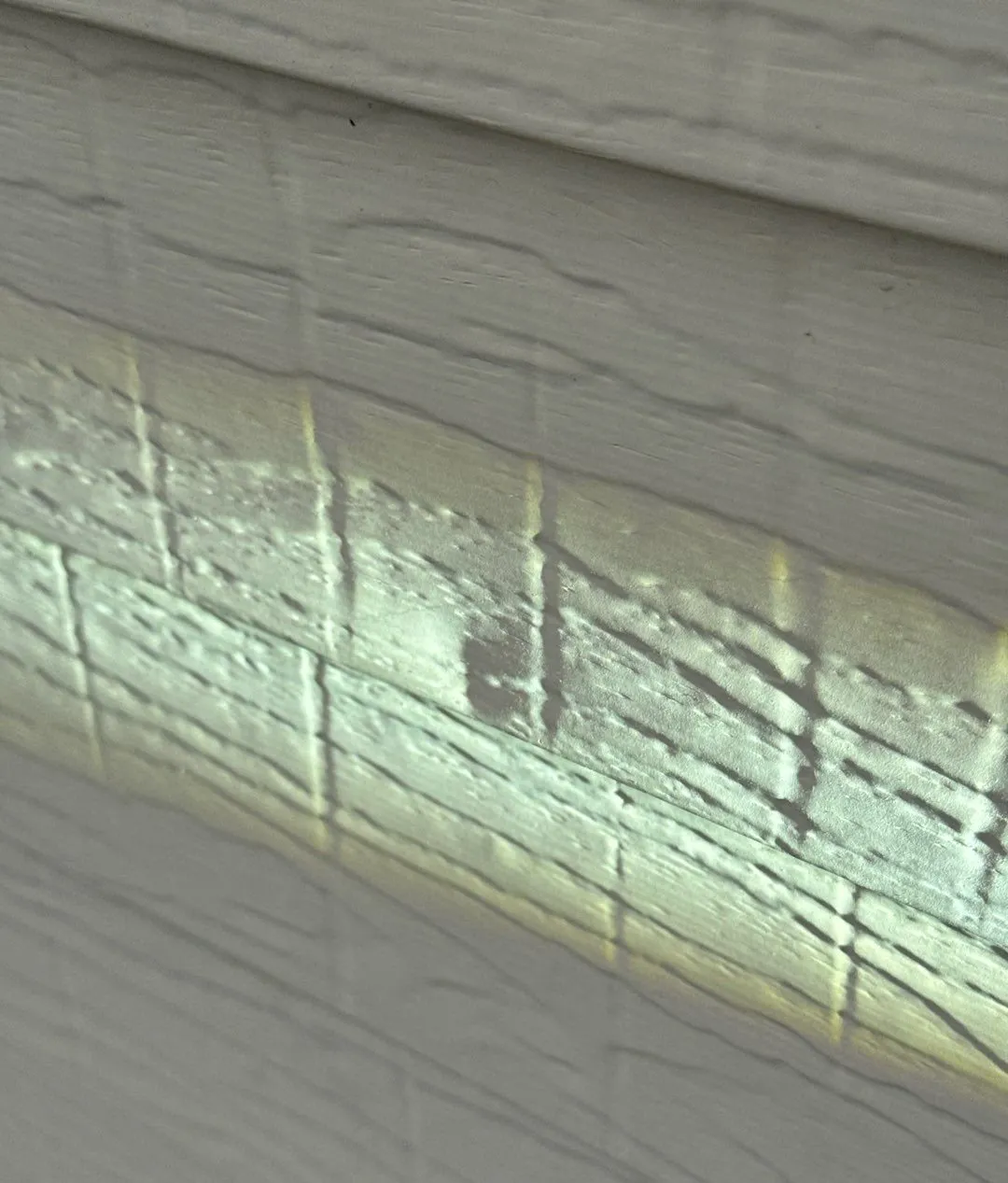
Some dents only show up with a flashlight held flat against the surface. Raking light makes a shallow dent throw a shadow you'd never see at noon.
Does the storm date need to match the damage?
It should. Damage consistent with hail is much easier to document when there's a known hail event at or near your address, and when the damage looks fresh compared to the weathering around it.
NRCA notes that whether hail actually fell at a site can be determined from statements and weather reports. Local weather and meteorology reports log hail by date. You can also use our Minnesota storm history or run your address through the free Roof & Storm Report.
Fresh hail hits usually look darker and sharper, with clean granule edges. Old hits that have weathered through a few summers look dull. If you're curious how big hail has to be to matter, we covered that in how big hail has to be to damage a Minnesota roof.
Not sure what you're looking at?
Send us a photo of the granules, a dented vent or a spot on a shingle and we'll tell you what it looks like.
Send a PicWhat can I safely check from the ground?
Plenty, and you don't need a ladder. Look at the metal, the gutters and the siding first, take photos with dates, and leave the shingles to someone who is trained and harnessed.
- Check the downspout outlets and gutter ends for granules, and note if it's a lot more than usual.
- Look at the gutter faces and downspouts for small round dents, especially on the side the storm came from.
- Use binoculars or a phone zoom on roof vents, pipe flashings and the ridge for dents or bright spots.
- Check window wraps, AC unit fins, mailboxes, grill lids and painted wood for fresh dings or spatter marks.
- Look at the siding in low sun or with a flashlight held flat.
- Photograph everything with the date, plus a shot of the neighbors' roof work if trucks are on your street.
- Don't press, pick, patch or seal anything on the roof before it's documented.
What happens during a hail inspection on the roof?
The inspector walks each slope, feels suspect spots for bruises, chalks the hits, and often marks a test square to count hits in a set area. Soft metals and other elevations get photographed too.
A test square is usually a 10-by-10-foot area per slope. Counting hits inside it gives a consistent sample instead of a guess.
We document what we see: photos, chalk marks, test-square counts, soft-metal dents and measurements. We don't decide coverage. If an adjuster looks at the same roof, we can walk them through the construction and damage observations. For how a few damaged shingles get handled, see when insurance says only a few shingles are damaged.
I think it's hail. What should I do next?
Get the roof documented by someone who will show you photos of every mark, then decide on next steps with your own agent. Don't let a door-knocker's quick look be the only record.
Questions about whether to open a claim belong with your agent and your policy. Our page on whether to file a hail claim lists good questions to ask. Timing matters too: for hail, plan on one year from the storm date and check the Suit Against Us section of your policy. More on that in how long you have to file a hail claim in Minnesota.
If the same storm brought strong wind, check for lifted or creased tabs as well. Our guide to creased and lifted shingles covers what that looks like. For the full process after a storm, the storm damage guide walks through it step by step, or you can request a photo-documented inspection.
Was your address in the hail path?
Run the free Roof & Storm Report to see hail and wind reported near your home, then decide if an inspection makes sense.
Questions people also ask
Are granules in my gutter a sign of hail damage?
Not by themselves. Aging shingles shed granules too, and Haag notes that weathered shingles can lose chunks of granules over time, so granules only tell you the roof is shedding. Look for matching dents on vents, gutters and downspouts, then have the shingles checked by hand.
Can a blister be mistaken for a hail hit?
Yes, especially once a blister pops and leaves a small dark pit. Haag notes blisters are usually 1/4 inch or less, come in clusters, and are not caused by hail. A hail bruise feels soft when pressed; a blister crater is hard.
Why do some slopes have hail damage and others don't?
Hail usually falls at an angle with the wind, so the slopes facing the storm take more hits. That's one reason inspectors check and document each slope separately.
Can a drone tell me if my roof has hail damage?
A drone can show granule loss, missing shingles and dented metal, which is useful. It can't feel for a bruise, so it can't confirm the mat is broken. Hands-on inspection is still needed on suspect spots.
Should I seal or patch spots I think are hail damage?
No, not before it's documented. NRCA warns that spreading coating or mastic, or puncturing blisters, covers up evidence a roofing contractor needs to see. Tarp an actual opening if water is getting in, and leave the rest alone.
Sources
- Hail Damage to Asphalt Shingles (Haag Engineering)
- Of Apples and Asphalt Comp Shingles: 'Bruise' Defined (Haag)
- Roof Repair After a Hailstorm (National Roofing Contractors Association)
- Minn. Stat. 65A.26 (Minnesota Revisor of Statutes)
Repair King is a licensed contractor, not an insurance company, public adjuster or attorney. We inspect, document and repair. Coverage decisions belong to your insurer, so read your own policy and ask your agent.


