Why Waite Park is differentWhy are so many Waite Park roofs flat, shared or commercial?
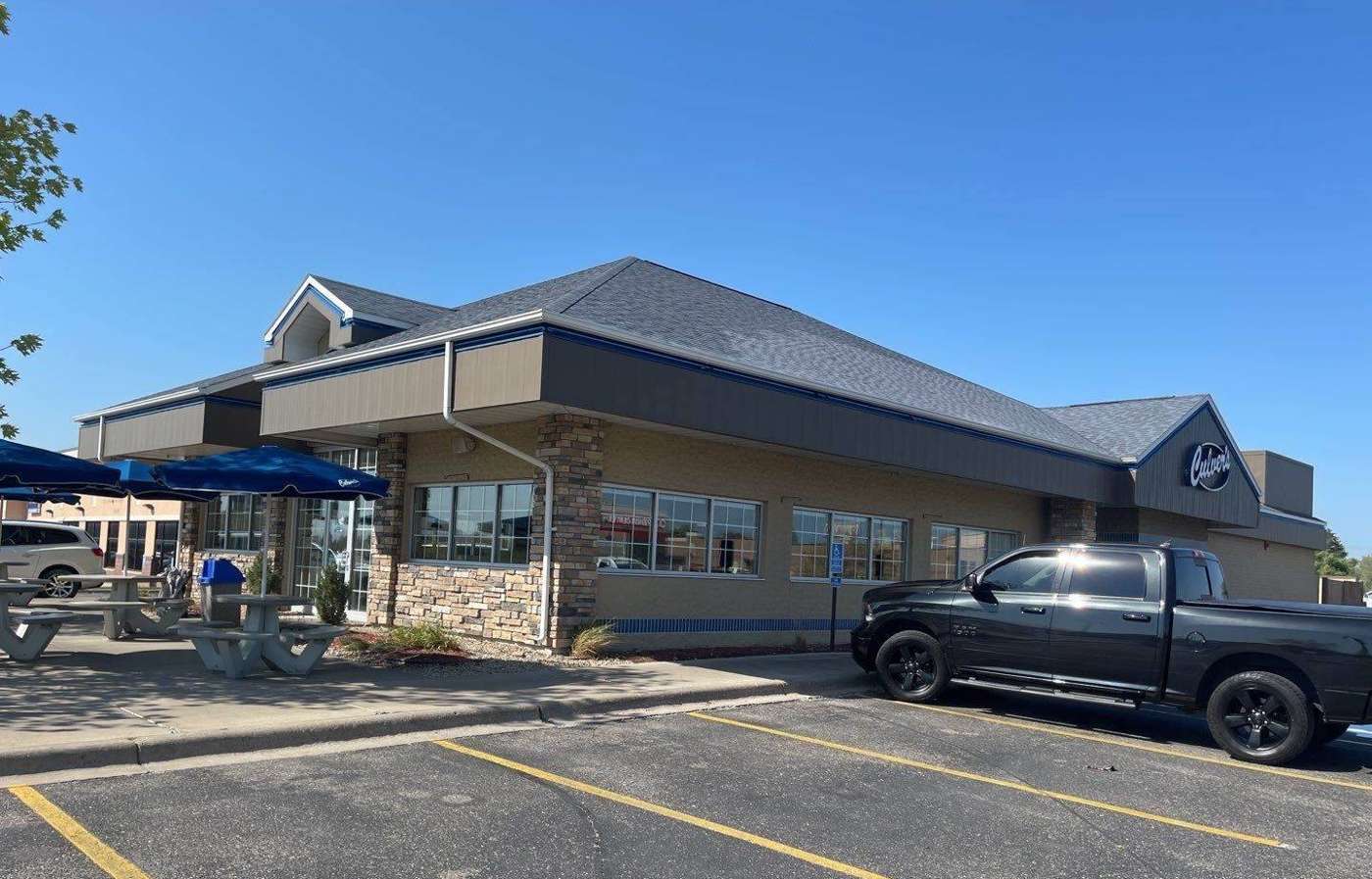
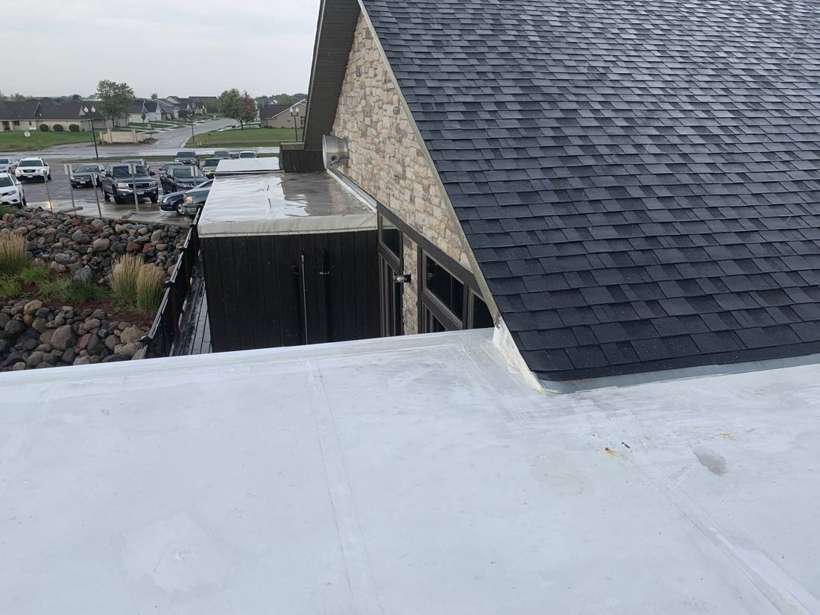
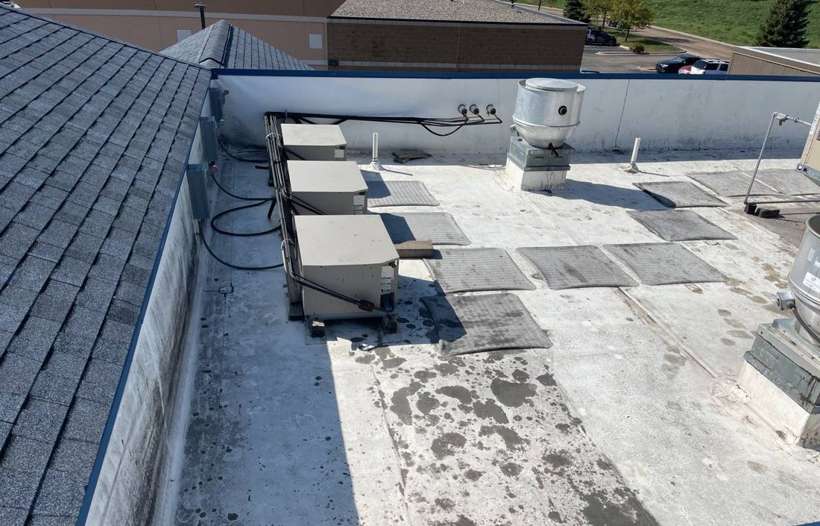
Waite Park has more renters and more big buildings than most Minnesota cities its size. Census data shows about half of its homes are owner-occupied and roughly 35% are in buildings with 20 or more units, and Division Street and Highway 23 add a long line of restaurants and stores. Those buildings usually have low-slope roofs with rooftop units, drains and parapet walls, which need a different inspection than a house.
The city grew around work, not lake cabins. In 1890 James J. Hill bought 300 acres here for the Great Northern Railway's car shops, built in 1890 and 1891, and quarry jobs followed. Waite Park incorporated as a village on March 20, 1893. Today Crossroads Center sits just across the city line in St. Cloud, and the retail strip along Division Street continues into Waite Park.
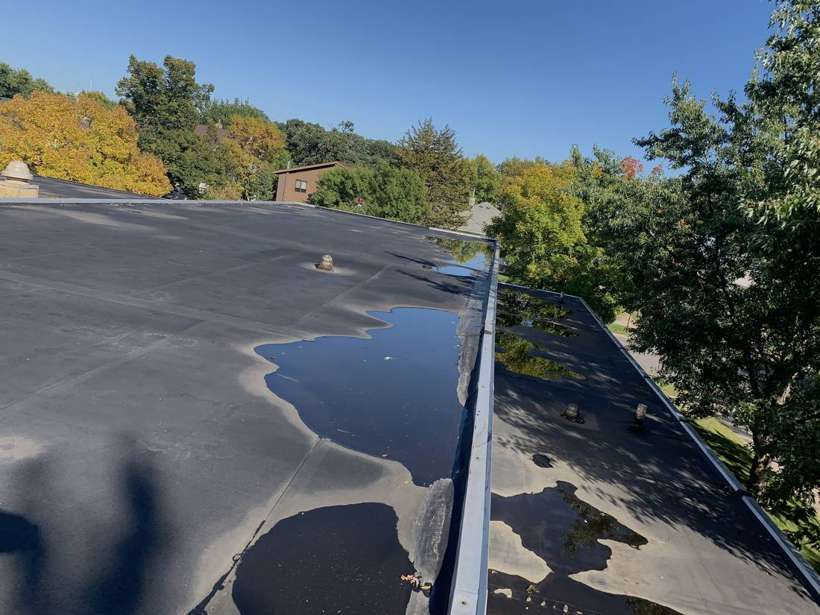
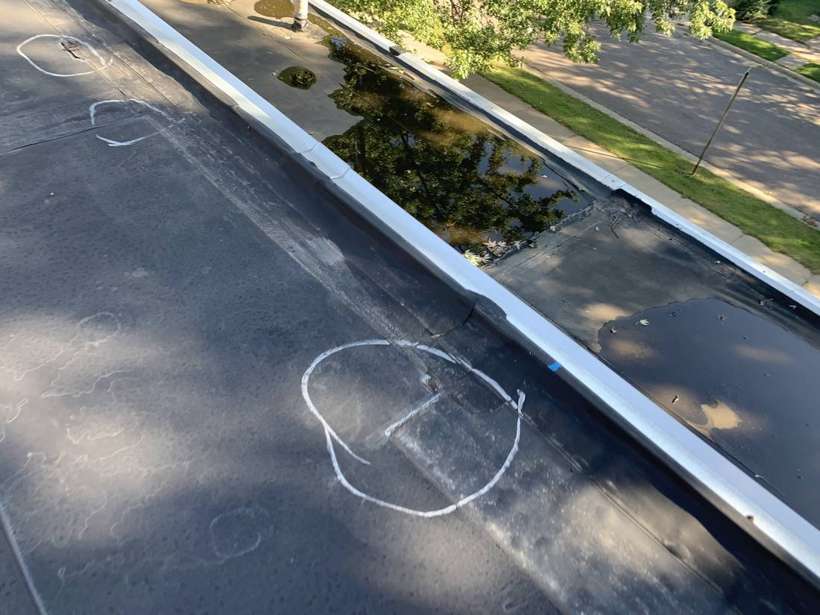
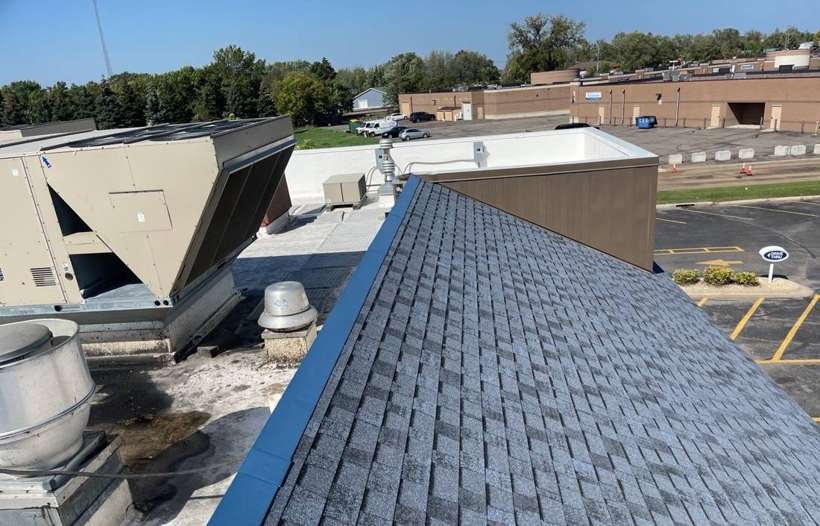
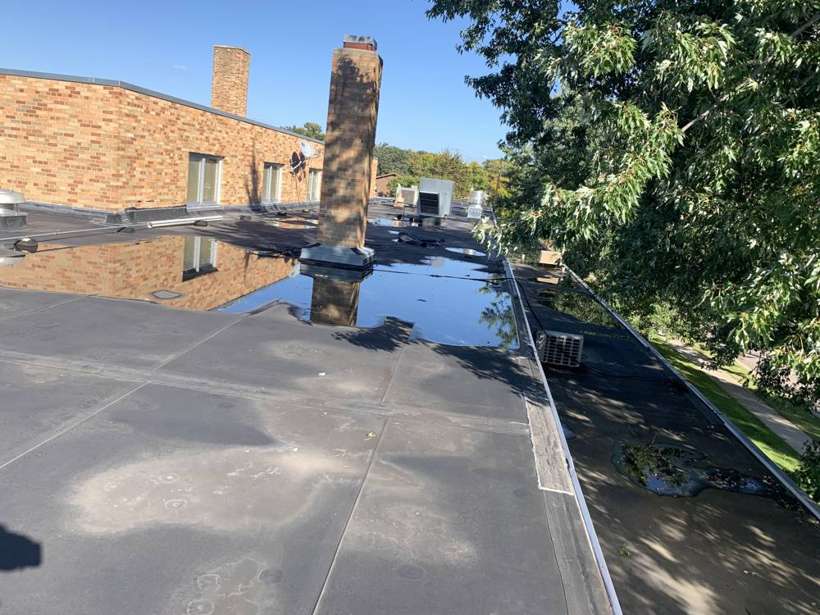
For apartment and commercial owners, the roof problems we photograph most are standing water, open seams at the edges and worn flashing around units and vents. The photo beside this text is from Washington Place in neighboring St. Cloud: water sitting on a black rubber roof long after the rain stopped. On a roof like that, the ponded areas and the seams around them get checked first after hail.
For houses, Waite Park's own roofing handout spells out the basics: an ice and water barrier on every roof except detached garages, running from the eave to 24 inches inside the exterior wall, and a solid deck under asphalt shingles. We photograph both before the new roof covers them.