Why St. Louis Park is differentWhy does a St. Louis Park re-roof start with the lot, not the roof?
Much of St. Louis Park was built fast and close together. The historical society says the village allowed 30- and 40-foot lots after World War II, and 60 percent of today's homes went up between 1946 and 1954. On lots that narrow, tear-off debris, ladders and the dumpster all have to fit next to a neighbor's house, and the original board decking is often still under the shingles.
In 1950 St. Louis Park issued a record 1,122 building permits, the third most in Minnesota behind Minneapolis and St. Paul. Between 1950 and 1956, 66 new subdivisions were recorded and 2,700 homes were built, many of them for an average price of about $7,000. Builder Adolph Fine alone was responsible for 219 of the homes from those record years. The Planning Department had argued for 50-foot lots, but the village allowed narrower ones, and those blocks are still here.
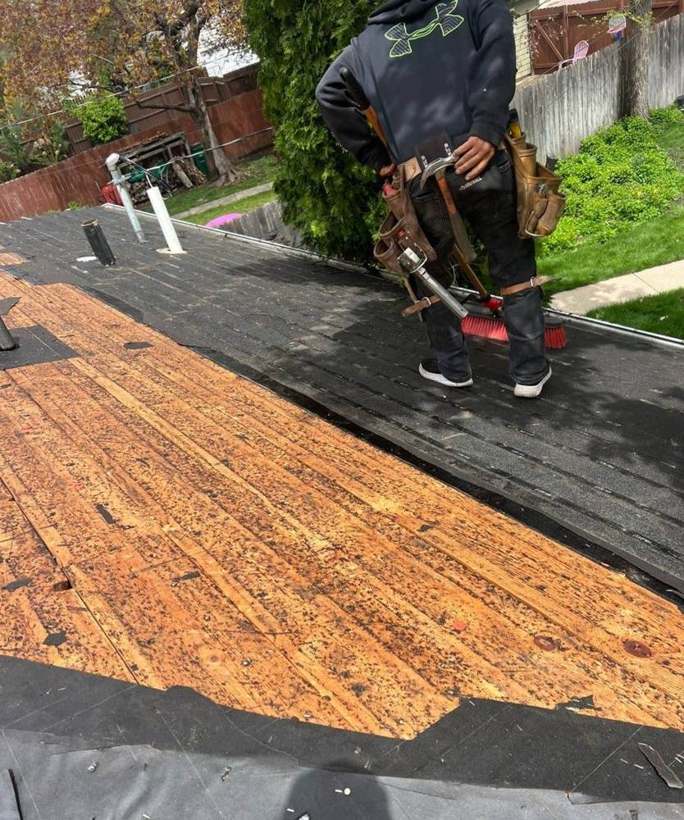
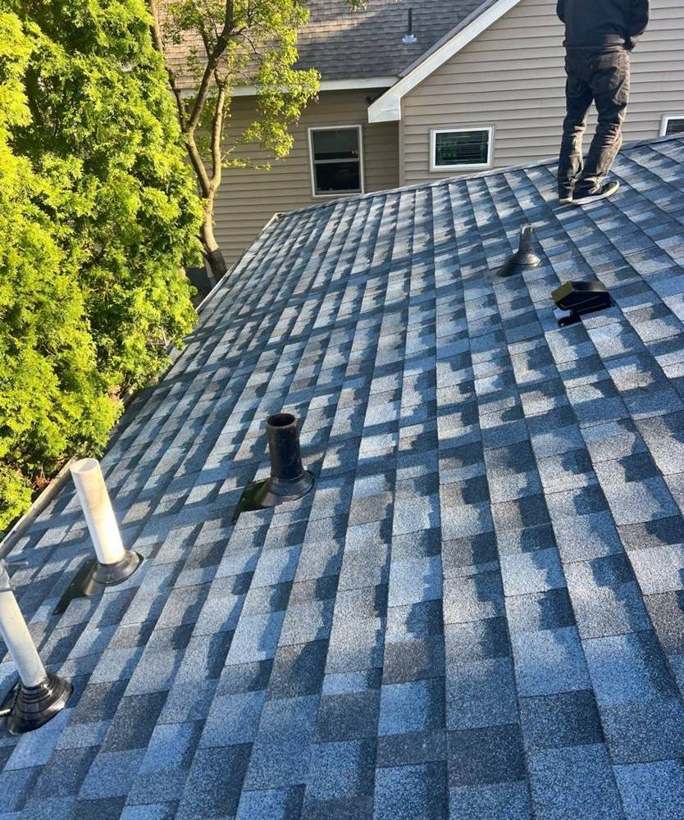
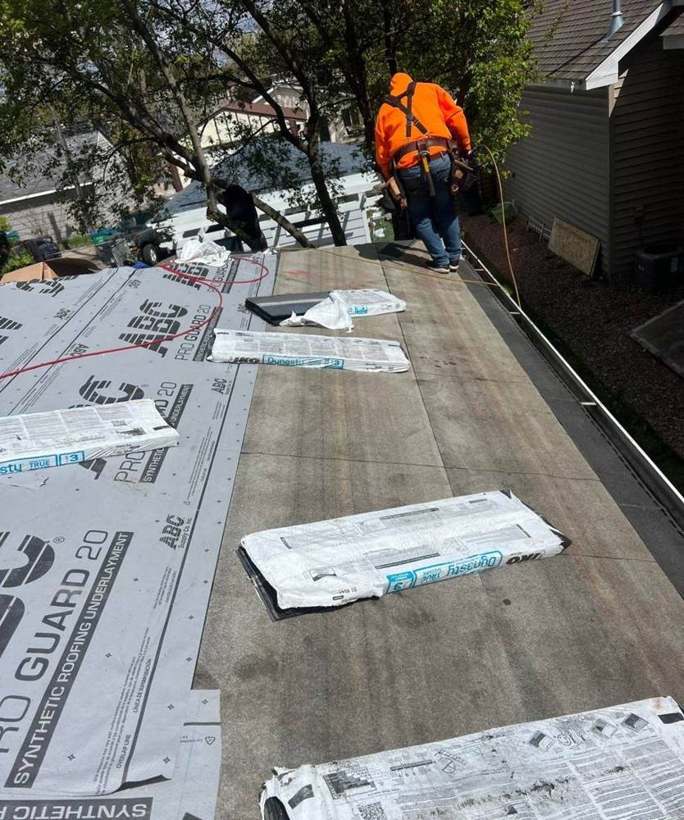
On a 30- or 40-foot lot, the side yard can be a few feet of grass between two houses. Before tear-off we plan where the dumpster goes, tarp the neighbor's side as well as yours and keep shingles from sliding onto the next roof. When the old roof came off our May 2024 re-roof in east St. Louis Park, it showed the original board decking under the shingles, the same kind of deck many homes from that boom still have.
Board decks need a closer look than plywood. Boards cup, split and leave gaps between them, so we check every run for nailing and soft spots before underlayment goes down. St. Louis Park's ePermits system even has a separate roof sheathing permit, so if decking has to be replaced we tell you before it becomes a surprise.