

What happens at a roof adjuster inspection in Minnesota (and what your contractor can and can't do)
At a roof adjuster inspection the adjuster confirms the storm date, walks the house, checks each roof slope and the soft metals, looks at interior leak spots, and later sends a written estimate. In Minnesota your contractor can attend to show documented damage and explain construction, but cannot negotiate the claim, interpret your policy, or touch your deductible.
The most common misconception about the adjuster appointment is that your contractor shows up to "fight" the insurance company for you. In Minnesota a residential roofer is legally barred from adjusting your claim or interpreting your policy, so the contractor's real job at the inspection is construction: showing the adjuster what is on the roof, how it was built, and what a proper repair takes.
That still matters a lot. Below is what actually happens at the appointment, how to get ready, and exactly where the contractor's role starts and stops.
What happens during a roof adjuster inspection?
The adjuster confirms the claim details with you, walks the outside of the house, usually gets on the roof to check each slope, looks at soft metals like vents and gutters, and checks any interior leak spots. Most then write up an estimate (often called a scope) and send it to you after the visit.
The order varies by adjuster and carrier, but a typical visit runs like this:
- Quick conversation. The adjuster confirms the date of loss, what you noticed, and whether there is interior damage. Have the storm date ready.
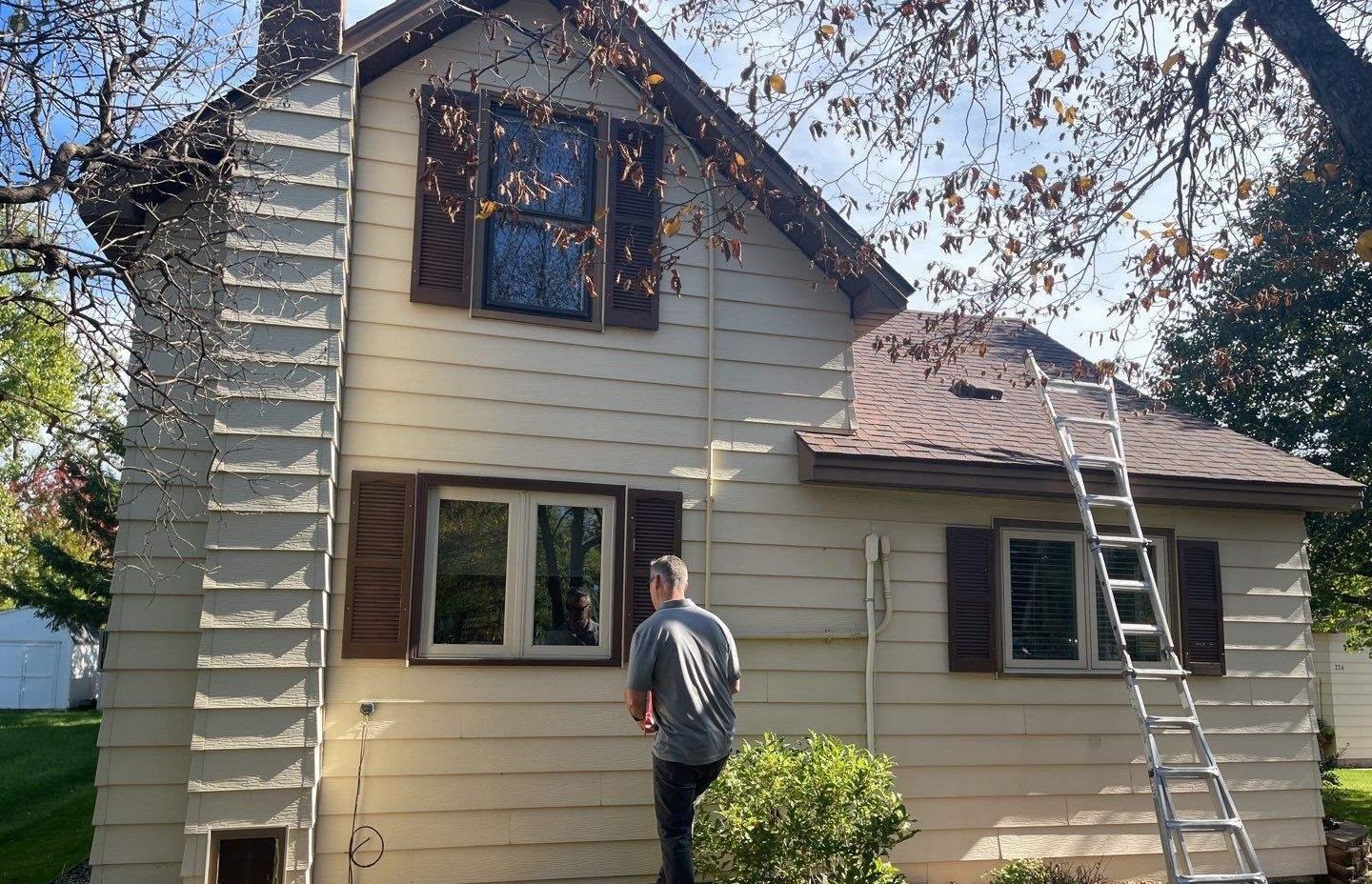
- Ground walk. Gutters, downspouts, window wraps, siding, screens, AC unit fins and anything else that dents. These "collateral" items help show a storm passed over the property.
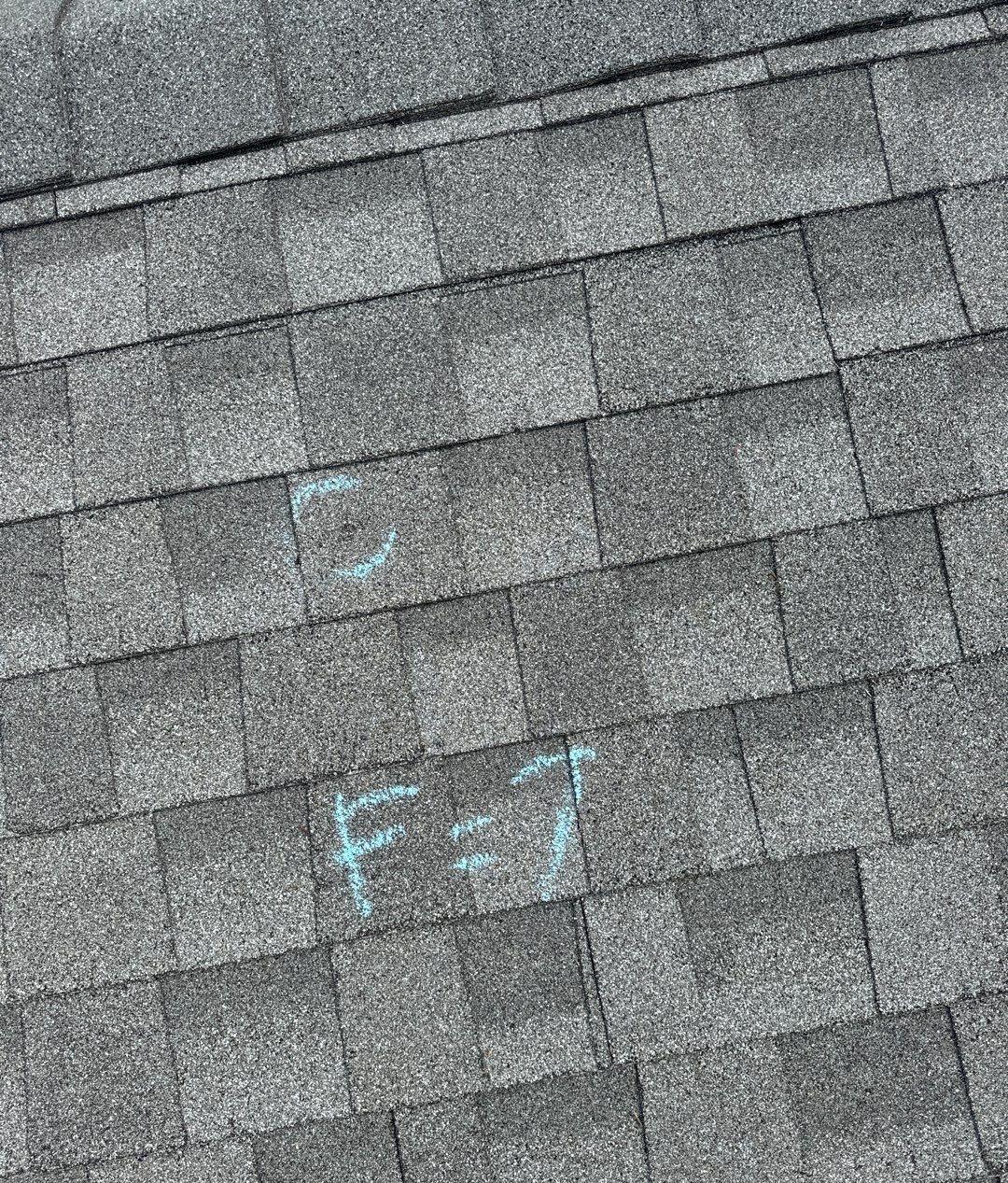
- On the roof. The adjuster looks at each slope, often marks hits with chalk and may lay out a test square on individual slopes to count damaged shingles in a set area.
- Soft metals on the roof. Roof vents, pipe flashings, ridge vents and drip edge show dents clearly and help separate storm marks from age.
- Measurements and photos. Slope sizes, pitch, layers, and photos of what they find.
- Interior and attic. If you reported a leak, they will want to see the ceiling stain and sometimes the attic or decking above it.
Some adjusters tell you their impression on site. Many don't, and the decision comes later in writing. Neither one is a bad sign by itself.
How long does a roof adjuster inspection take?
There is no fixed length. A simple single-story roof can be quick; a steep, cut-up roof with interior damage takes longer. Block out the full appointment window and plan to be home for all of it.
How should I prepare for the adjuster inspection?
Have the storm date, your claim number, your own photos, and a list of every spot you have noticed damage or leaking. Clear access to the attic hatch and any interior stains, and make sure the adjuster can reach every side of the house.
- The storm date you are claiming. If you are unsure, check your address for hail and wind or look at local storm history first.
- Your own photos from right after the storm: dented gutters, vents, siding, hail on the ground, ceiling stains.
- A written list of interior leak spots, even small ones, so none get missed.
- Attic access cleared, with a light if the hatch is in a closet.
- Gates unlocked, pets inside, vehicles moved off the driveway if a ladder needs to go there.
- Your contractor's inspection photos and notes, if you already had one done.
If you aren't sure the date you gave your insurer is the right one, sort that out before the visit. Our page on how long you have to file a hail claim in Minnesota covers the timing side.
Check your address for hail before the adjuster comes
See what storms were reported near your home so you walk into the appointment with the right date.
Get my Free Roof & Storm ReportWhat does the adjuster look for on the roof?
They look for damage consistent with the reported storm, spread across the slopes, and they compare it against normal wear, blistering, foot traffic and manufacturing marks. Test squares, soft metal dents and the direction each slope faces all feed into that.
What is a test square?
A test square is a marked area on one slope (often 10 feet by 10 feet, which is one roofing "square" of 100 square feet) where the inspector counts the hits inside it. The count is commonly chalked right on the shingles so it shows up in photos.
How many hits a carrier wants to see before it will pay for a slope, and whether it repairs or replaces, depends on the carrier and the policy. That is the insurer's call, not the contractor's. If you get a repair-only answer, read what decides whether a few shingles can be repaired.
Why do vents and gutters matter so much?
Thin metal dents and keeps the mark. A dented vent cap or gutter backs up what the shingles show. Telling a hail bruise from an old blister is a separate skill; our photo guide to hail damage vs. normal wear walks through it.
Will the adjuster check inside the house and the attic?
Usually, if you reported interior damage. Point out every ceiling stain and let them see the attic or decking above it if they ask.
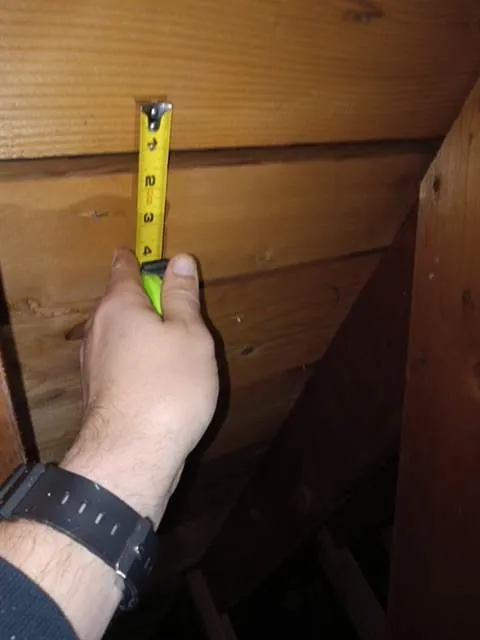
Roof decking condition can change what a proper replacement involves. Gaps between old board decking, rot, or multiple shingle layers are construction facts the estimate has to account for.
Should my contractor be at the adjuster inspection in Minnesota?
It often helps, as long as you understand the contractor is there to explain construction and point out documented conditions, not to argue your claim. Minnesota law draws that line clearly.
The same statute says that if a contractor breaks these rules, the insurer does not have to consider that contractor's estimate. So a roofer who "takes over" your claim can actually hurt it. The contractor also has to give you written notice of these rules with its first estimate.
| A contractor CAN | A contractor CAN'T |
|---|---|
| Be present and walk the roof with the adjuster | Represent you or negotiate the settlement |
| Point out damage they documented and photographed | Tell you what your policy covers or means |
| Share measurements, pitch, layers and decking conditions | Adjust the claim (unless licensed as a public adjuster) |
| Explain construction methods, matching and repairability | Promise to pay, cover or rebate your deductible |
| Provide an itemized repair or replacement estimate | Offer you money or gifts for an inspection, a claim or a referral |
| Answer construction questions afterward | Promise the claim will be approved |
What does Repair King do at an adjuster meeting?
We observe, document and explain construction. That means our photo report, chalked test areas, measurements, soft-metal photos, notes on things like decking or flashing, and a written estimate. When the adjuster asks how something is built or whether a section can be repaired, we answer that. The coverage conversation stays between you, your agent and your insurer. More on how our process fits a claim is on the insurance claims page.
What is a public adjuster, and how is that different from a roofer?
A public adjuster is someone paid to act for the policyholder in negotiating or settling a property claim, and Minnesota requires them to be licensed. A roofer is not a public adjuster unless separately licensed.
Repair King is a contractor, not a public adjuster. If you want someone negotiating on your behalf, that is a licensed public adjuster or an attorney, and it is your choice to make.
What happens after the adjuster inspection?
The insurer sends a written decision and usually an estimate listing what it will pay for, line by line. Payment often comes in stages, depending on how your policy handles roof claims.
Read the estimate against what was on your roof: number of slopes, squares, layers, vents, flashing, gutters. If something on the house is missing from the paperwork, that is a construction question your contractor can help you see. Upload it to our insurance paperwork explainer to see what each section of the paperwork is.
How the money arrives (replacement cost, actual cash value, depreciation held back until the work is done, or a roof payment schedule) is a policy question. Our Know Your Coverage calculator shows how those options change what you get, and your agent can tell you which one you have. If you're still deciding whether a claim is worth it at all, see should I file a claim for hail damage, and the storm damage guide covers what surprises homeowners most.
Want the roof documented before the adjuster arrives?
We photograph, chalk and measure every slope and give you a written estimate you can have on hand at the appointment.
Questions people also ask
Do I have to be home for the adjuster inspection?
Being there lets you point out every spot you have noticed and give interior access. If you can't be, ask your insurer what it needs and make sure the adjuster can reach the attic and any leak areas.
Can my roofer talk to the insurance adjuster?
Yes, about construction: what was observed, measurements, how the roof is built and what a proper repair requires. Under Minn. Stat. 325E.66 the roofer cannot adjust the claim or advise you about coverage unless licensed as a public adjuster.
Should I get my own inspection before the adjuster comes?
It can help. A documented contractor inspection with photos gives you a record of what was on the roof and lets you point out specific areas during the adjuster's visit.
Can a contractor pay my deductible in Minnesota?
No. Minn. Stat. 325E.66 bars residential contractors from advertising or promising to pay all or part of an insurance deductible as an inducement.
Will the adjuster tell me the decision on the spot?
Sometimes. Many adjusters send the decision and estimate in writing after the visit, so don't read too much into what is or isn't said on site.
Sources
- Minn. Stat. 325E.66 Insurance claims for residential contracting goods and services (Minnesota Revisor of Statutes)
- Minn. Stat. 72B.02 Definitions (Minnesota Revisor of Statutes)
- Minn. Stat. 72B.03 License required (Minnesota Revisor of Statutes)
Repair King is a licensed contractor, not an insurance company, public adjuster or attorney. We inspect, document and repair. Coverage decisions belong to your insurer, so read your own policy and ask your agent.


