

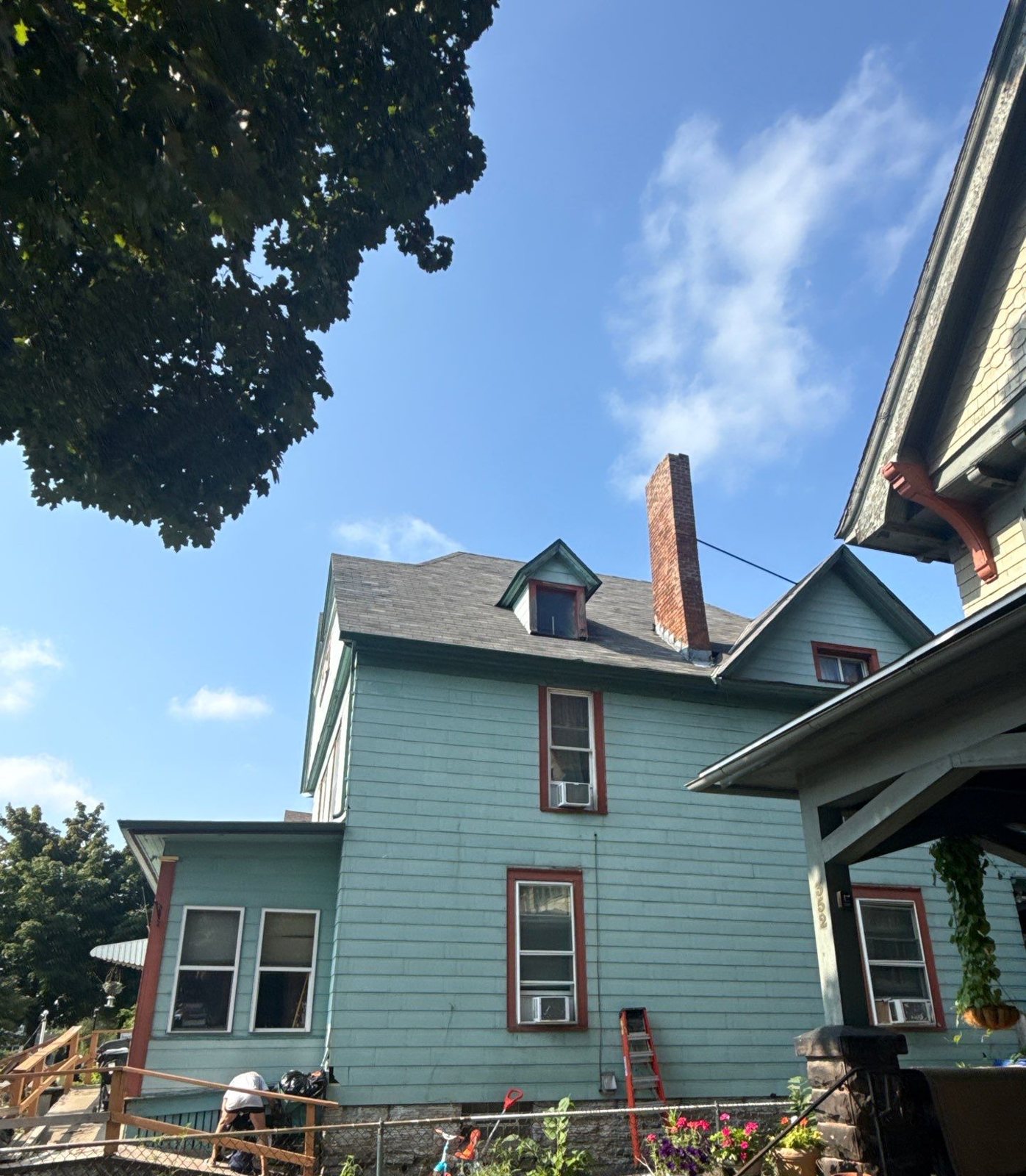
What Should I Check on the Roof and Exterior Before Buying a Twin Cities Rental Property or Flip?
Before you buy, check the roof's age and number of layers, the decking, the chimney and wall flashing, the eaves and fascia (signs of ice dams), the siding, the windows and the drainage. Then compare what you see with the city permit history and the property's rental license status.
Fifty-seven percent of St. Paul's single-family, duplex and triplex buildings were built before 1930, according to the city's own housing assessment. That is the rental and flip stock most Twin Cities investors are buying. On a house that old, the roof and exterior can swing a rehab budget more than the kitchen will.
What exterior items change a rehab budget the most?
Roof condition, including how many layers are on it and whether the decking is sound, usually matters most. After that come chimney and wall flashing, rotted fascia and soffit, siding, and windows. Anything that has been letting water in for years can hide framing damage you won't see on a walk-through.
Cosmetic work is predictable. Water damage isn't. When you look at a property, spend most of your time on the places where water gets in.
How old is the roof, and how many layers are on it?
Ask the seller for the roof's age and any paperwork. Then check it yourself. At a rake edge or a vent, you can often count the layers of shingles.
If a roof already has two layers, the next roof will be a tear-off. Put the tear-off and disposal in your numbers now. Don't wait to find out after closing.
Is the decking soft?
Decking is the wood sheathing under the shingles. You can't see it from the ground, but you can see what it does. From inside the attic, look for dark stains, daylight at the boards, or sagging between rafters. On the roof, soft spots underfoot are a warning sign.
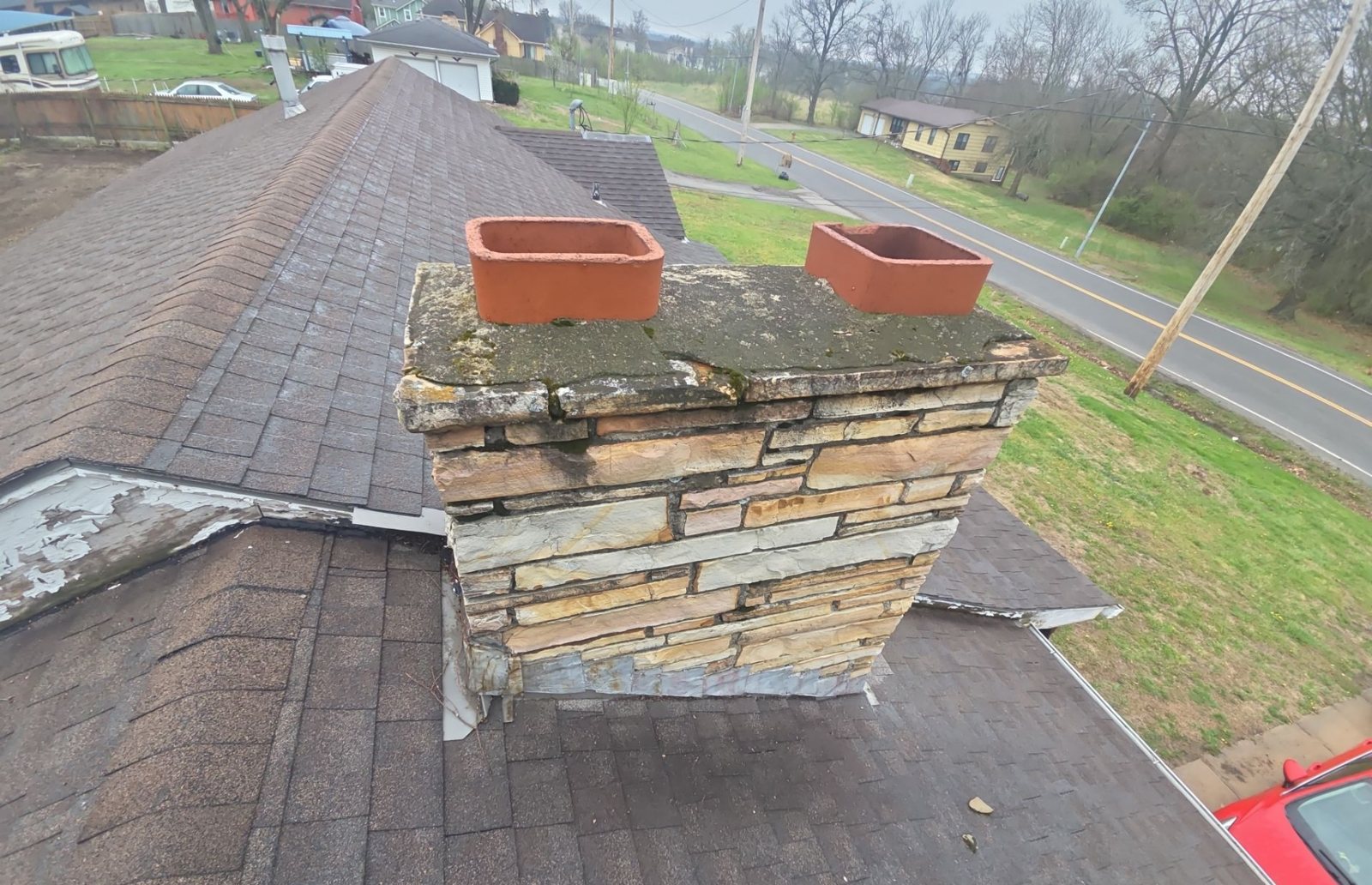
What should I look for at the chimney and flashing?
Flashing is the metal that seals the joint where the roof meets a wall, chimney or dormer. On older houses it's often the first thing to fail. Look for loose or missing mortar and spalled (flaking) brick on the chimney. Check for tar smeared over the base, which usually means someone patched a leak. Look for stains on the ceiling or attic framing below.
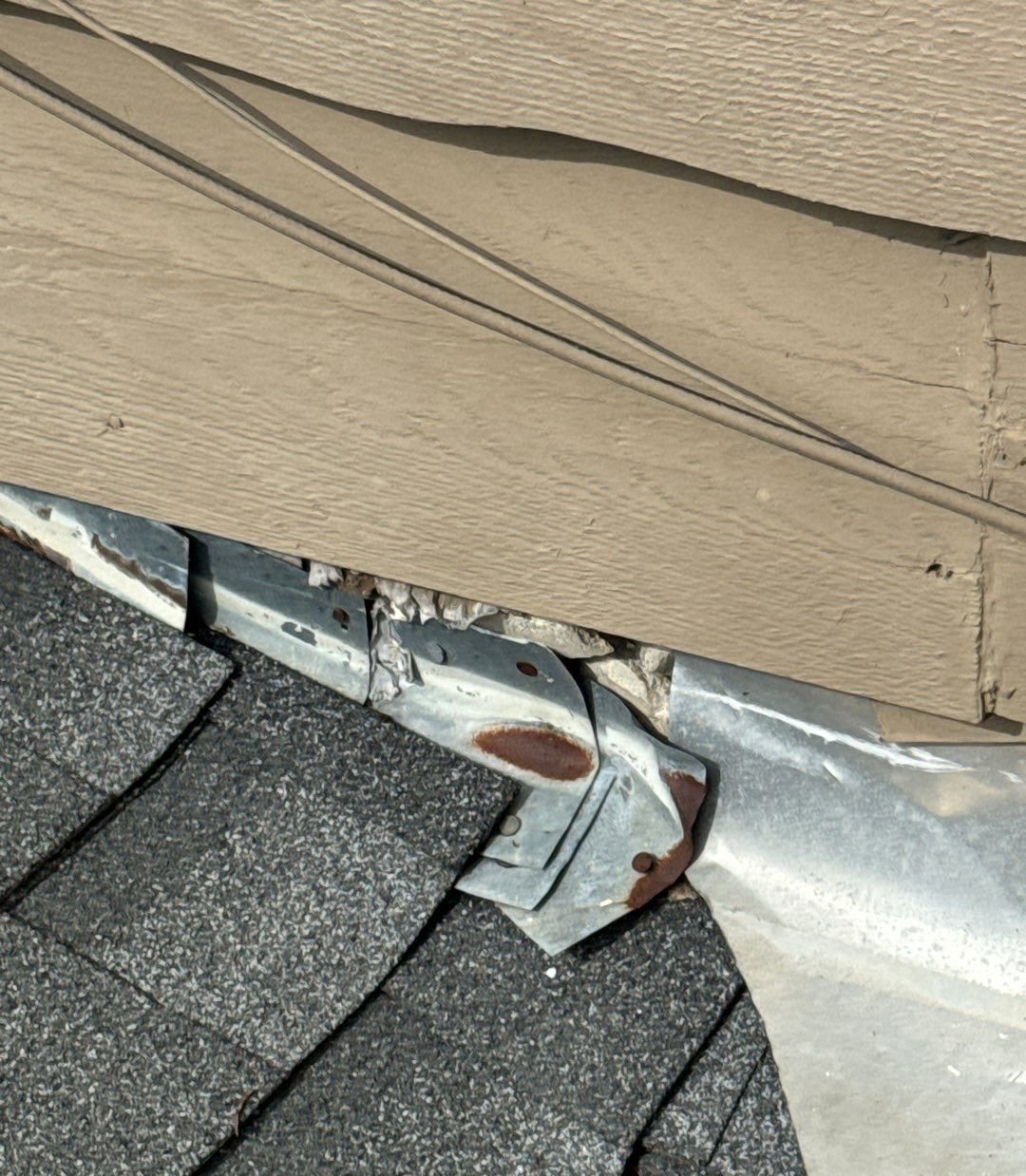
Gutters, grading and ice-dam history
Gutters that pour water against the foundation, or a yard that slopes toward the house, send water to the basement. Look along the eaves for peeling paint, stained siding and rotted fascia (the trim board the gutters hang on). Those are common signs that ice dams have formed there in past winters.
For an investor, that means an ice-dam problem is often an attic problem as well as a roof problem. Budget for air sealing and insulation, not just shingles. Our ice dam removal page covers steam removal and prevention.
Siding and windows
Press on trim at the corners and under windowsills. Soft wood means water has been getting in for a while. Check whether the siding is original wood under a newer layer, and whether windows are painted shut, fogged or rotted at the sills. For material options, see our siding and windows pages.
Does lead paint affect exterior work on a pre-1978 rental?
Yes. If the house was built before 1978, federal rules require the contractor doing paid work that disturbs painted surfaces to be an EPA-certified firm that follows lead-safe work practices. That includes scraping, replacing trim, siding and windows.
In practice, lead-safe work on older siding and trim involves containment and cleanup, so plan time and budget for it. Ask every bidder for their EPA firm certification.
How do I check a property's permit history in Minneapolis and St. Paul?
Minneapolis has a public Historic Property Permits Dashboard and a Property Information Search. St. Paul has a property search tool, linked from its Property Information and Reports page, that shows permits, code compliance reports and Certificate of Occupancy status.
- Minneapolis: Open the city's Historic Property Permits Dashboard and search by address or permit number. The city's Property Information Search also shows building details and license history.
- St. Paul: Start from the city's Property Information and Reports page. The property search shows code compliance reports from the last 365 days, whether the building has a Certificate of Occupancy, and vacant-building status. The same page links to Truth-in-Sale of Housing reports.
- Compare to what you see. If the roof looks newer than the last roofing permit on file, ask the seller who did the work and when.
Agents can also use our Realtor property report, which pulls St. Paul permits and Minneapolis code cases for an address.
What are the rental license and inspection basics in Minneapolis and St. Paul?
Minneapolis requires a rental license for any unit the owner doesn't live in, even if no rent is paid. St. Paul requires a Fire Certificate of Occupancy for residential buildings that aren't owner-occupied. For one- and two-unit rentals, St. Paul issues a provisional certificate until the inspection takes place.
Fees, inspection schedules and specific requirements change. Confirm them with each city before you buy. Also check whether the property you're buying has an active license. Minneapolis offers an active rental licenses search.
Buying a rental or a flip?
Before you firm up your offer, we'll photo-document the roof and exterior and give you a condition and rehab report.
Request a Property Condition / Rehab ReportWalk-through checklist: roof and exterior before you buy
Use this table during a showing. Anything marked "red flag" deserves a closer inspection before you set your rehab number.
| Item | What to check | Red flag |
|---|---|---|
| Roof layers | Count layers at the rake edge or at vents | Two layers already (the next roof has to be a tear-off under MNRC R908) |
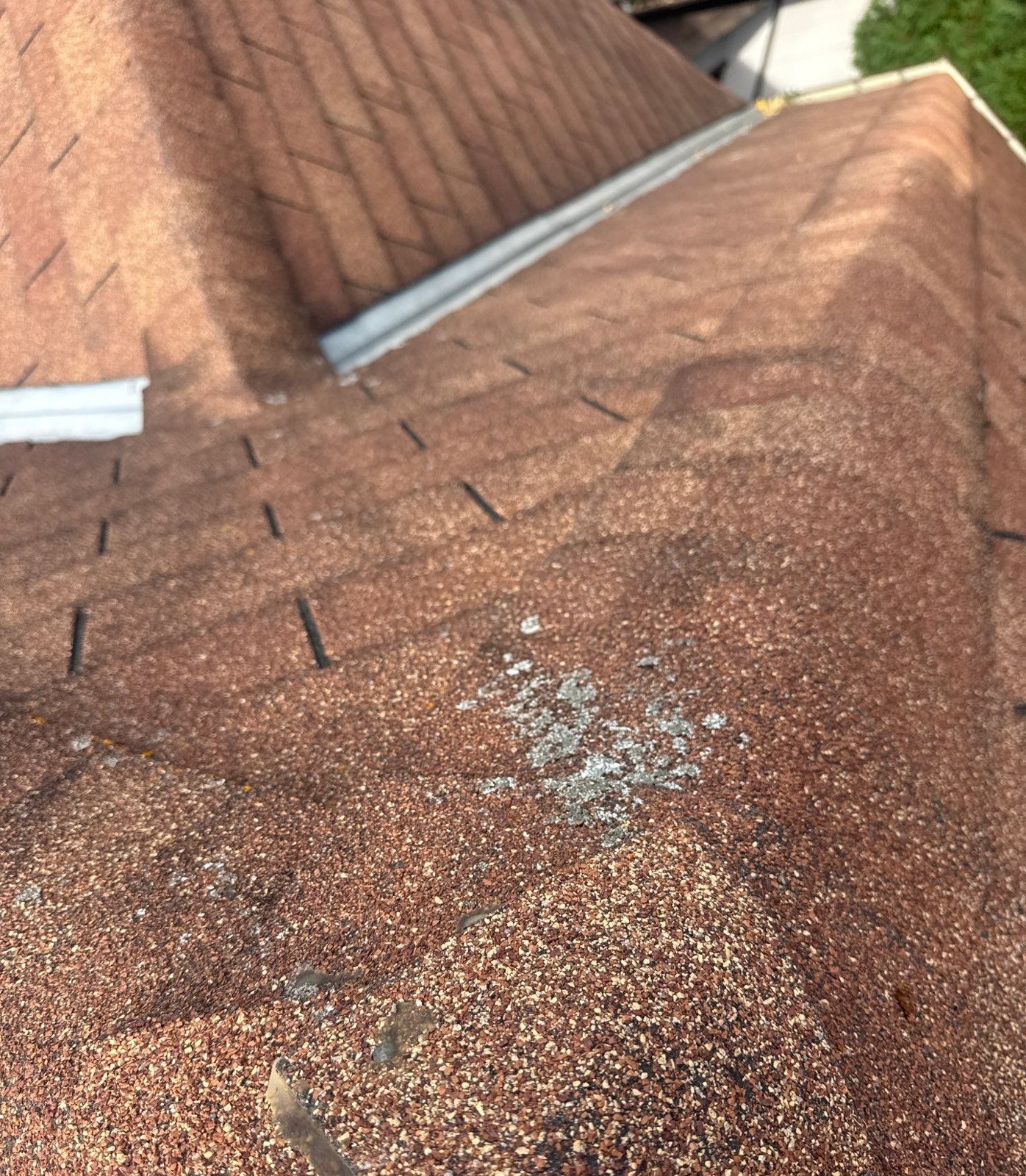
| Shingles | Granule loss, curling, lichen, missing tabs | Bare spots, brittle tabs, patchwork repairs |
| Decking / attic | Stains, daylight, sagging, frost or damp sheathing | Soft spots, dark rings around nails |
| Chimney | Mortar, crown, brick face, base flashing | Tar over the base, spalled brick, leaning |
| Wall / dormer flashing | Step flashing and counterflashing at walls | Caulk-only joints, bent or face-nailed flashing |
| Eaves | Fascia, soffit, paint at the eaves | Rotted fascia, peeling paint, stains (signs of past ice dams) |
| Gutters & grading | Downspout discharge, slope of the soil | Water pooling at the foundation |
| Siding & trim | Press corners and sills | Soft wood, hidden layers, pre-1978 paint to be disturbed |
| Windows | Sills, glazing, operation | Rotted sills, failed seals |
| Paperwork | City permit history, rental license / C of O | Recent work with no permit, expired license |
- Photograph every elevation and the roof from the ground. That gives you a baseline for bids.
- Run the address through our free Roof & Storm Report to see recent hail and wind history.
- If you can't get on site, send us a photo and we'll tell you what we see.
Can I use Section 179 for the roof on a rental house?
Generally, no. The Section 179 treatment of roofs applies to "qualified real property," which means improvements to nonresidential (commercial) real property. Residential rental property doesn't qualify.
Talk to your tax professional about how to treat roof costs on a residential rental. If you also own commercial buildings, see our Section 179 page.
Who should look at the roof before I close?
A general home inspector gives you a broad overview. For a rental or flip, add a roof and exterior inspection with photos, so you can price the work with confidence.
We photo-document each inspection and can bid the roof, siding and window work on the same visit. If you manage several doors after closing, our property manager program and maintenance agreements help keep small leaks from turning into big rehab costs.
Know the rehab number before you buy
We'll photo-document the roof and exterior and put it in a property condition / rehab report. Can't get on site? Send us a pic first.
Questions people also ask
How many layers of shingles are allowed in Minnesota?
The Minnesota Residential Code allows a total of two layers of asphalt shingles. If a house already has two, the next roof has to be a full tear-off, so budget for it.
Where do I look up permits on a Minneapolis property?
Use the City of Minneapolis Historic Property Permits Dashboard and search by address or permit number. The city's Property Information Search also shows building and license information.
Does a St. Paul duplex rental need a Certificate of Occupancy?
Yes. St. Paul requires a Fire Certificate of Occupancy for residential buildings that aren't owner-occupied, including one- and two-unit rentals. The city issues a provisional certificate until the inspection takes place.
Does the EPA lead rule apply to exterior work on an old rental?
If the house was built before 1978, paid work that disturbs painted surfaces must be done by an EPA-certified firm using lead-safe practices. That includes siding, trim and window work.
Can I get a roof report without meeting you on site?
You can start by sending a photo through our Send-a-Pic form. For a full condition and rehab report, request an inspection.
Sources
- Housing Assessment (2018) (City of Saint Paul)
- Reroofing Information Sheet (MNRC R908) (City of Bloomington)
- Got ice dams? (Minnesota Department of Commerce)
- RRP Program: Firm Certification (US EPA)
- Historic Property Permits Dashboard (City of Minneapolis)
- Property Information Search (City of Minneapolis)
- Property Information and Reports (City of Saint Paul)
- Rental Licenses: Rules & Regulations (City of Minneapolis)
- One and Two Family Residential (City of Saint Paul DSI)
- Publication 946 (IRS)
Repair King is a licensed contractor, not an insurance company, public adjuster or attorney. We inspect, document and repair. Coverage decisions belong to your insurer, so read your own policy and ask your agent.


