

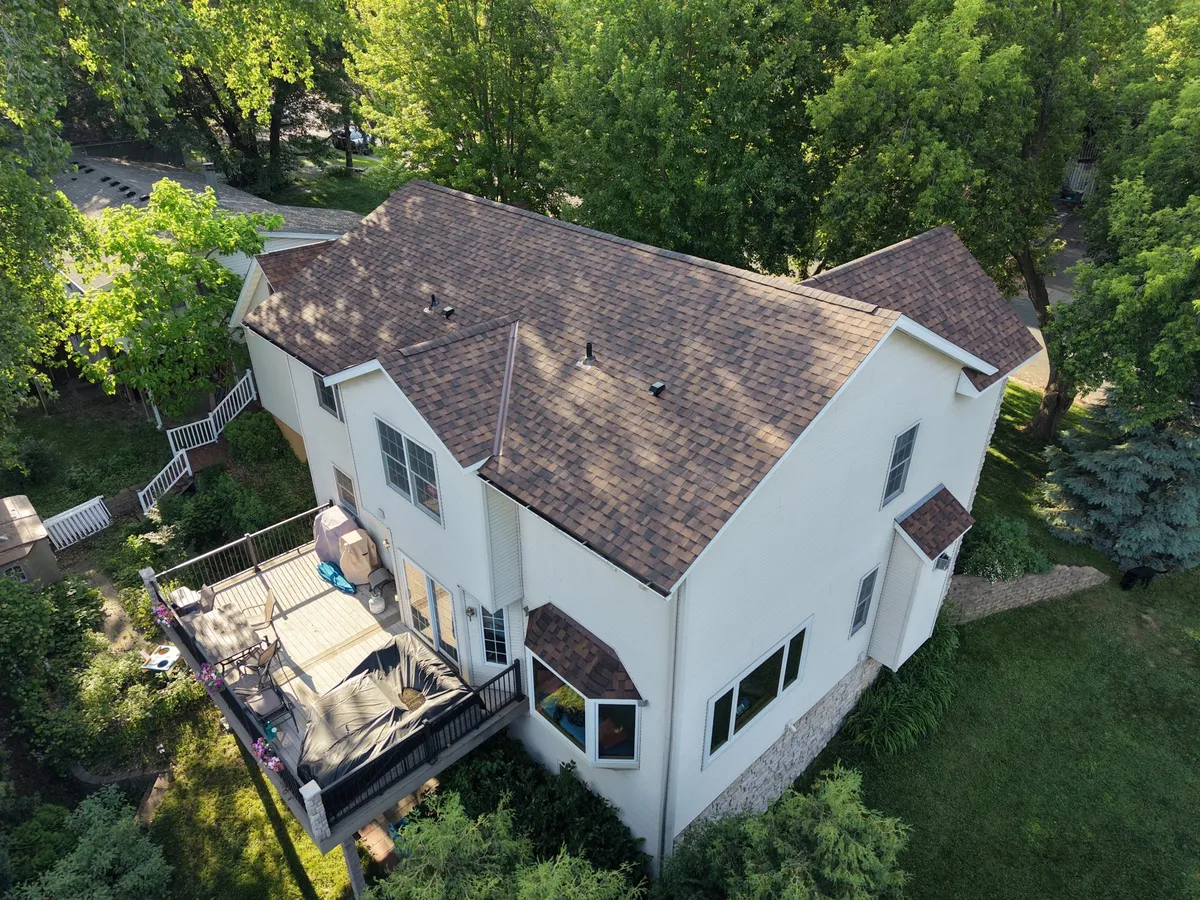
What's in your roof? Every layer of a Minnesota shingle roof, explained (with video)
A shingle roof is a stack: decking, ice and water shield at the eaves and valleys, valley metal, underlayment, starter shingles, shingles, then vents and ridge cap. Minnesota code requires the ice barrier to reach at least 24 inches inside the exterior wall.
Most people only ever see one layer of their roof: the shingles. That's the part you pick a color for, and the part the neighbors notice. It's also the part that does the least work on its own.
Under the shingles is a stack, built from the wood up in a set order. When a roof leaks, ages early or gets written up after a storm, the answer is usually somewhere in that stack. Here's every layer, what it does, and what Minnesota's code says about the ones it covers.
What are the layers of a shingle roof, from the deck up?
From the bottom: roof decking, ice and water shield at the eaves and valleys, valley metal, synthetic underlayment over the rest, starter shingles, the shingles themselves, and then vents, pipe boots and ridge cap on top. Each layer covers a weakness in the one above it.
| Layer | What it is | Its job |
|---|---|---|
| 1. Roof decking | Plywood or OSB sheets (older homes: wood boards) nailed to the rafters or trusses | The solid base everything is fastened to |
| 2. Ice & water shield | Self-adhering rubberized membrane that sticks straight to the wood | Seals the eaves and valleys, where ice dams and heavy runoff push water uphill |
| 3. Valley metal | Corrosion-resistant metal lining down each valley | Carries the water from two roof planes meeting in one channel |
| 4. Synthetic underlayment | Woven synthetic sheet rolled over the rest of the deck | Backup water barrier if wind-driven rain gets under a shingle |
| 5. Starter shingles | A dedicated first row with a sealant strip, set at the edges | Seals the first course down so wind can't get under the edge |
| 6. Shingles | Architectural asphalt shingles | Sheds water and takes the sun, hail and wind |
| 7. Vents, boots & ridge cap | Exhaust vents, pipe boots, flashing and hip & ridge shingles | Lets the attic breathe and closes the peaks and penetrations |
Under all of that are the rafters or trusses and the attic insulation. They aren't part of the roof covering, but the attic matters to the roof: a warm, poorly vented attic is how a lot of Minnesota ice dams start. If that sounds familiar, attic frost and winter leaks are worth a read.
What is roof decking, and does it get replaced with a new roof?
Decking is the wood your roof is nailed to. It only gets replaced where it's soft, rotted, delaminated or the wrong type, and you can't know that until the old shingles are off.
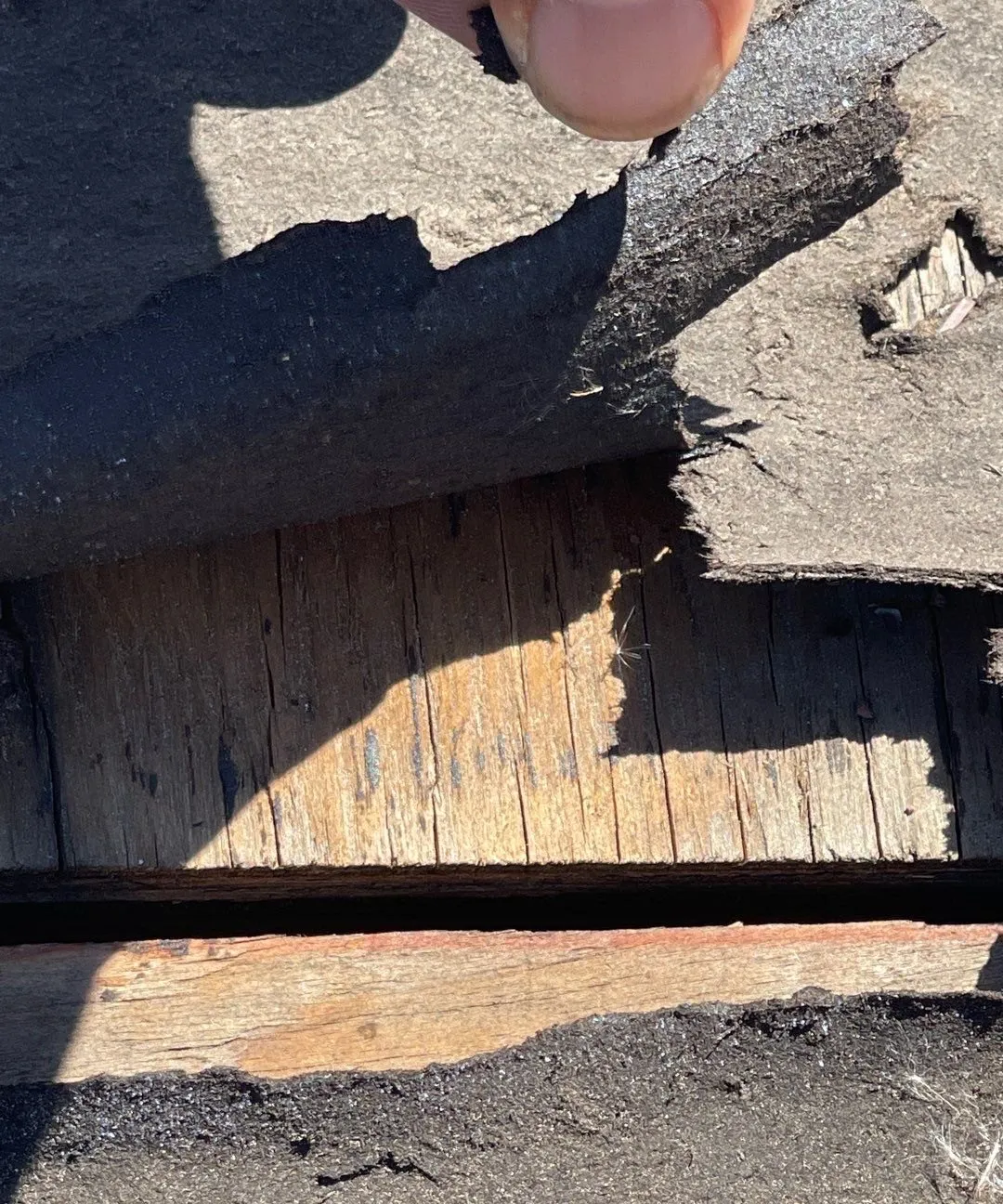
Plenty of older Twin Cities houses were built with board decking instead of sheets. Boards aren't automatically a problem. Wide gaps between them, rot, or boards that won't hold a nail are. That is a real cost question, so we covered it on its own: does insurance pay for roof decking in Minnesota?
Is ice and water shield required in Minnesota, and where does it go?
Yes. Minnesota's residential code requires an ice barrier on shingle roofs, running from the lowest edge of the roof to at least 24 inches inside the exterior wall line. We also run it up the valleys.
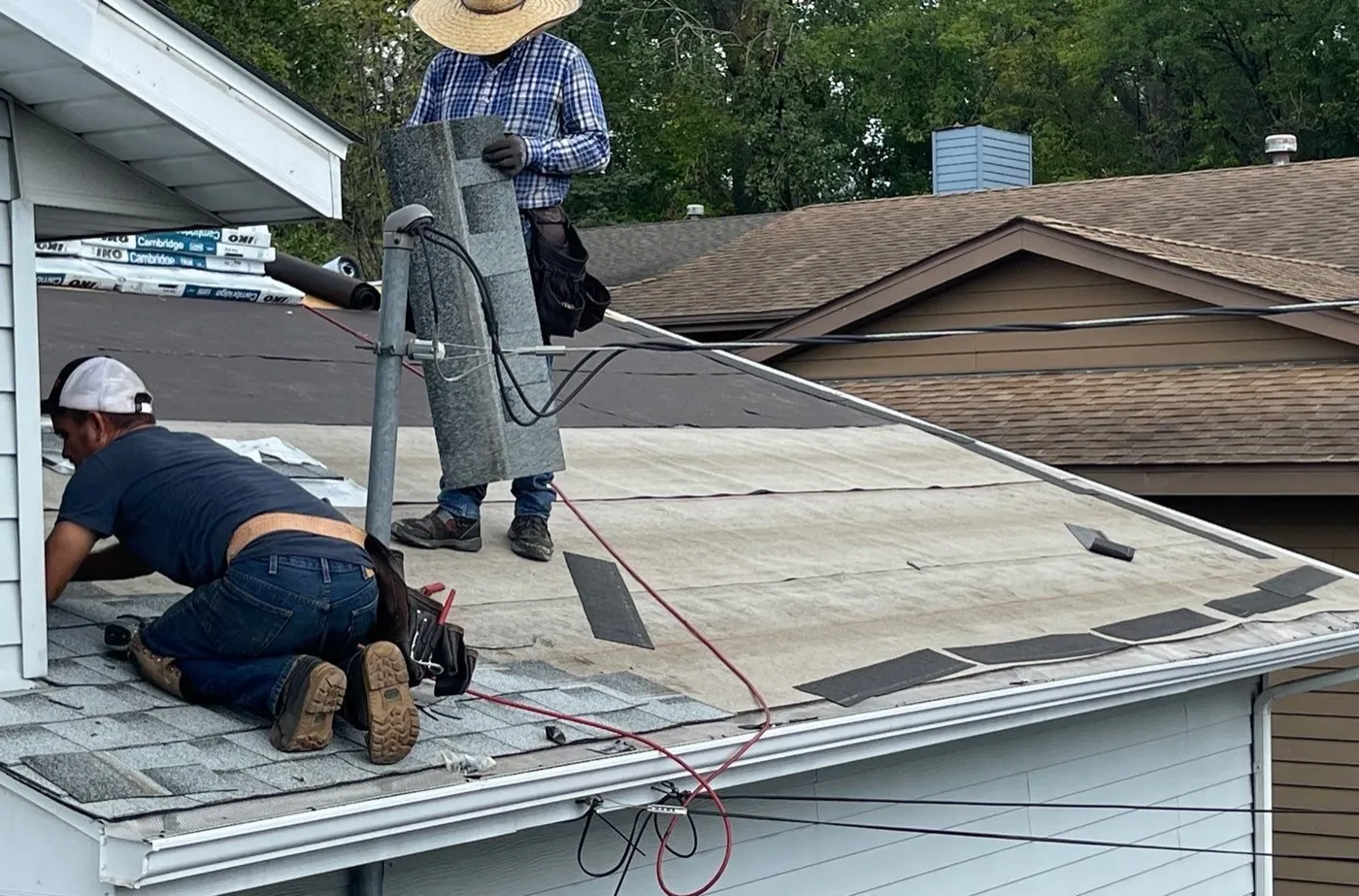
The 24-inch line is measured inside the wall, not from the edge of the roof. That's the part people miss. Your overhang sits outside the wall, so a home with a deep overhang or a low pitch needs more ice barrier to reach the line than a home with a short one.
Want the code side in more detail? See is ice and water shield required in Minnesota?
What does valley metal do?
A valley is where two roof slopes meet, so it carries the water from both. Valley metal lines that channel so the heaviest runoff on the roof runs over metal instead of a seam.
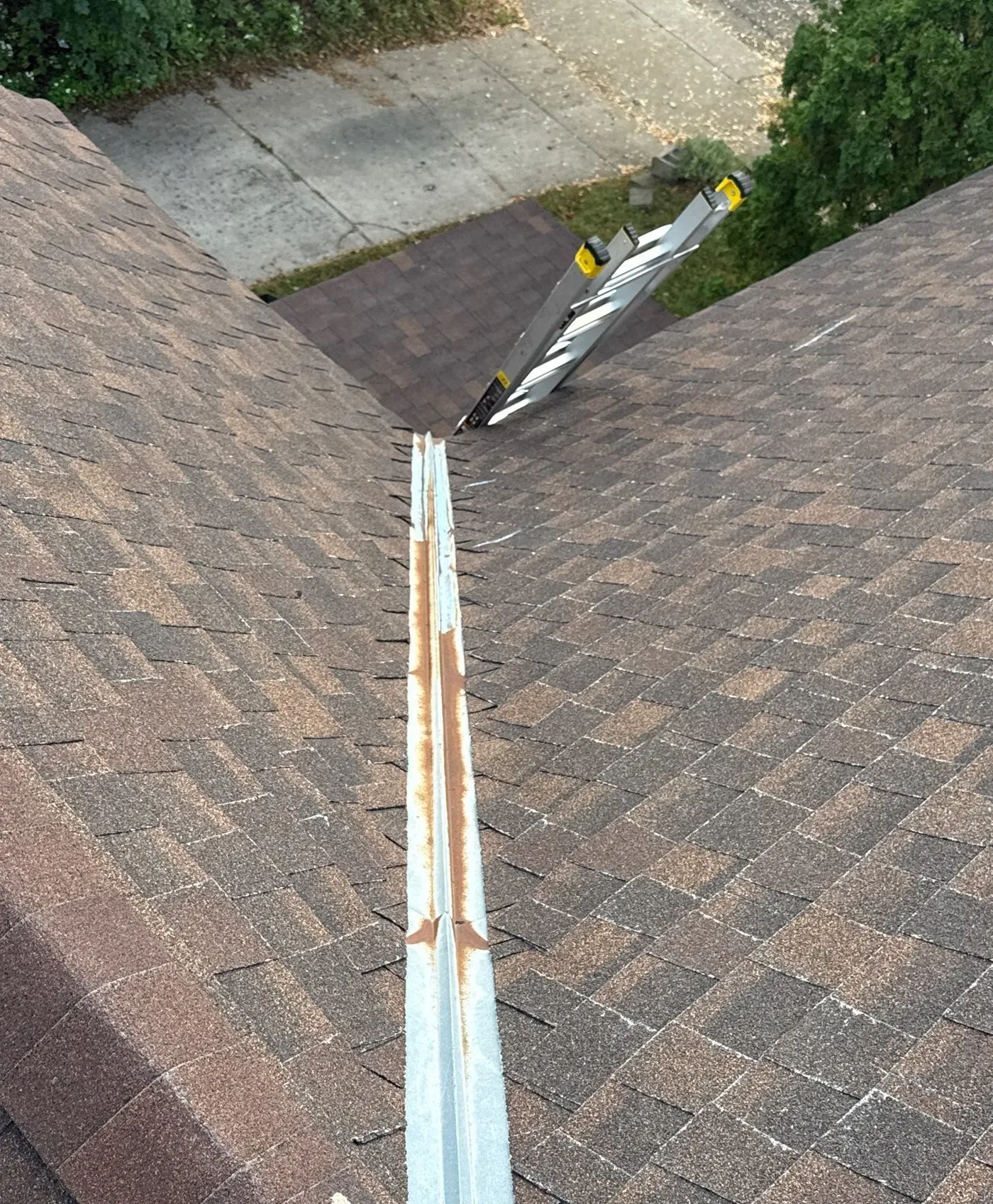
On our roofs the order in the valley is ice and water shield first, sealed to the wood, then the valley metal over it, then the shingles. If something ever gets past the metal, there's still a sealed membrane underneath.
What goes over the rest of the deck: felt or synthetic underlayment?
Everywhere the ice and water shield doesn't cover gets underlayment. We use a synthetic underlayment, which covers the whole deck outside the eaves and valleys.
Underlayment is your second line of defense. Shingles shed water, but wind-driven rain and melting snow can get under a tab. The underlayment is what that water hits next.
Why do starter shingles matter?
The first row of shingles has nothing underneath to seal to. Starter shingles give it a sealant strip at the edge, so wind can't get under the first course and peel the roof back from the bottom.
If you've ever seen a roof with shingles lifted along the bottom edge after a windstorm, the starter course is the first thing to look at. More on that in wind damage to Minnesota roofs.
What finishes the roof: vents, pipe boots and ridge cap?
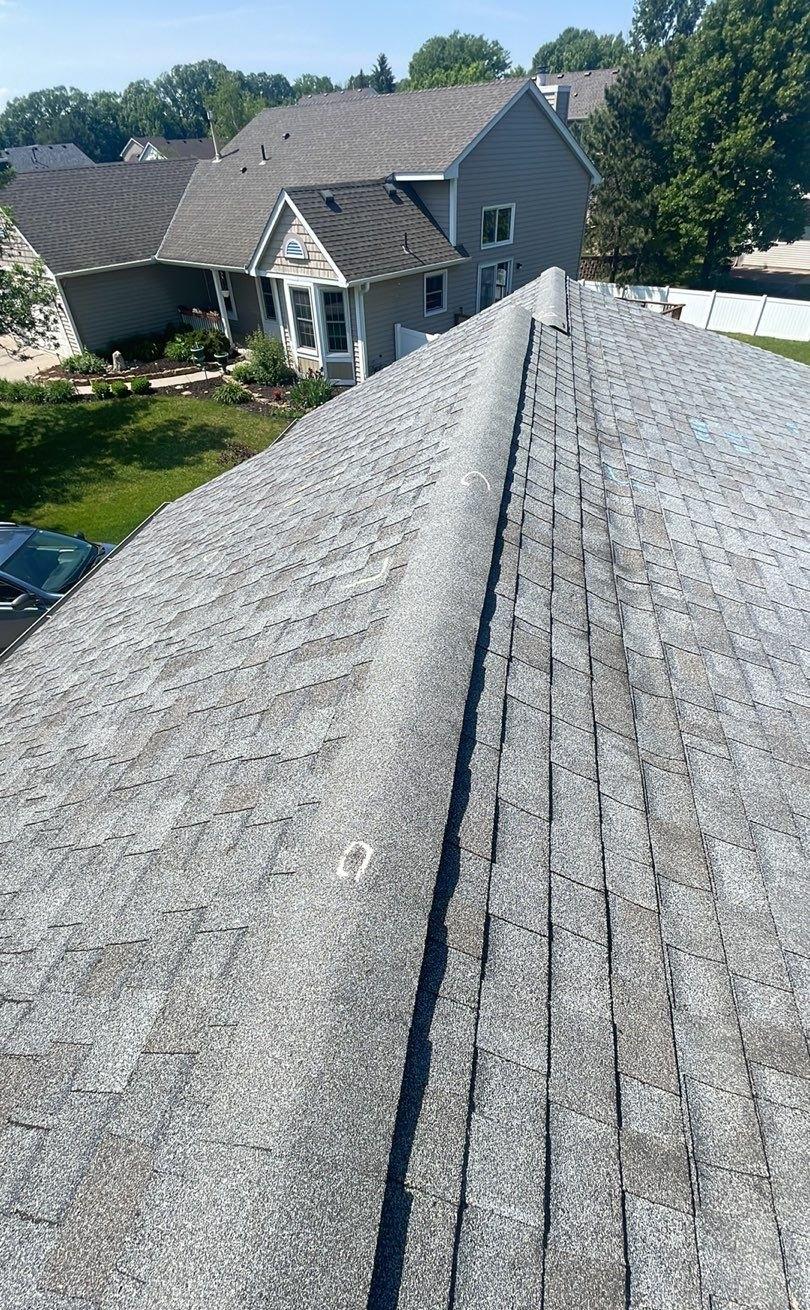
After the shingles come the parts that close the roof up: exhaust vents, pipe boots and flashing around anything that pokes through, and ridge cap shingles over the peaks and hips.
Ventilation works as a pair: intake low at the soffits, exhaust high near the ridge. When the exhaust is there but the intake is blocked, the attic runs warm and wet, which shows up later as frost, dark stains on the decking or ice dams.
Pipe boots and flashing are small parts that cause a big share of leaks. We replace them on a new roof rather than reusing the old ones.
Which layer usually causes a roof leak?
Usually not the open field of shingles. Leaks tend to start where the roof changes: eaves, valleys, walls, chimneys and pipes, which are the exact spots the hidden layers are there to protect.
- Ice at the eaves in winter, water on the inside wall: look at the ice barrier and attic ventilation first.
- Stain under a valley: valley lining, or shingles cut short in the valley.
- Drip around a bath fan or plumbing pipe: a cracked pipe boot or failed flashing.
- Shingles lifted along the bottom edge: starter course and nailing.
- Soft spots when you walk the roof: decking, often from a long, slow leak.
Not sure which layer is giving out?
We'll go up, photograph every problem area and show you what's under the shingles before anyone talks about replacement.
Schedule a Roof InspectionWhat should a roof estimate list, layer by layer?
A good estimate names every layer, not just "tear off and reshingle." If a line is missing, ask about it before you sign.
- Full tear-off to the deck, with a price per sheet for any decking replacement
- Ice and water shield: where it goes and how far past the exterior wall
- Valley method: metal-lined or another approved lining
- Underlayment type, covering everything outside the ice barrier
- Starter shingles at the eaves, plus the rakes if the manufacturer calls for it
- The exact shingle line and color
- New pipe boots, flashing, vents and ridge cap (new, not reused)
- Permit where your city requires one, clean-up and a final walkthrough
Comparing two bids that look far apart? Lay them side by side with this list. The gap is usually in the layers you can't see. For what the whole process looks like on our end, see roof replacement, or compare roof types on roof systems.
Find out what's under your shingles
We'll inspect the roof, photograph every layer we can see and explain repair vs. replacement in plain English.
Questions people also ask
How far does ice and water shield have to go in Minnesota?
From the lowest edge of the roof to at least 24 inches inside the exterior wall line of the house. On slopes of 8:12 or steeper it must also reach at least 36 inches up the slope from the eave. Depending on the overhang and pitch, that can take more than one 36-inch course.
Is synthetic underlayment better than felt?
Both can meet code when they carry the required standard label and are installed per the code tables and the manufacturer. We use synthetic underlayment over everything outside the ice barrier. What matters most is that the whole deck is covered and laps are done right.
Do you replace the decking on every new roof?
No. Decking is replaced only where it's soft, rotted, delaminated or not a code-acceptable base, and that's checked sheet by sheet after tear-off. Any replaced decking shows up in your photos.
Can a new roof go over the old shingles?
In some cases code allows one recover layer, but you lose the chance to inspect the deck and install ice barrier and underlayment properly. We cover the rules in a separate post on shingling over old shingles in Minnesota.
Sources
- Minnesota Residential Code (2018 IRC) Chapter 9, Roof Assemblies (UpCodes)
- Minn. R. 1309.0301 (Minnesota Residential Code) (Minnesota Revisor of Statutes)
Repair King is a licensed contractor, not an insurance company, public adjuster or attorney. We inspect, document and repair. Coverage decisions belong to your insurer, so read your own policy and ask your agent.


