

What does hail damage look like on siding? A Minnesota guide by siding type
Hail damage on siding usually shows up as fresh cracks, chips or holes in vinyl, round dents in steel or aluminum, chipped edges and corners on fiber cement, and dents, splits or knocked-off paint on wood. It tends to sit on the wall that faced the storm, with matching marks on screens, gutters, wraps or the AC unit nearby.
It's the morning after a storm. The sun is still low, and it lights the siding on your back wall from the side. That's when you notice small shadows on the laps that weren't there yesterday.
Hail damage on siding usually shows up as fresh cracks, chips or holes in vinyl, round dents in steel or aluminum, chipped edges and corners on fiber cement, and dents, splits or knocked-off paint on wood. It tends to sit on the wall that faced the storm, and you'll usually see matching marks on screens, gutters, window wraps or the AC unit nearby.
What does hail damage look like on vinyl siding?
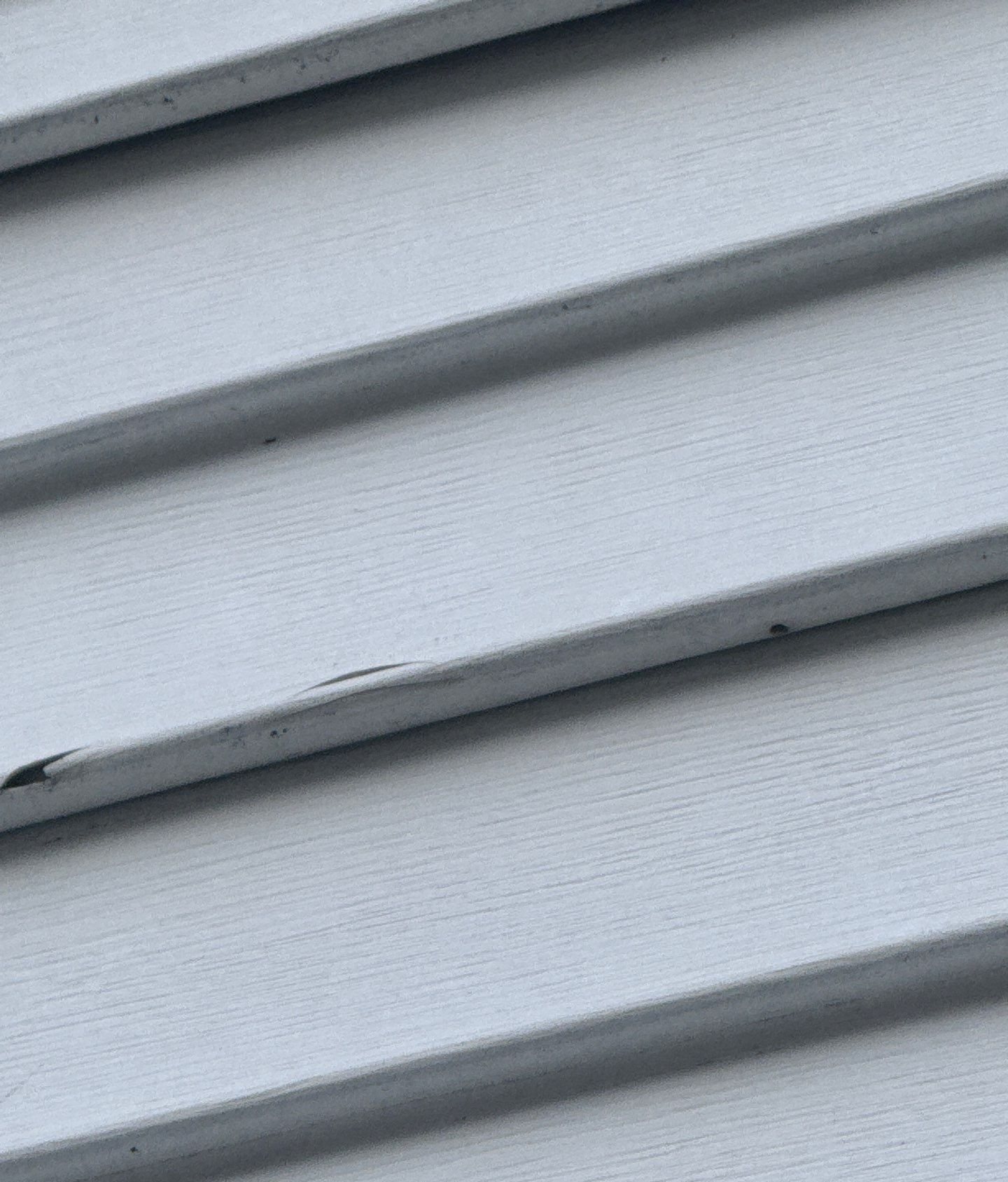
On vinyl, hail usually leaves cracks, punched holes, or broken chips along the bottom edge of a lap. It rarely leaves a clean dent like it does on metal, because vinyl tends to break instead of bend, and that's especially true when it's cold.
Look at the bottom lip of each course, where one panel overlaps the one below. That edge sticks out, so it takes the hit first. Hail often cracks it or knocks out a small half-moon chip.
On the flat face of the panel you may see a star crack, a short split running along the grain texture, or a clean hole about the size of the stone. Older, sun-faded panels break more easily than new ones.
Can a single cracked vinyl panel be replaced?
Physically, yes. Vinyl panels lock into each other, so an installer can unzip the course above with a zip-lock tool, pull the nails, and slide in a new panel. The hard part is usually finding a panel that matches. More on that below.
What does hail damage look like on steel or aluminum siding?
Metal siding dents instead of cracking. Look for round or oval dimples, often in clusters, which are easiest to see when light rakes across the wall. Sometimes you'll also see a "spatter" mark, a clean spot where the hail knocked off dirt or oxidation.
Older aluminum siding gets chalky. When hail hits it, it can leave bright, roughly round spots in the chalk, even if the dent is shallow. Those spatter marks fade within weeks, so photograph them early.
Steel and aluminum also bring up the cosmetic-versus-functional question. A shallow dent may not let any water in. A dent that cracks the paint, splits a seam, or bends a lock can. That's a construction observation an inspector can record. What the damage means for your claim is up to your policy and your adjuster.
What does hail damage look like on fiber cement (Hardie) siding?
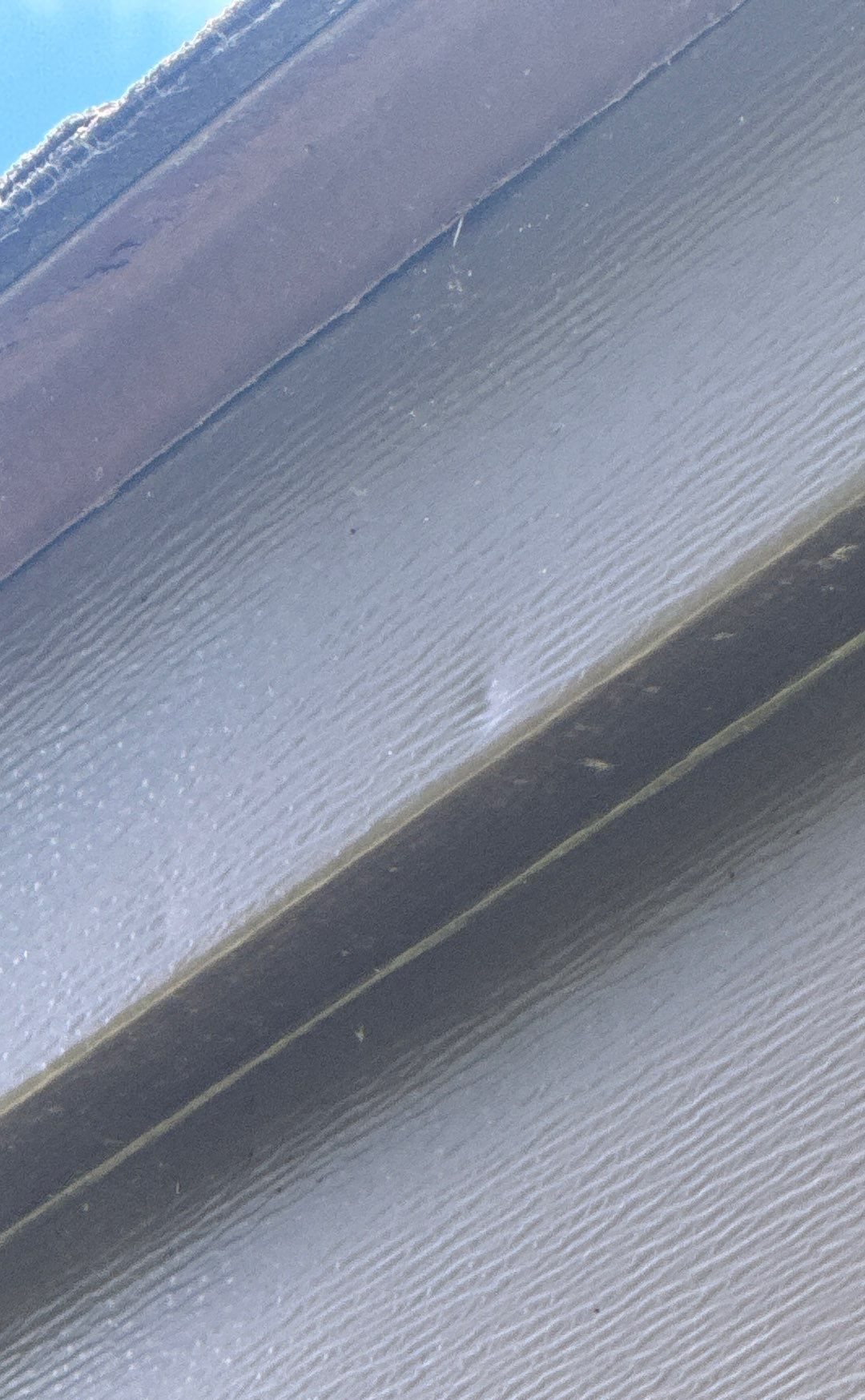
Fiber cement doesn't dent much. When hail damages it, you'll usually see chipped paint or a chipped surface, cracked corners, and broken board ends or bottom edges. Look closely at the trim corners and the butt edge of each board.
The flat face often holds up. Edges and corners are thinner and more exposed, so that's where the hits show. A fresh chip shows bare, lighter gray cement under the paint. An old chip that's been weathering for years looks dirty and rounded over.
So a small chip on fiber cement isn't automatically a reason to replace the board. A cracked board, or a broken edge that lets water behind the siding, is a bigger deal.
What does hail damage look like on wood or cedar siding?
Wood siding shows hail as small dents or crushed spots in the grain, fresh splits along the boards, and spots where the paint or stain got knocked off and bare wood shows through. Fresh damage looks clean and bright. Old damage looks gray and weathered.
Cedar is soft, so it dents easily. In old Minnesota houses with many coats of paint, hail can chip paint off in flakes, and fresh flaking can be hard to tell from failing paint that was already peeling. One clue: paint that failed with age usually peels in sheets or curls at the edges. A fresh hail hit usually leaves a small, round spot with sharp edges.
How do I check my siding for hail damage after a storm?
Walk each side of the house when the sun is low (early morning or late afternoon), start with the side that faced the storm, and look along the wall at an angle rather than straight at it. Then check soft metals and screens on that same side to confirm.
- Figure out the storm side. Hail usually comes in at an angle, driven by wind. The wall facing that direction takes most of the hits, and the opposite wall may have none.
- Use low-angle light. Stand at a corner and look down the length of the wall. Dents and lifted chips throw shadows when the light hits them from the side. A flashlight held flat against the wall works on a cloudy day.
- Walk every side anyway. Gusting wind can push hail onto more than one wall. Note each side as front, rear, left or right so your photos make sense later.
- Check the soft metals on that wall. Gutters, downspouts, window wraps, light fixtures, dryer vents, and the AC unit's fins all dent more easily than siding.
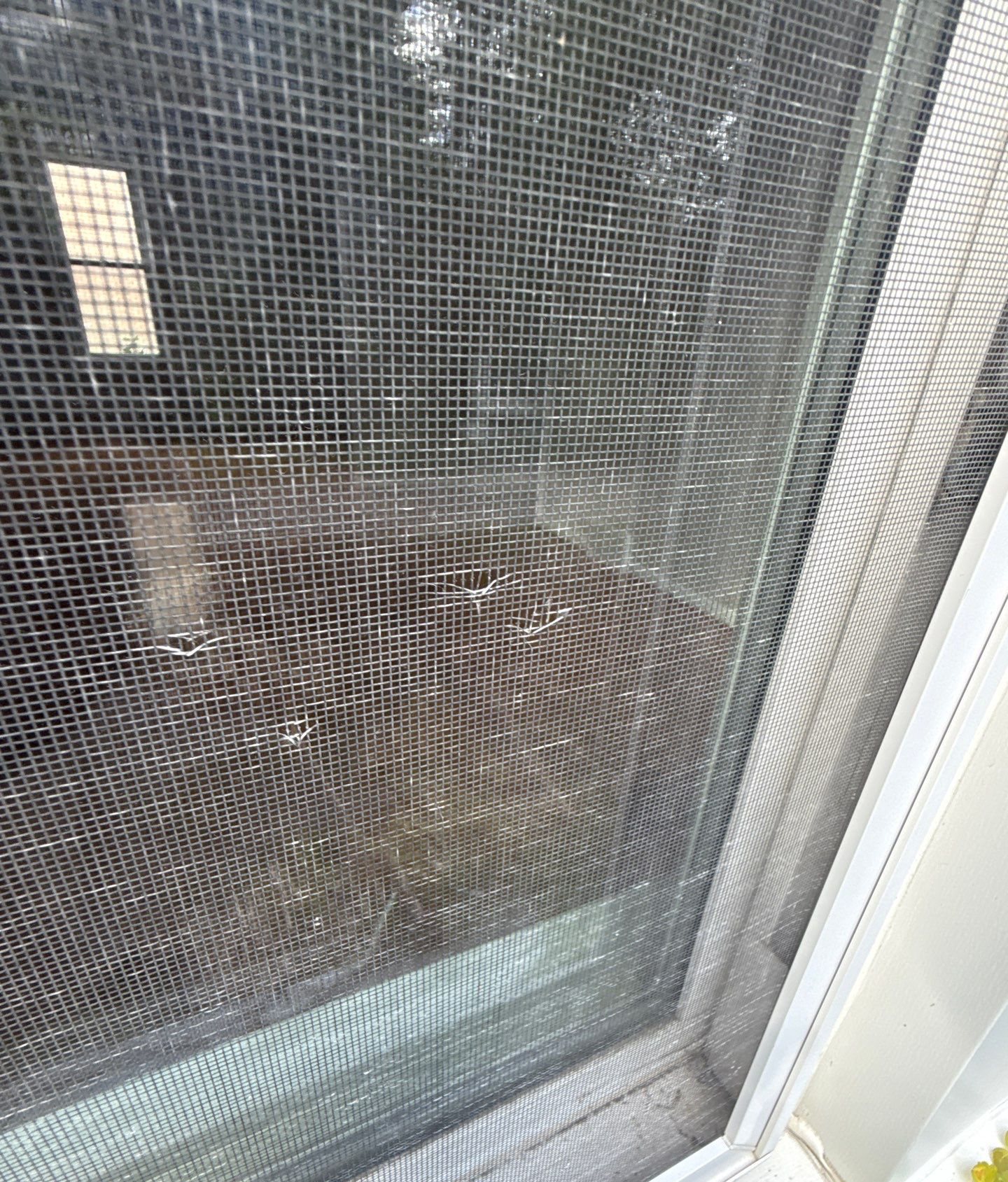
- Look at window screens. Hail tends to split or stretch screen mesh in small spots. Splits on the same side as your siding damage support the same story.
For a full ground-level walk of the rest of the property (AC fins, downspout granules and what they tell you), see our guide on checking for hail from the ground first. If you're also worried about the roof, here's how hail on shingles compares to normal wear.
How should I photograph hail damage on siding?
Stay on the ground. For every damaged spot, take one wide shot that shows where it is on the house and one close-up with a coin or tape measure in the frame for scale. Do this on every side, and keep the original files so the dates stay attached.
- Start each side with a wide photo of the whole wall, then move in.
- Put a quarter, a ruler or a tape measure next to each mark. Scale is what makes a close-up useful.
- Shoot at an angle as well as straight on. Dents on metal often only show at an angle.
- Photograph the soft metals and screens on the same wall, not just the siding.
- Write down the storm date and the date you took the photos. Don't edit or filter the originals.
- Don't use a ladder to reach second-story siding. Zoom from the ground, or let an inspector handle it.
Found marks on the storm-facing wall?
We'll photo-document every side of the siding, plus the soft metals and roof, in one inspection.
Request a storm inspectionIs it hail damage or something else?
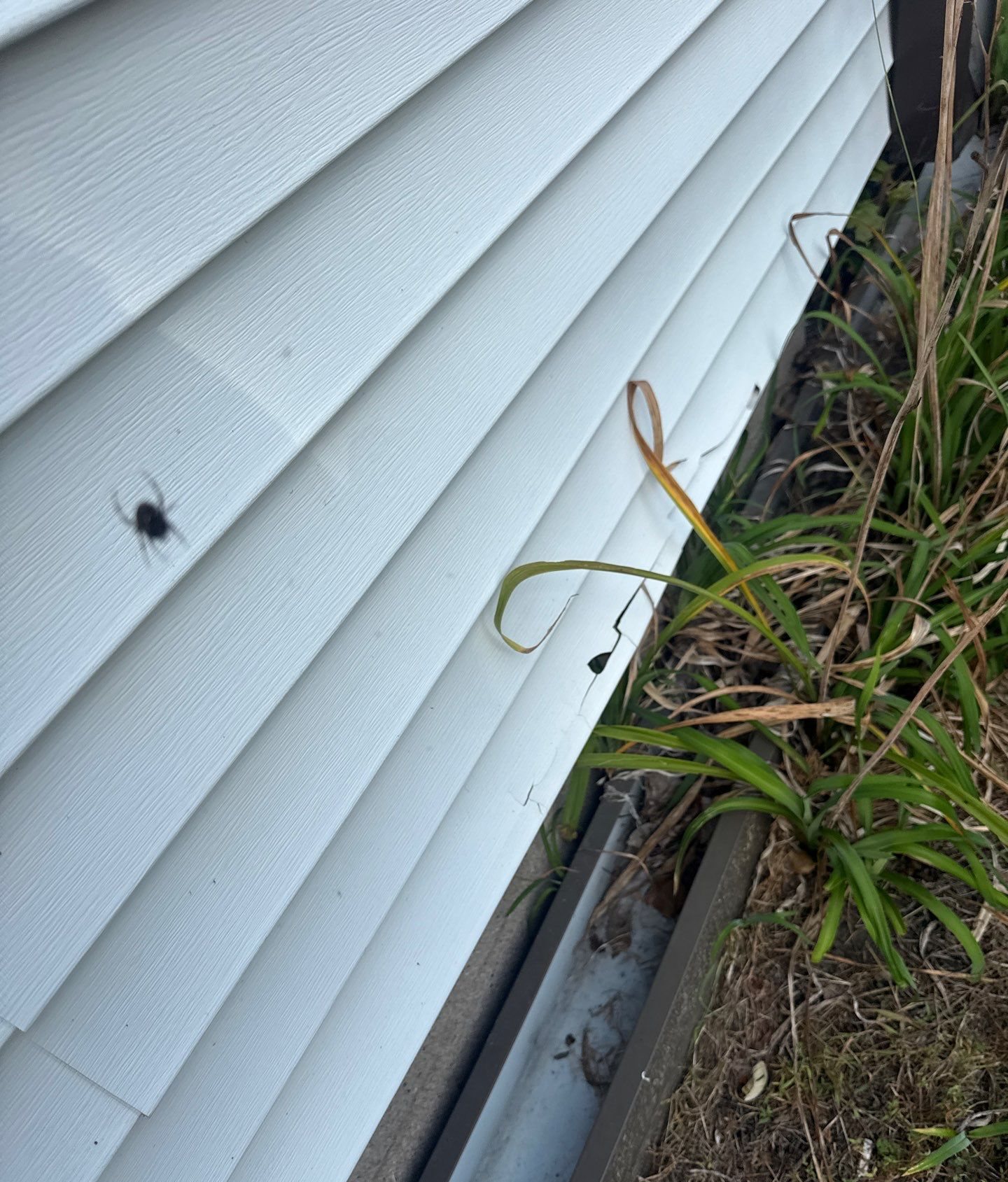
Hail damage is usually spread across a wall at different heights, it's fresh, and the same marks show up on soft metals nearby. Damage from a lawn mower, ladder or age tends to be low, all in one spot, or old and weathered.
| Cause | Where it shows | What it looks like |
|---|---|---|
| Hail | Spread across the storm-facing wall, at many heights | Fresh cracks, chips, holes or dents. Screens and soft metals nearby show hits too. |
| Mower or trimmer rocks | The bottom 1–2 feet, near beds and edging | Small chips or punctures grouped low on the wall |
| Ladder or impact | One spot, often under a window or near a gutter | A single crack or crease, sometimes in a pair matching ladder feet |
| Age brittleness | Anywhere, often sunny sides | Faded, chalky vinyl. Cracks at nails or ends. Edges dirty and weathered. |
| Sun fade | South and west walls, the whole wall | Color change with no break, often lighter where nothing shades it |
These can overlap. Old, sun-faded vinyl can also take fresh hail hits, and a careful inspection records both.
Those findings cut both ways. If your siding took hits, the roof above it probably took more. And no marks on the siding doesn't clear the roof.
If only one wall is damaged, can it just be patched?
Sometimes. Whether a patch works mostly depends on whether matching siding is still made and whether a new piece will look right next to boards that have weathered for years.
We cover why new siding often doesn't match and how a match gets documented in Is Minnesota a matching state?.
What does Repair King record on a siding hail inspection?
We photograph each side of the house, mark the damage we see, capture the soft metals and screens on the same sides, and put it all in a photo-documented report. We describe what we see as damage consistent with hail. We don't decide coverage.
That's the point of documenting it. An adjuster can work with a clear record showing which marks look like hail and which don't. It's much harder to work from a pile of unlabeled close-ups.
If you'd rather see first whether hail was reported near you, our free Roof & Storm Report looks up storm history by address. You can also browse our siding services and storm damage pages.
Was your address in the hail path?
Check storm history for your home before you walk the siding, then get every side documented.
Questions people also ask
Does hail damage siding on every side of the house?
Usually not. Hail comes in at an angle with the wind, so the wall that faced the storm takes most of the hits. Gusty storms can hit more than one side, so walk every side anyway.
Why does vinyl siding crack in hail instead of denting?
Vinyl tends to break rather than bend, and it gets less flexible as it gets colder. The Vinyl Siding Institute warns installers to cut it slowly in extreme cold to avoid chipping or cracking. The same brittleness is why a cold-morning hailstorm can break panels.
Can small chips in fiber cement siding be repaired?
James Hardie says small cracks, chips and dents can be repaired with a cementitious patching compound. Cracked boards or broken edges that let water behind the siding are a bigger repair.
How long do I have to deal with hail damage in Minnesota?
For hail, plan on one year from the storm date (Minn. Stat. 65A.26). Check the Suit Against Us section of your policy for your exact terms.
Should I climb a ladder to check upper siding?
No. Zoom in from the ground, or let an inspector document the upper walls. A photo from a safe angle is plenty to tell whether the upper siding needs a closer look.
Sources
- Vinyl Siding Installation Manual (2020) (Vinyl Siding Institute)
- Frequently Asked Questions (James Hardie)
- Hailstorm Demonstration Report (Insurance Institute for Business & Home Safety)
- Building Vulnerability to Hailstorms (IBHS)
- Minn. Stat. 65A.26 Standard hail policy (Minnesota Office of the Revisor of Statutes)
Repair King is a licensed contractor, not an insurance company, public adjuster or attorney. We inspect, document and repair. Coverage decisions belong to your insurer, so read your own policy and ask your agent.


