

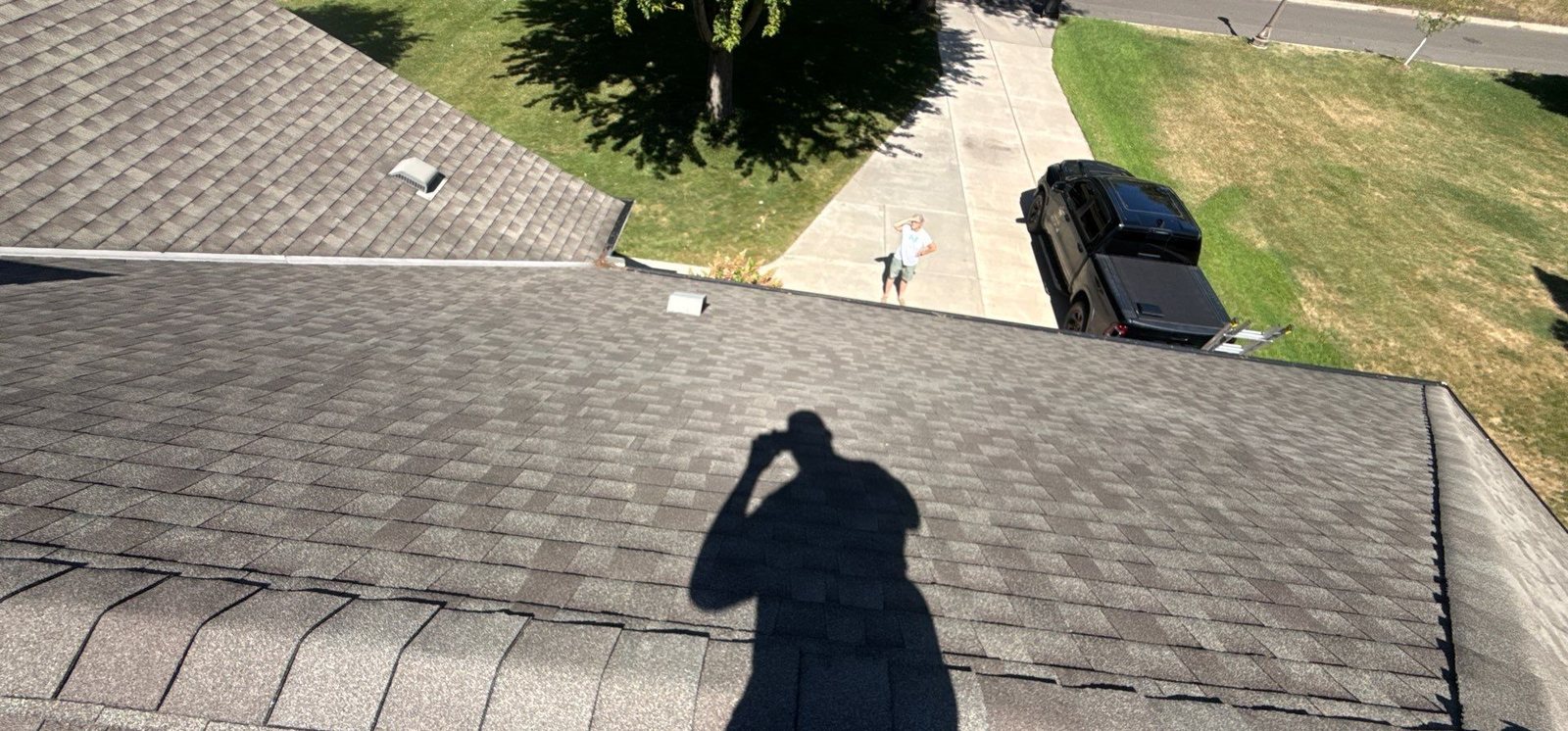
Hail damage? Check the ground first, not your roof
Check for hail damage from the ground first: photograph reachable soft metals, the outdoor AC unit and material at downspout outlets. These clues guide a professional inspection; they do not prove that the roof is damaged.
The hail stops. You step outside, look up at the shingles and wonder whether anything happened. Before you pull out a ladder, look down: some of the most useful things to photograph are within reach of the yard.
This is how to check for hail damage after a storm in Minnesota without climbing onto your roof. Mike Holmes, owner of Repair King, walks through the ground-first approach in this short video; the guide below explains what each clue can tell you, and what it cannot.
Read the transcript
The first place to check for hail damage isn't your roof. It's the ground around your house. After a Minnesota hailstorm, start at your AC unit. It took the same hits as your roof, and it keeps the marks. Those thin aluminum fins dent easily, and the dents show the hail's size and direction. Next, check the bottom of your downspouts for granules knocked off your shingles. Up on the roof, a hard hit can crack the mat inside a shingle. Roofers call that a bruise. A few loose granules alone aren't damage. Shingles are made with extra. But where hail knocks them off, fresh asphalt shows black, then grays over several months. That's how new damage is told from old. So check the ground first, leave the ladder to the pros, and get a free inspection from Repair King while the marks are fresh.
Where should I look first after a hailstorm?
Start at ground level with the outdoor AC unit, reachable downspouts and metal trim, then look at the ground below downspout outlets. Photograph what you see before trying to clean or straighten anything; these are clues to document, not a roof diagnosis.
Wait until conditions are safe to go outside. Skip areas with broken glass, hanging branches or electrical hazards. A useful walk-around is one you can do with both feet on stable ground, without reaching over a fence or moving equipment.
Walk each accessible side of the house, not just the side facing the street. Look for groups of dents on thin metal, damaged screens and anything noticeably different from before the storm. Owens Corning's storm checklist recommends checking gutters, vents, windows and outside areas as well as the roof.
Take one wide photo showing where the item sits, then a closer photo of the mark. Label it in plain language: “AC, west side” or “downspout beside garage.” Save the originals and note when you first noticed the condition. Don't label an unfamiliar dent “new hail damage” just because it caught your attention today.
What do dents in AC fins tell me about hail size and direction?
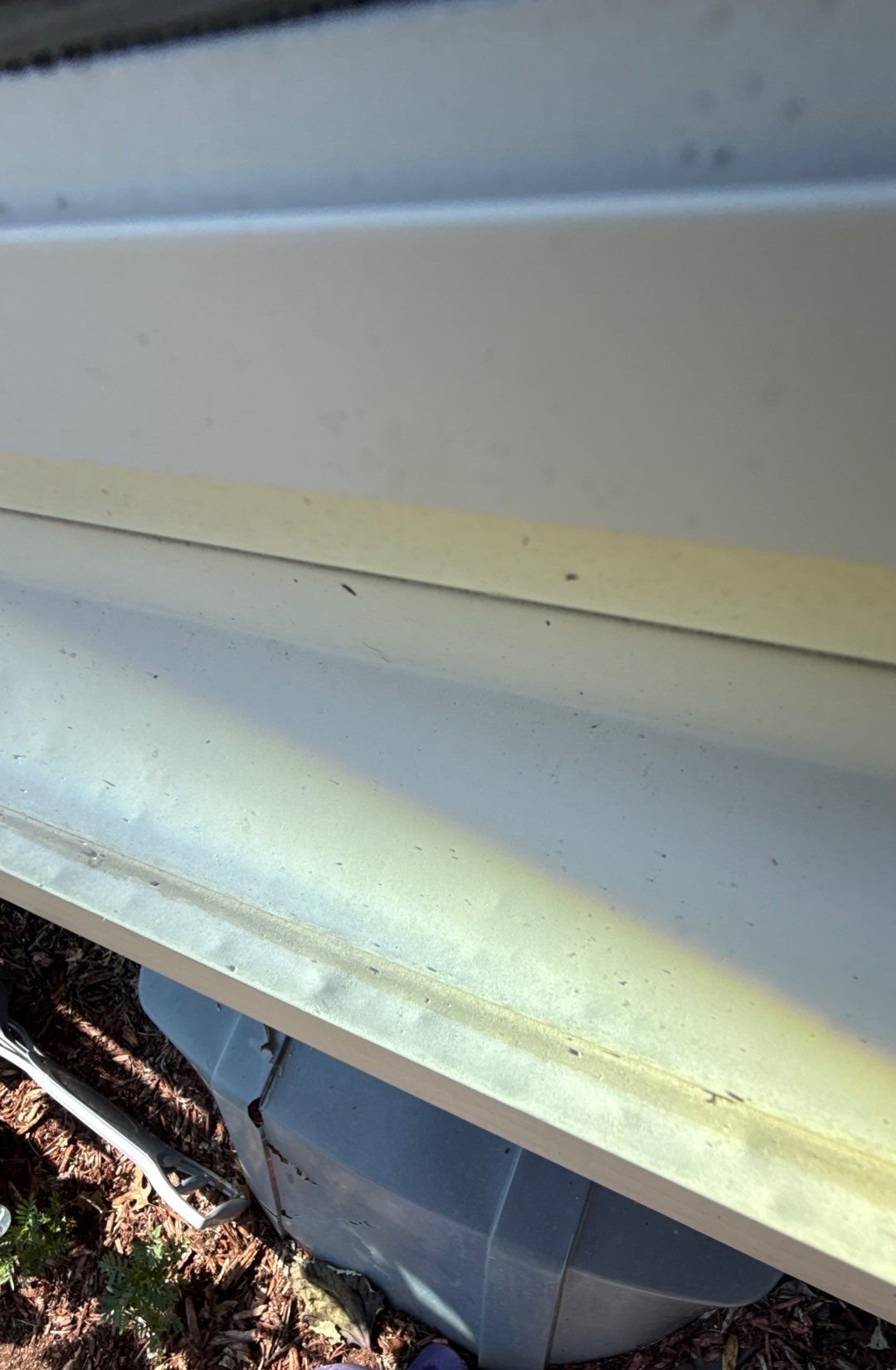
Dents in the outdoor unit's thin metal fins can help an inspector evaluate hail size and the direction of impacts. They do not give you an exact hail measurement or prove that the shingles have the same damage.
The fins are the closely spaced metal strips around the outdoor coil. Look through the protective grille from outside the unit. Photograph the whole side and any concentrated patches of flattened fins without removing panels, poking through the grille or trying to comb the fins straight.
Compare accessible sides. Record which side has marks and which appears undisturbed. That gives the inspector a location pattern to compare with other surfaces, rather than one isolated close-up with no orientation.
Don't assume the outdoor unit and roof received identical impacts. In the video, “the same hits” means they were exposed to the same storm, not that every surface took equal-sized stones at the same angle. Tell the inspector if the unit was recently installed, protected by a cover or already dented before this storm.
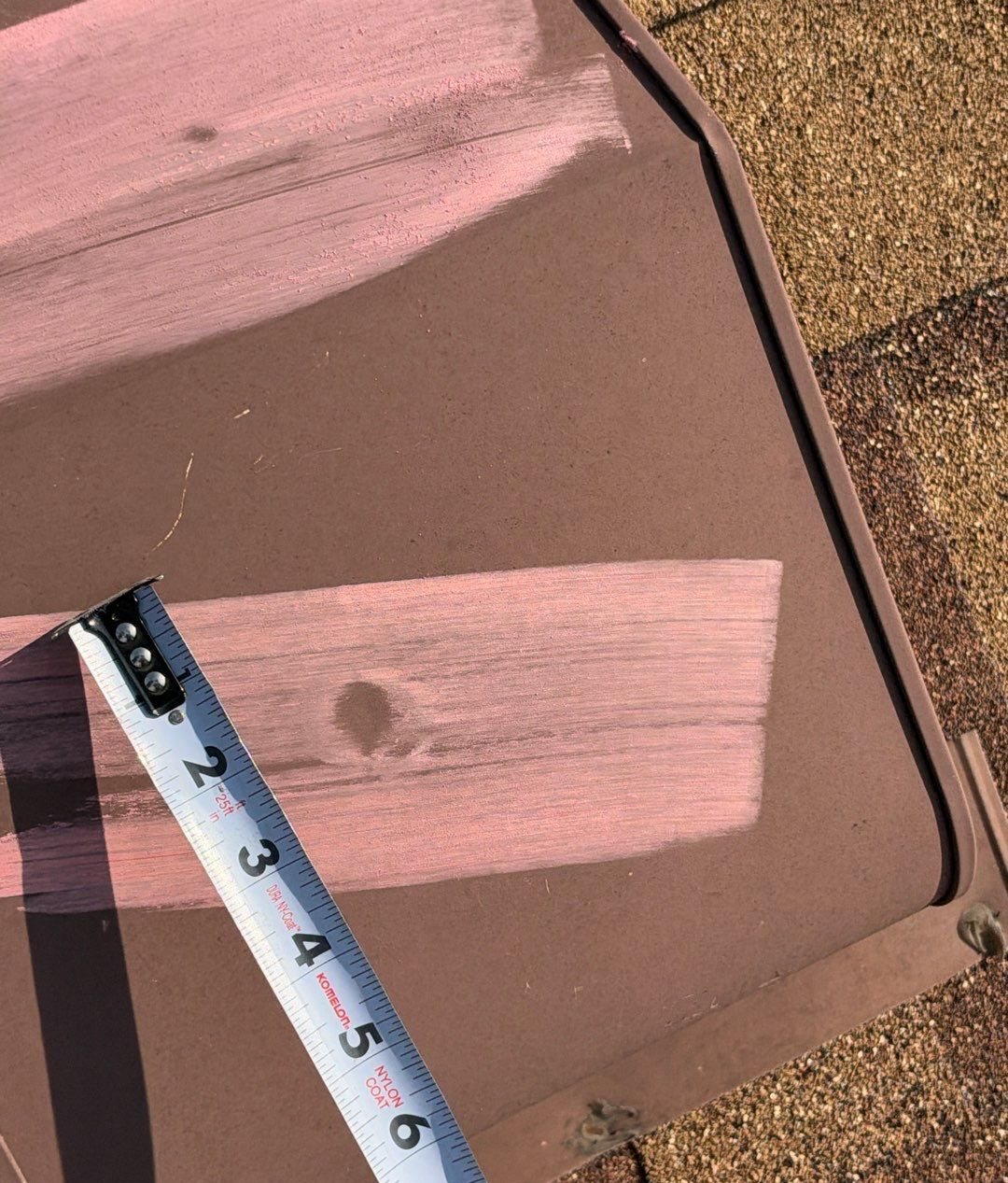
For other soft metals, roof vents offer a useful professional comparison. The Repair King photo below shows a tape beside a chalk-highlighted dent on a metal vent. It illustrates measured documentation, not a reason to climb up and measure your own.
Do granules at the bottom of a downspout mean hail damaged my shingles?
No. A few loose granules alone are normal and do not establish hail damage; shingles are made with extra granules, some of which shed after installation. A new or unusually heavy collection is worth photographing and discussing with an inspector.
Granules are the small mineral particles on a shingle's surface. At a reachable downspout outlet, look for material that resembles the roof's surface grains rather than assuming every pile of grit came from the shingles. Photograph the outlet and what is beneath it before sweeping.
The roof's history matters. Tell the inspector whether it was recently installed, whether the gutters were recently cleaned and whether you have seen similar material before. “I noticed this today” is useful. “All of this came off last night” is a stronger statement than a photograph alone supports.
Stay at the outlet. Don't remove a downspout, reach into an elevated gutter or brush the shingles to see what falls off. The next step is to compare the loose material with conditions on the roof, including any concentrated impact marks and the roof's overall wear.
Our photo guide to hail damage versus normal shingle wear covers the look-alikes in more detail. Use this ground check to gather the clues, then that guide to understand why a bald spot needs context.
What is a shingle bruise or mat fracture?
A shingle bruise is a localized soft area associated with an impact fracture; the mat is the reinforcing layer inside the shingle. A hard hail impact can fracture that reinforcement even when the roof does not show an obvious hole from the yard.
Think of a shingle as more than its colored surface. A photograph can show missing surface granules, but it cannot by itself show the full condition of the reinforcement underneath. The NRCA article explains that some impact fractures are visible, while others are identified as localized soft spots during a close inspection.
This is not a suggestion to press on your shingles. Leave hands-on evaluation to the inspector. Don't lift tabs, scratch a suspected impact or draw circles around random bare spots yourself.
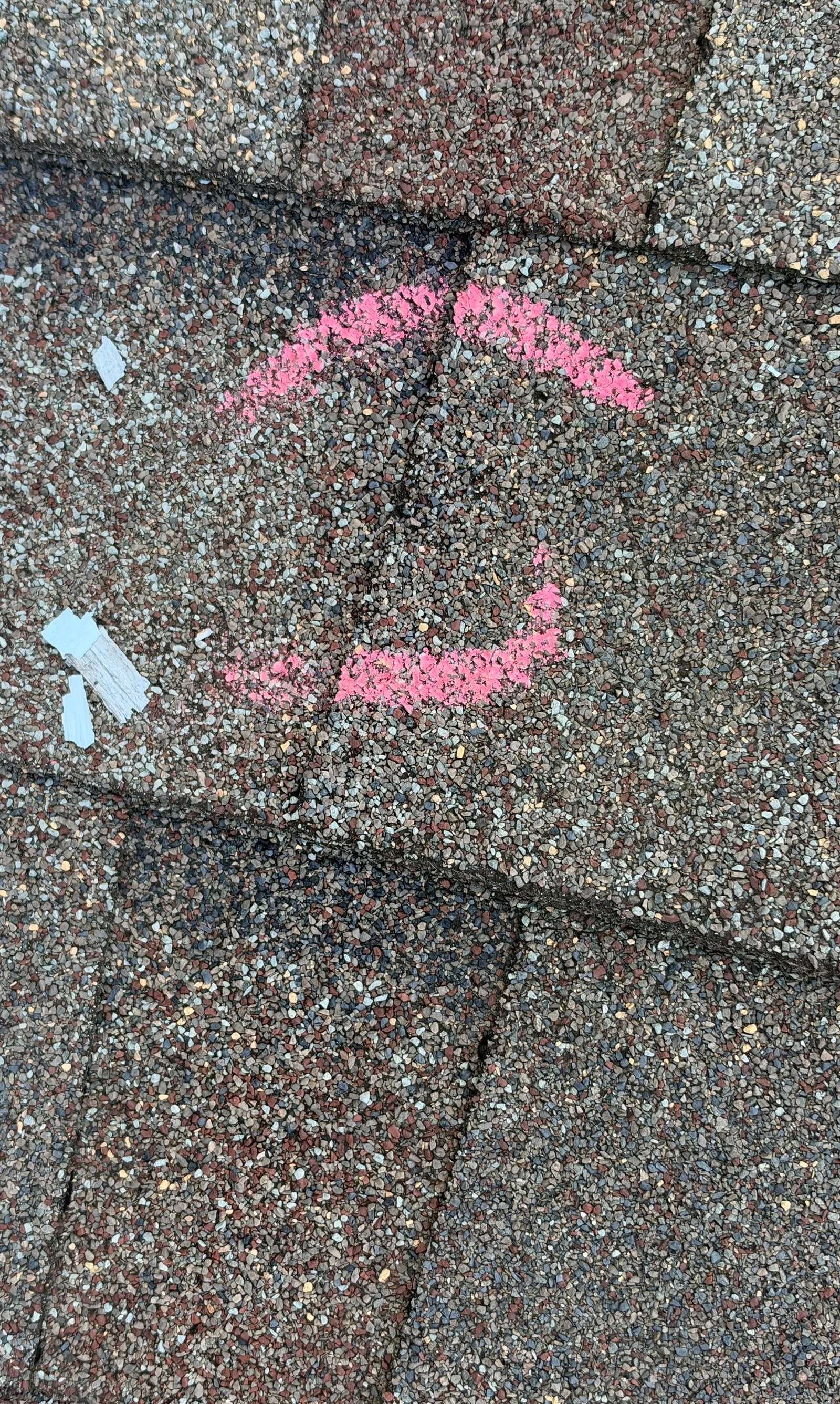
Ask the inspector to explain what makes a spot consistent with hail rather than simply showing a circle and saying “damage.” A useful explanation connects the surface condition, any observed fracture and the surrounding pattern. If a condition cannot be confirmed, the report should leave that uncertainty clear.
How can an inspector tell fresh black hail marks from old gray ones?
Freshly exposed asphalt can appear dark or black and shiny; older exposed material becomes duller with weathering. That contrast helps an inspector assess relative age, but color is not a reliable calendar for assigning damage to one storm.
University of Missouri Extension describes new hail hits as shiny because the exposed asphalt has not yet weathered to a dull color. Mike's video summarizes that change as black turning gray over several months. Treat that as a field description, not a rule that every mark changes color on a fixed schedule.
A black spot alone is not enough to call something a fresh hail impact, and a gray spot alone cannot tell you its storm date. Ask what other evidence supports the interpretation. Earlier inspection photos, roof work records and your own before-and-after pictures can help provide context.
If you remember more than one storm, write down each possible date rather than choosing the most recent one. You can review Twin Cities storm history or request an address-based free Roof & Storm Report. Those resources describe storm history, not the condition of your particular shingles.
Save the storm report alongside your photos, not in place of them. A local weather and meteorology report and a physical inspection answer different questions: what happened nearby, and what conditions are actually present on your home.
Why should I stay off the ladder, and what does a free inspection document?
You do not need roof access to make a useful first record after hail. Leave ladder and roof work to a professional; Repair King's free inspection documents observed conditions with photos and explains construction-related repair options.
Owens Corning recommends a ground-level visual check around the house and a professional inspection for damage assessment. Use binoculars or a camera zoom from a safe place if you want a broader view. If you cannot see a section, simply note “not visible from ground.”
Repair King's storm inspection service includes the roof, siding, gutters and soft metals. Its photo report uses close-ups and wider location photos, with findings organized by roof slope or exterior side. You keep the report whether or not you hire Repair King.
- Show us the AC side, downspout outlet or metal mark that prompted your question.
- Share earlier photos and note any recent roof, gutter or equipment work.
- Ask which observations are consistent with hail or wind, which are normal wear and which remain uncertain.
- Ask for the construction explanation behind any recommended repair or replacement.
We inspect and document property conditions and can provide a written construction estimate. We do not decide insurance coverage or promise a claim result. Your insurer handles coverage questions; our role is to make the observed conditions understandable.
Found a mark you can't explain?
Keep your feet on the ground. Let us photograph the roof and exterior and explain what we find.
Request a free hail inspectionEven if you never book an inspection, you now have a useful starting record: where the marks are, when you noticed them and what the storm left around the house. That is a better next step than a ladder and a guess.
Leave the ladder. Get the roof documented.
Request a free Repair King inspection with photos of observed roof and exterior conditions and a plain-English explanation.
Questions people also ask
Should I straighten dented AC fins before an inspection?
Photograph the unit and leave the fins alone during your ground check. Do not remove panels or reach through the grille. Ask an HVAC professional about equipment condition or repair.
What if my gutters have guards and I cannot see inside?
Skip the elevated gutter and photograph the accessible outlet and surrounding ground. Tell the inspector that the gutter interior was not visible. You do not need to remove guards to make a useful first record.
Does a storm history report confirm damage to my roof?
No. It provides storm-history context for your address, not a physical damage assessment. Pair it with photographs and an inspection of the actual property.
What should I send Repair King before the inspection?
Send a wide view and close-up of each concern, its location and when you noticed it. Include earlier photos if available and mention recent work or pre-existing dents. There is no need to get on a ladder for more pictures.
Sources
- Learn how to identify hail damage on roof systems (National Roofing Contractors Association)
- Granule Loss on New Shingles (manufacturer bulletin; hosted copy) (GAF)
- Call insurance adjuster to determine hail damage (University of Missouri Extension)
- Roof Storm Damage Checklist (Owens Corning)
- Storm inspection and photo documentation services (Repair King)
Repair King is a licensed contractor, not an insurance company, public adjuster or attorney. We inspect, document and repair. Coverage decisions belong to your insurer, so read your own policy and ask your agent.


