
Can you paint over smoke damage? How to clean, seal and paint after a fire in Minnesota
You can't paint directly over smoke damage: the surface has to be cleaned, dried and sealed with a stain- and odor-blocking primer first, then painted. Anything charred, soaked or still smelling after cleaning gets replaced instead.
The most common mistake after a house fire is rolling a fresh coat of paint straight over a smoke-stained ceiling. It looks great for a few weeks, then yellow-brown shadows creep back through and the room starts to smell like a campfire again on the first humid day.
So can you paint over smoke damage? Not directly. The surface gets cleaned first, then sealed with a primer made to block smoke stains and odors, and only then painted. Anything charred, soaked or crumbling gets replaced instead of painted. For the short version see our top 20 homeowner questions; this post is the full, practical walk-through.
Why do smoke stains bleed through new paint?
Smoke residue is oily and partly water-soluble, so regular latex paint can pull it up into the new film as it dries. That is why stains "ghost" through one or two coats of wall paint and why a stain-blocking primer is the step that matters.
Wall paint is designed to cover color, not to lock things in. Stain-blocking primers are formulated to form a barrier so the residue underneath stays underneath.
The manufacturers say this plainly, and they also say the same thing about prep: the primer is not a cleaner.
Why does the smoke smell come back after painting?
Because the smell usually isn't coming from the paint surface. It is coming from something porous behind or under it: soot left on the wall, smoke-saturated drywall or plaster, insulation, or framing in the cavity. Paint over that and the odor finds its way out.
Odor-sealing primers help on surfaces that have been cleaned. They are not designed to make a smoke-soaked wall cavity smell new. If a room still smells after cleaning, find out what is still holding the smoke before anyone opens a can.
What is the right order: clean, seal, then paint?
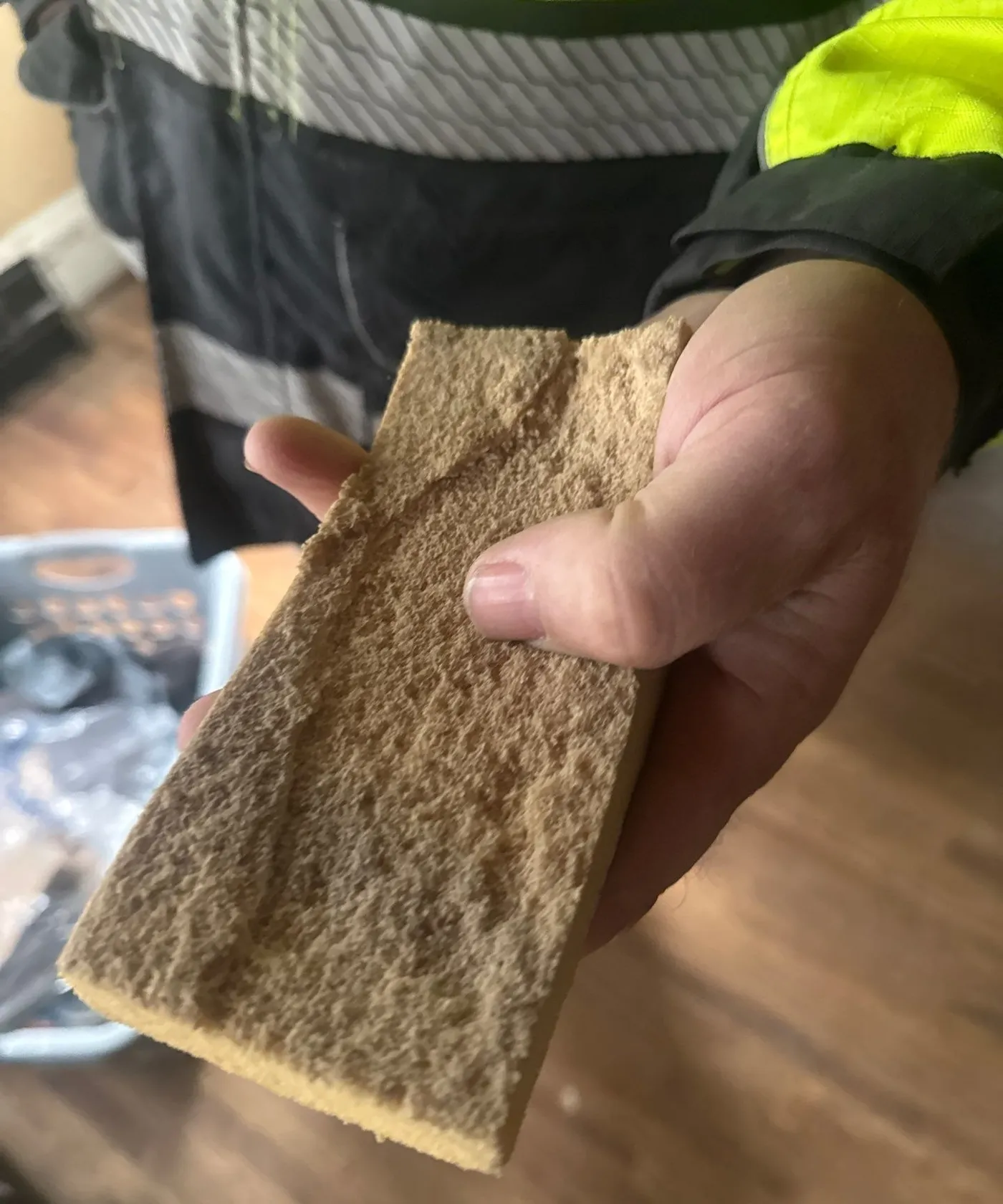
Remove what can't be saved, clean what can, let it dry, prime with a stain- and odor-blocking primer, test for bleed-through, then finish paint. Skip a step and you usually end up doing the whole room twice.
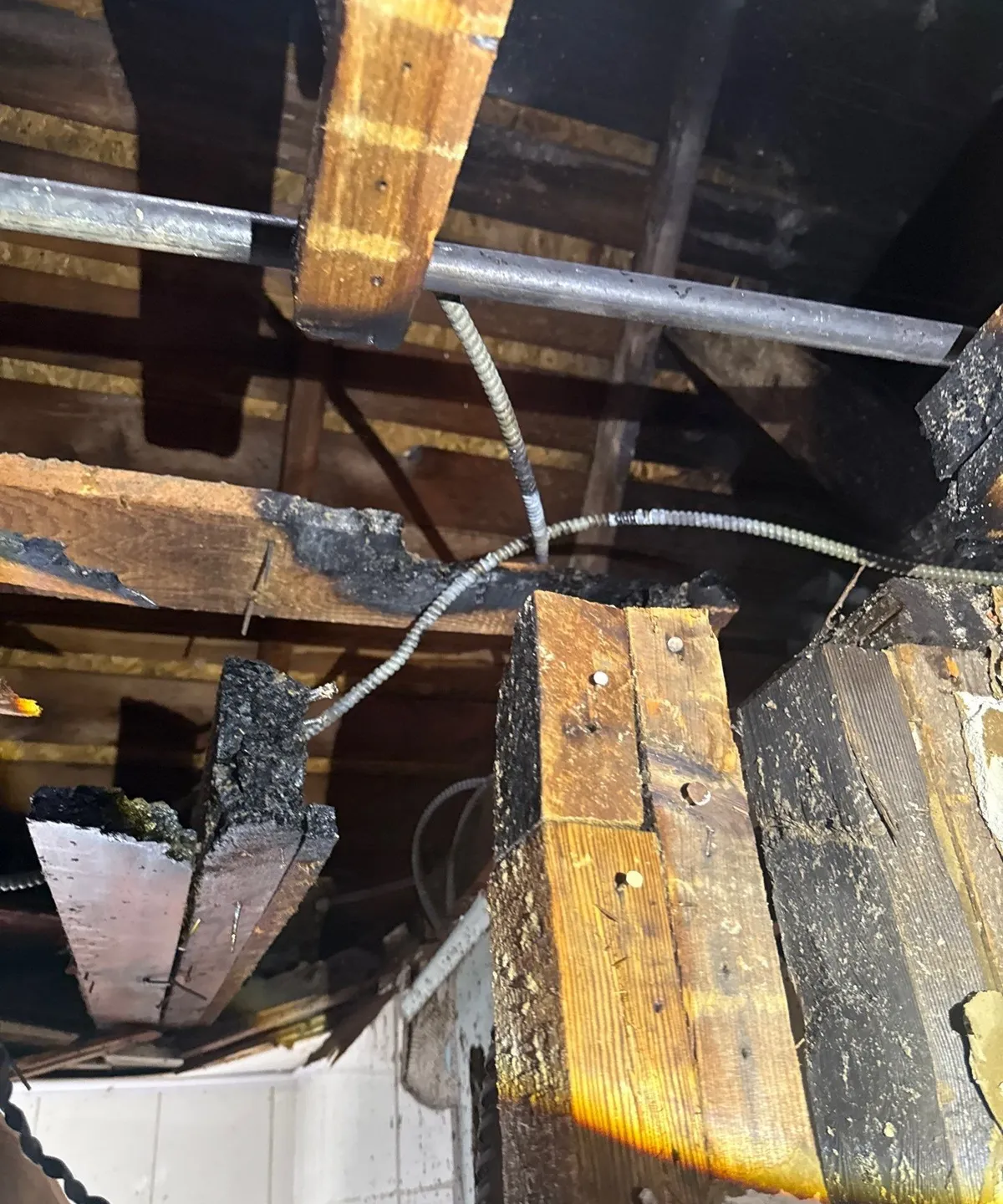
- Decide what stays. Charred wood, crumbling plaster and drywall that was soaked by firefighting water come out. Paint is not a repair for any of those.
- Clean the surfaces that stay. Every primer data sheet we checked requires a clean surface. KILZ suggests a non-soapy detergent or TSP substitute, rinsed and dried. Heavy soot cleanup is its own trade; get it done before the painter shows up.
- Let it dry. B-I-N's data sheet says substrate moisture should not exceed 12%. A cheap moisture meter answers this question; guessing doesn't.
- Prime the whole surface. Several data sheets recommend priming the entire surface rather than spot-priming stains, so the topcoat looks even.
- Test before you paint everything. KILZ's Restoration primer instructions: topcoat a small section, and if the stain bleeds, apply a second coat of primer and test again.
- Finish paint. Ceilings first, then walls, then trim and doors, so drips land on surfaces not yet finished.
What is the best primer for smoke damage: shellac, oil or water-based?
All three types are sold for smoke. Shellac-based primer is the traditional heavy-duty choice and the only one of these rated for application at very low temperatures, oil-based primers sit in the middle, and the newer water-based "restoration" primers trade a little blocking power for low odor and easy cleanup. Read the label for smoke and odor specifically.
| Primer | Base | What the maker lists | Application temperature |
|---|---|---|---|
| Zinsser B-I-N Shellac-Base | Shellac | Blocks stains and odors from water and fire damage; one coat blocks smoke stains, some need a second | 0–90°F air, material and surface; humidity below 70% |
| Zinsser Cover Stain | Oil | Interior/exterior stain-blocking primer | 41–90°F; humidity below 85% |
| KILZ Original | Oil | Blocks water and smoke stains; seals smoke odors | 35–90°F |
| Sherwin-Williams Extreme Block | Oil (alkyd) | Blocks and seals stains from water, smoke and fire | See data sheet |
| Benjamin Moore Fresh Start 032 | Alkyd | For smoke damage, water stains, nicotine | Not below 50°F |
| KILZ Restoration | Water | Blocks smoke stains; seals smoke odors | 50–90°F |
| Zinsser Odor Killing Primer | Water | Odors from fire and smoke damage; dries clear, does not hide stains | 40–90°F |
One detail people miss: Zinsser's Odor Killing Primer dries clear. The data sheet itself says that to hide stains while blocking odors, use B-I-N. So a clear odor sealer alone won't cover a brown ceiling.
Shellac and oil primers have strong solvent fumes. In an occupied house, that matters as much as the blocking power.
When does drywall or trim get replaced instead of painted?
Replace it when it is charred, soft, swollen, delaminating or was soaked long enough to sag, or when the smell won't leave after cleaning. Paint and primer are for sound surfaces that are only stained.
| You see | Usually |
|---|---|
| Even gray or yellow film that wipes off, surface hard and flat | Clean, prime, paint |
| Stain that stays after cleaning, surface still sound | Stain-blocking primer, test, paint |
| Bubbled or blistered paint, drywall paper peeling | Replace that section |
| Ceiling sagging or stained from suppression water | Open it up; check the cavity and insulation |
| Charring you can press a screwdriver into | Remove; framing gets evaluated |
| Odor that returns after cleaning | Find the source; often the cavity, not the face |
Old lath and plaster complicates the call. It holds residue and water differently than drywall, and once you open part of a wall in an older Minneapolis or St. Paul house you often see more than expected.
Should burned or smoky framing be sealed before new drywall goes up?
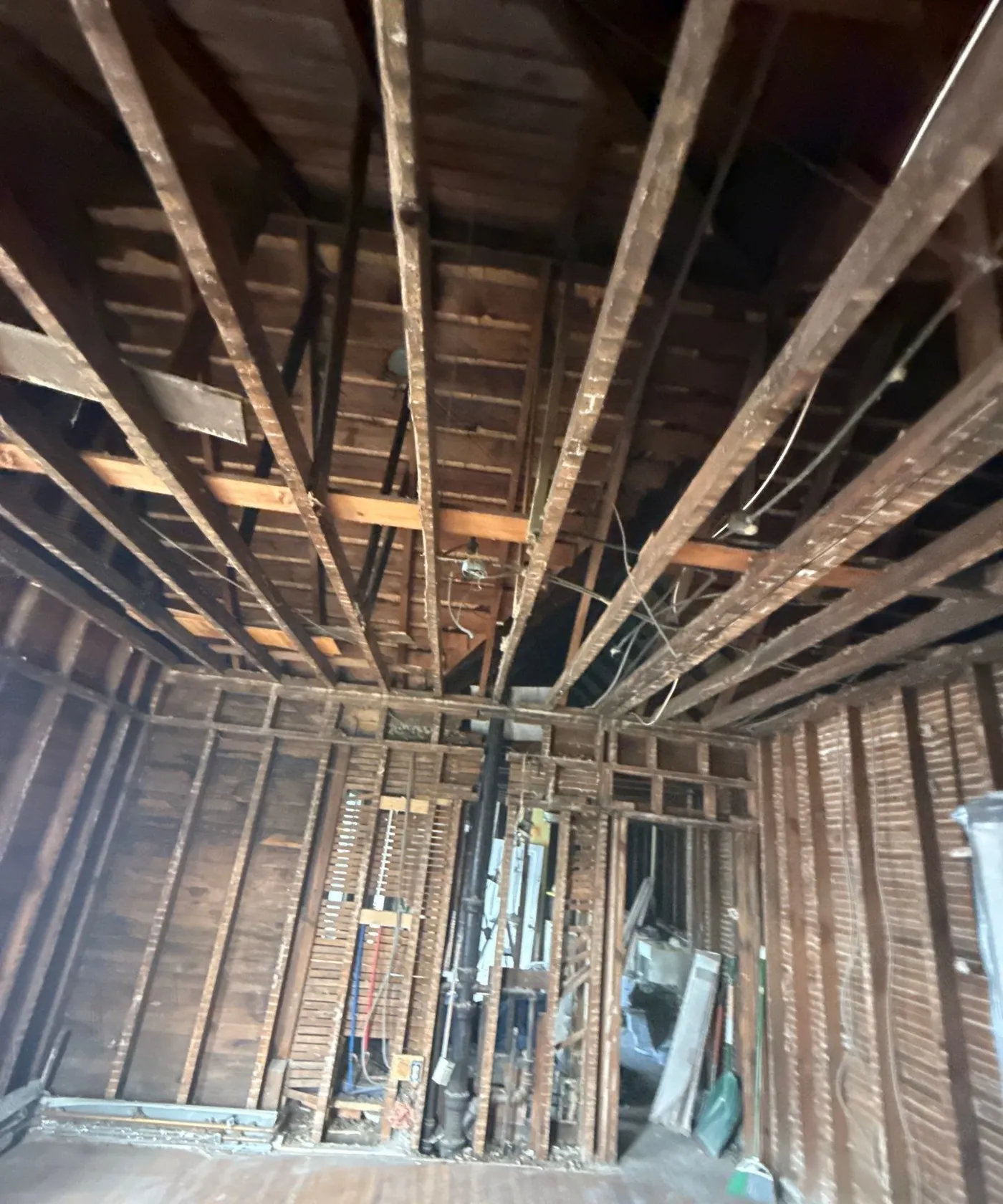
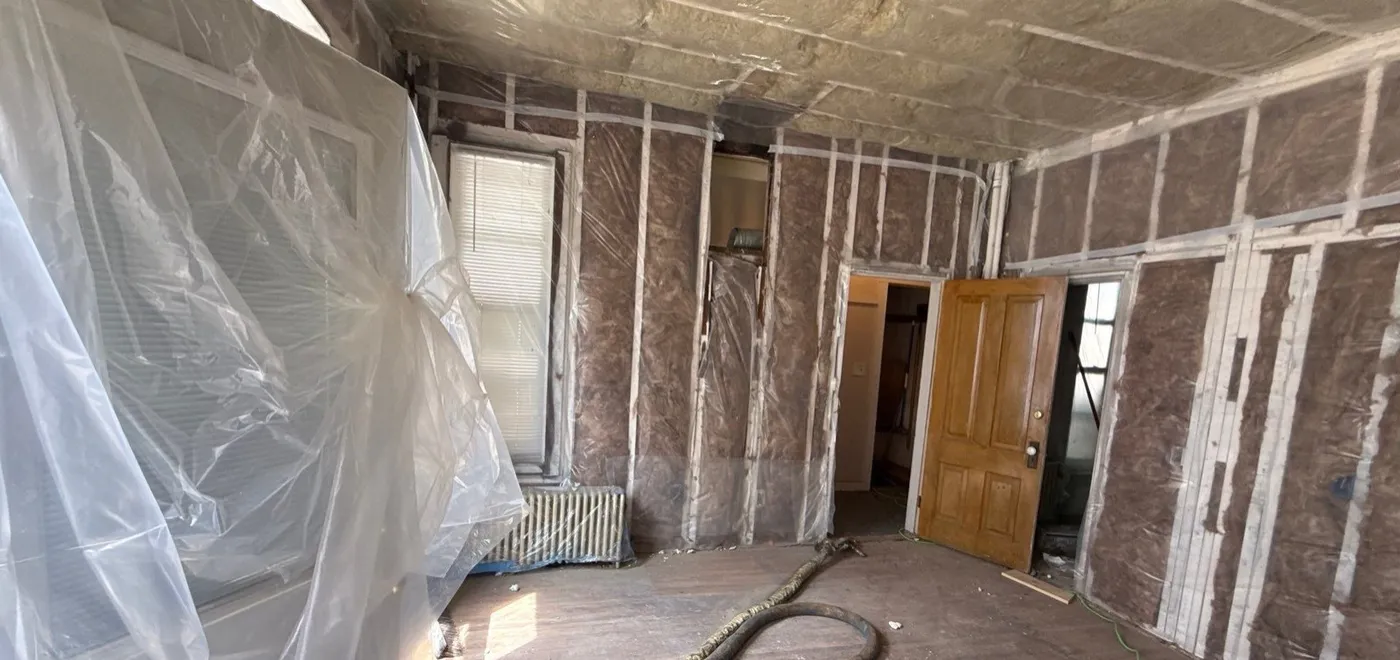
Framing that is structurally sound but smoke-stained is commonly cleaned and then sealed with a stain- and odor-blocking primer before insulation and drywall cover it. Framing that is structurally compromised gets replaced or reinforced, which is a carpentry decision, not a paint decision.
This is the one chance to seal those surfaces. Once drywall is up, any odor left in the studs and joists has nowhere to go but into the house.
Just had a fire?
Our free After-the-Fire Kit lists what to photograph, what to keep and what to ask before anything gets painted over.
Get the After-the-Fire KitCan you paint after a fire in a Minnesota winter?
Yes, but only when the room meets the temperature range on the primer and paint labels, and most water-based restoration primers need 50°F or warmer. In a fire-damaged house with the heat off, that usually means temporary heat and a plan for ventilation.
The minimum applies to the surface, not just the air. An exterior wall or a ceiling under an unheated attic can sit well below the thermostat reading in January.
Ventilation is the other half. Shellac and oil primers call for adequate ventilation, and opening windows in a Minnesota winter drops the temperature. Crews balance heat, fans and timing, and that can add days to a winter schedule.
Does a pre-1978 house change how smoke-damaged walls get painted?
It can. If the work disturbs paint in a home built before 1978, federal rules require the contractor's firm to be certified and to use lead-safe work practices. Scraping, sanding and tearing out painted walls and trim during a fire rebuild are exactly that kind of work.
Many fire-damaged houses in Minneapolis and St. Paul are well over 50 years old, so assume old paint layers until a test says otherwise. EPA's consumer RRP page explains what to ask a contractor.
What order do rooms get painted in a fire rebuild?
Paint follows the dirty work. Rooms get painted after demolition, cleaning, framing repairs, sealing, mechanical work, insulation and drywall are finished, usually starting where the drywall finished first, and before finish flooring goes in.
Painting a room early because it "looks done" is how fresh walls get dusty or scratched while the rest of the house is still being torn apart. If you are choosing colors, choose early; the painting itself happens late.
- Smoke testing or inspection results cover every room being painted
- Walls pass the white-cloth test
- Moisture readings are in the primer's range
- Room and surface temperatures meet the label minimum
- Pre-1978 house: lead-safe practices in place
- Bleed-through test patch done before full topcoat
Rebuild scope beyond paint is on our fire and water restoration page, and kitchens or layouts you want to change while the walls are open fit under remodeling.
Planning the rebuild after a fire?
We'll walk the house with you, photograph what has to be replaced versus cleaned and sealed, and lay out the rebuild order.
Questions people also ask
How many coats of primer does smoke damage need?
Often one, but not always. Zinsser says one coat of B-I-N blocks smoke stains while some stains need a second, and KILZ recommends a test patch of topcoat: if the stain bleeds, add another primer coat and test again.
Can I use paint-and-primer-in-one over smoke stains?
The products that manufacturers list for smoke stains and odors are dedicated stain-blocking primers such as shellac, oil or restoration primers. Check the label for smoke specifically; if it isn't listed, don't count on it.
Does clear odor-sealing primer hide smoke stains?
No. Zinsser's Odor Killing Primer dries clear, and its data sheet points to B-I-N when you need to hide stains as well as block odor.
How long after priming can I paint?
It depends on the product and the room conditions. The data sheets list recoat times from about an hour to two hours at normal temperatures, and cold or humid rooms slow drying down.
Who should paint after a house fire, me or a contractor?
Small, lightly stained areas in a newer home can be a DIY job if you follow the label. In a pre-1978 home where paint will be disturbed, contractors must follow EPA lead-safe rules, and heavy smoke spread is usually part of a larger rebuild scope.
Sources
- B-I-N Shellac-Base Primer technical data sheet (Rust-Oleum / Zinsser)
- B-I-N Shellac-Base Primer TDS (Canada) (Rust-Oleum / Zinsser)
- Cover Stain technical data sheet (Rust-Oleum / Zinsser)
- Odour Killing Primer technical data sheet (Rust-Oleum / Zinsser)
- KILZ Original Oil-Based Primer (KILZ)
- KILZ Restoration Primer (KILZ)
- Extreme Block Stain Blocking Primer/Sealer data page (Sherwin-Williams)
- Fresh Start 032 technical data sheet (Benjamin Moore)
- Lead Renovation, Repair and Painting Program Rules (U.S. EPA)
- RRP Program: Consumers (U.S. EPA)
Repair King is a licensed contractor, not an insurance company, public adjuster or attorney. We inspect, document and repair. Coverage decisions belong to your insurer, so read your own policy and ask your agent.


