

How long does it take to rebuild a house after a fire in Minnesota?
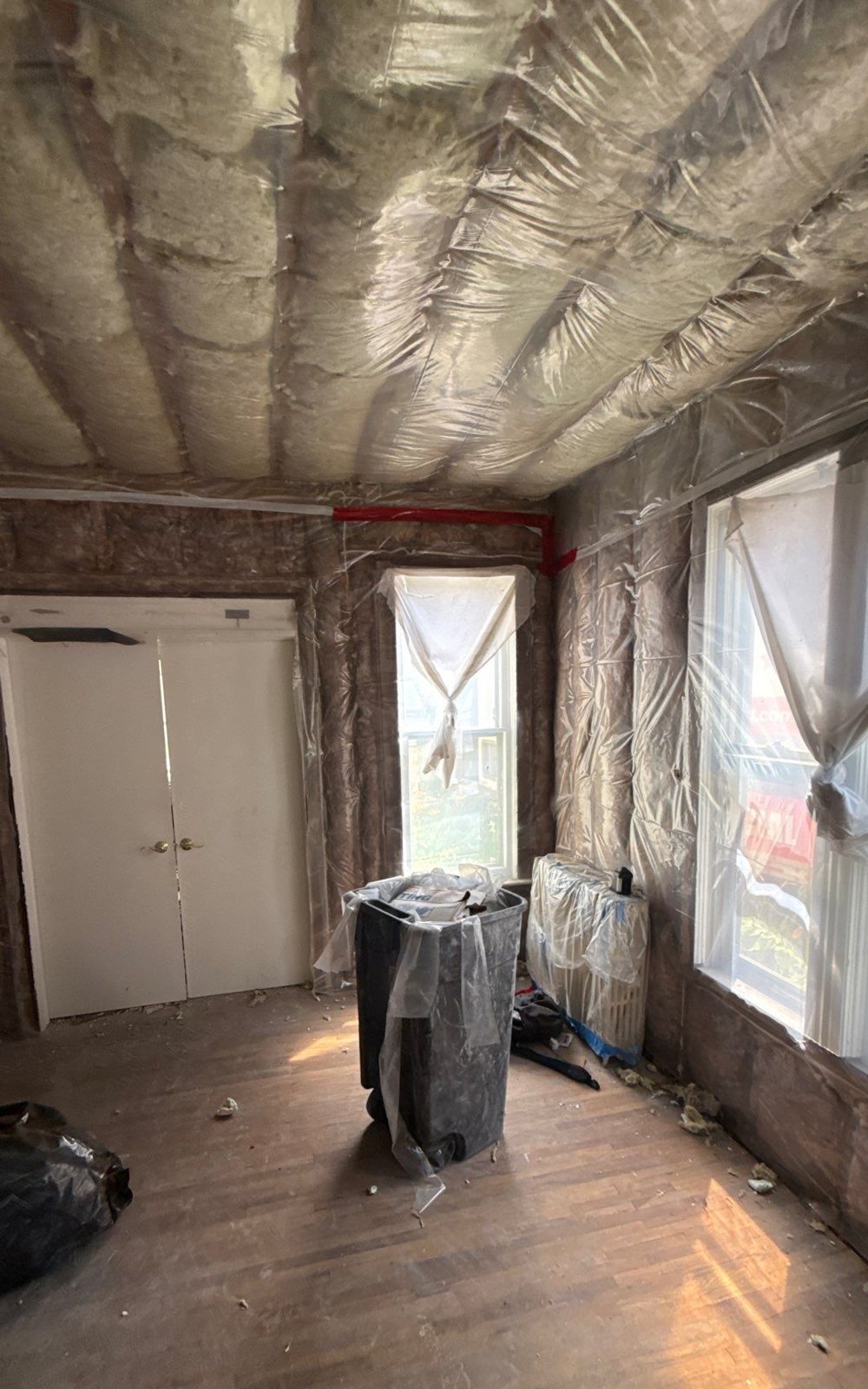
Twelve months. That is how long the South Minneapolis house fire rebuild in our job camera has taken so far, from the first photos in mid-July 2025 to insulation going into the walls in July 2026. Drywall and finishes are still ahead. That is one real job, not a promise, but it is a good picture of where the time actually goes.
Our fire and water restoration page covers the first 72 hours. This article is the part after that: the phases, what stalls each one, and what you can get done while you wait.
How long does it take to rebuild a house after a fire in Minnesota?
A small, contained fire can be repaired in weeks. A fire that spreads smoke and firefighting water through a house often means a rebuild of many months, and our South Minneapolis job reached the insulation stage about 12 months after the fire.
The clock is set less by the flames than by three things: how far water and smoke traveled, how fast the scope gets agreed, and how the house was built. Older Minneapolis and St. Paul homes add time because what is inside the walls is rarely what you expect.
What does a real fire rebuild timeline look like, month by month?
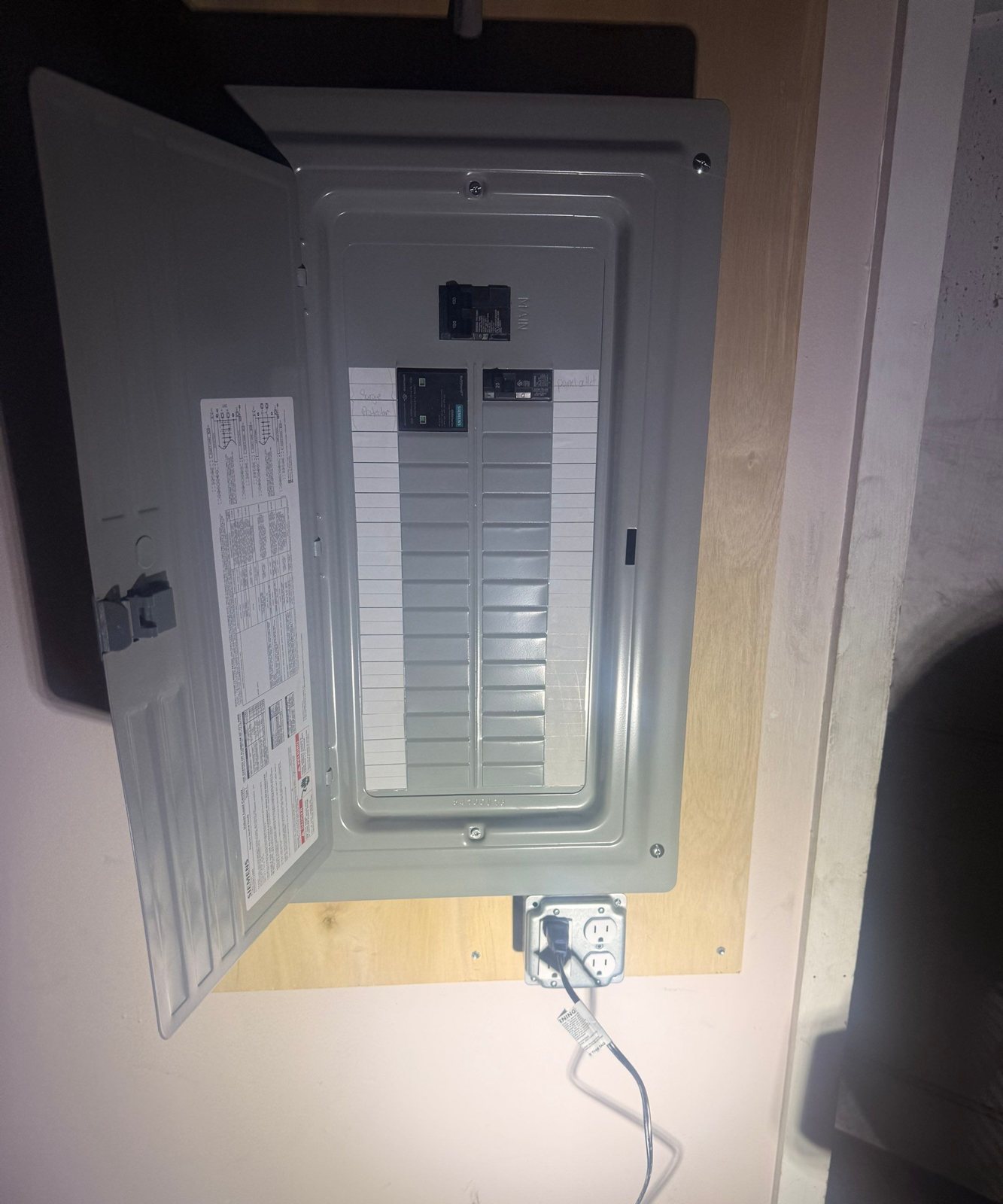
On our South Minneapolis job, the first month was documentation, moisture testing, demolition of wet materials and drying. Around months 3 to 5 the smoke scope widened. New electrical was in about 8 months after the fire, the walls were being reframed at 10 to 11 months, and insulation went in at about 12 months.
| When | What the photos show |
|---|---|
| Start (mid-Jul 2025) | Room-by-room photos, moisture meter and thermal readings, ceiling collapse from suppression water, kitchen ceiling demo, drying equipment starts Jul 31 |
| ~1 month (Aug 2025) | Follow-up moisture readings |
| ~3–4 months (Oct–Nov 2025) | Third-party smoke and soot inspection, balloon-framing findings, pipes winterized and flushed |
| ~5 months (Dec 2025) | Measurements, more removal, floor plans drawn |
| ~8 months (Mar 2026) | New electrical panel and meter equipment |
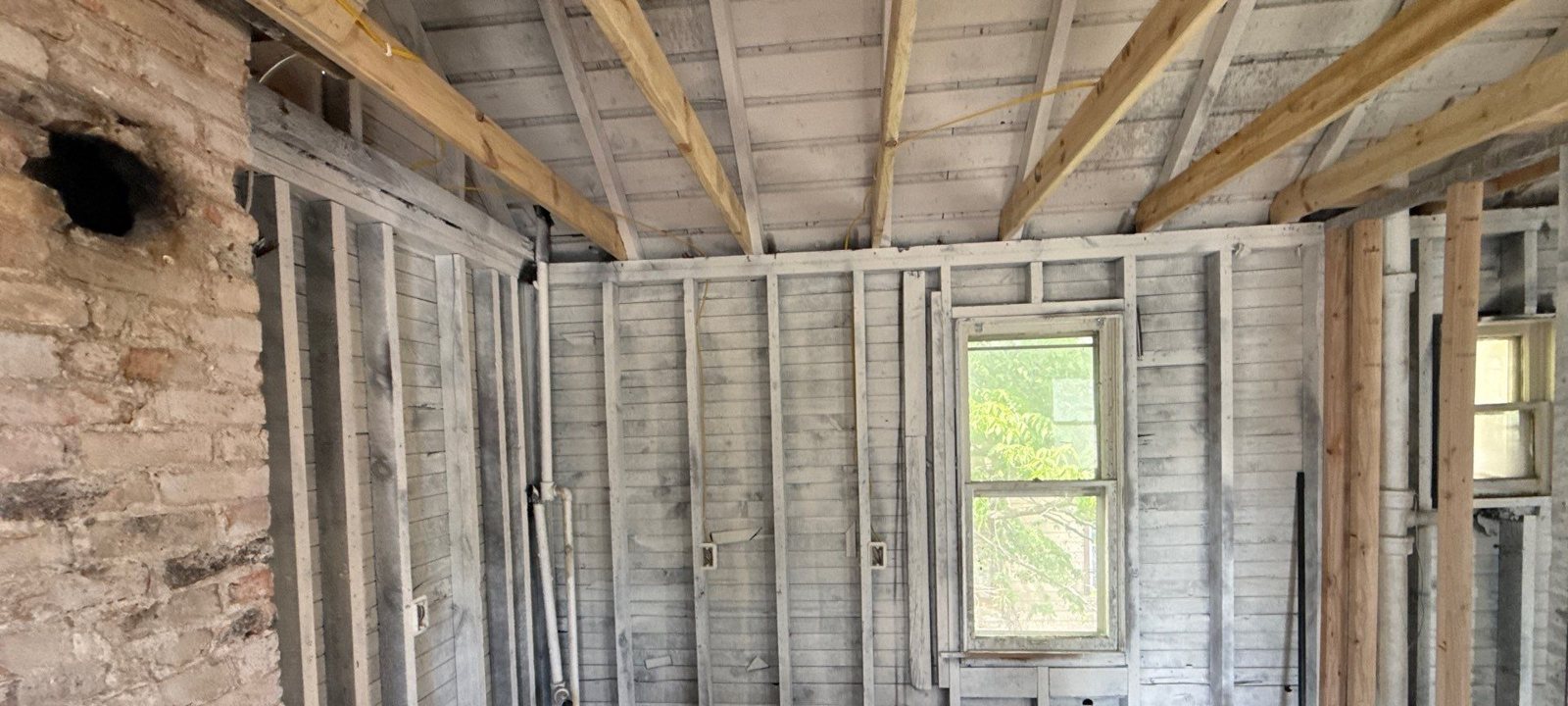
| ~10–11 months (May–Jun 2026) | Walls open to studs, framing, materials delivered |
| ~12 months (Jul 2026) | Insulation and vapor barrier installed |
Phase 1: How long does securing and board-up take?
Securing the house is usually the fastest phase, often the first day or two. It covers boarding openings, tarping the roof and shutting off or protecting utilities.
Minneapolis lets emergency repairs start before the permit, but you must apply by the next working business day. Our emergency roof repair team handles tarping.
Phase 2: Why does documentation and scope take so long after a fire?
Because hidden damage keeps turning up. Water from firefighting and smoke move into places you cannot see, and each discovery has to be measured, photographed and added to the scope before anything is torn out.
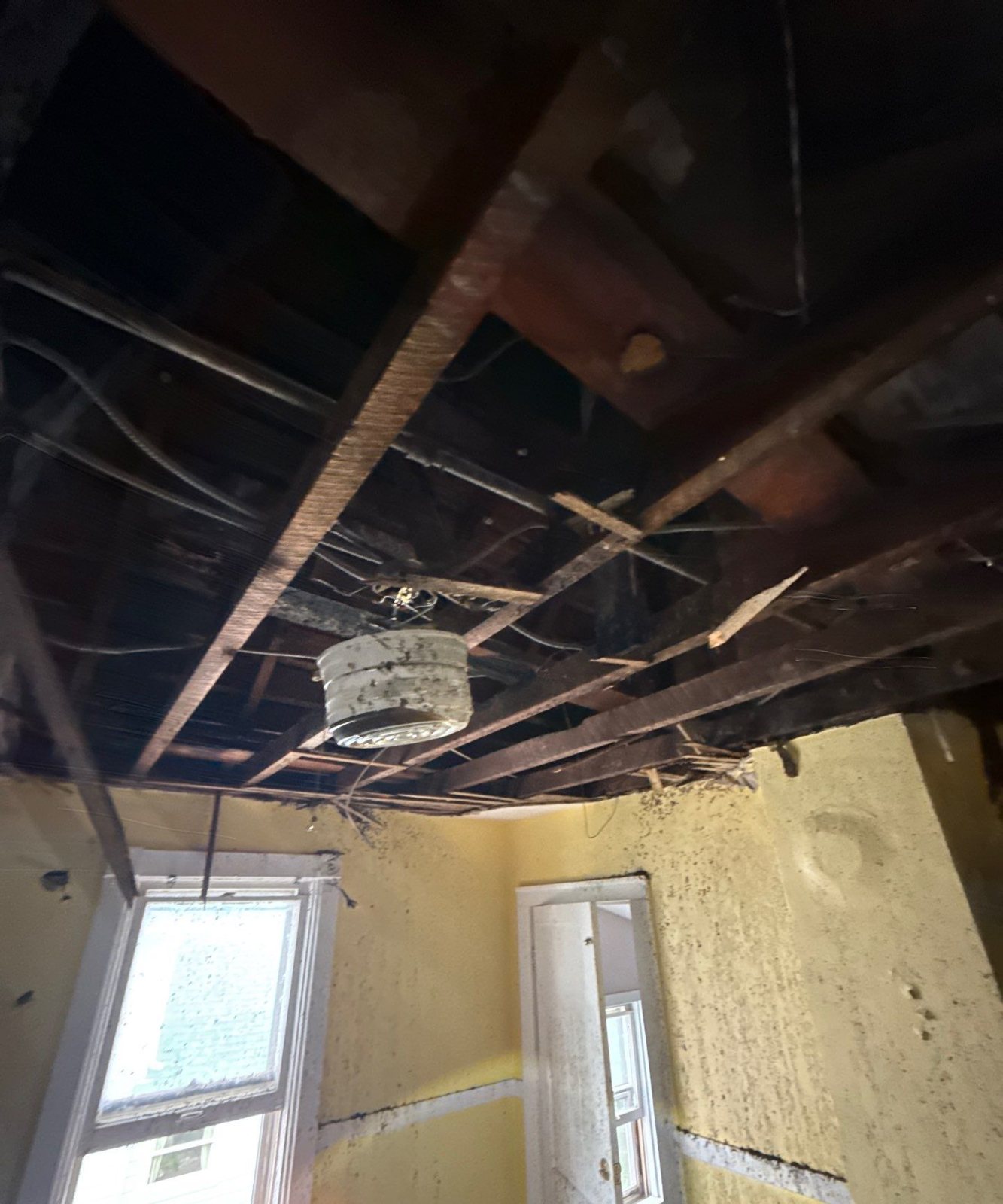
On our job, the worst ceiling damage was not from the fire at all. It came from suppression water that ran from the second floor and sat inside the ceiling cavity until the plaster came down.
Moisture readings drove the demo. Walls, a closet and ceiling sections tested beyond drying thresholds, and those were removed with the adjuster's approval, all photo-documented.
We are a contractor, not an adjuster. We document conditions and write the construction scope; coverage questions go to your insurer. The insurance claims page explains what we can and can't do.
Phase 3: How long do demolition and drying take?
Plan on weeks, not days. Wet materials have to come out, then the structure has to dry to acceptable readings before anything gets closed back up.
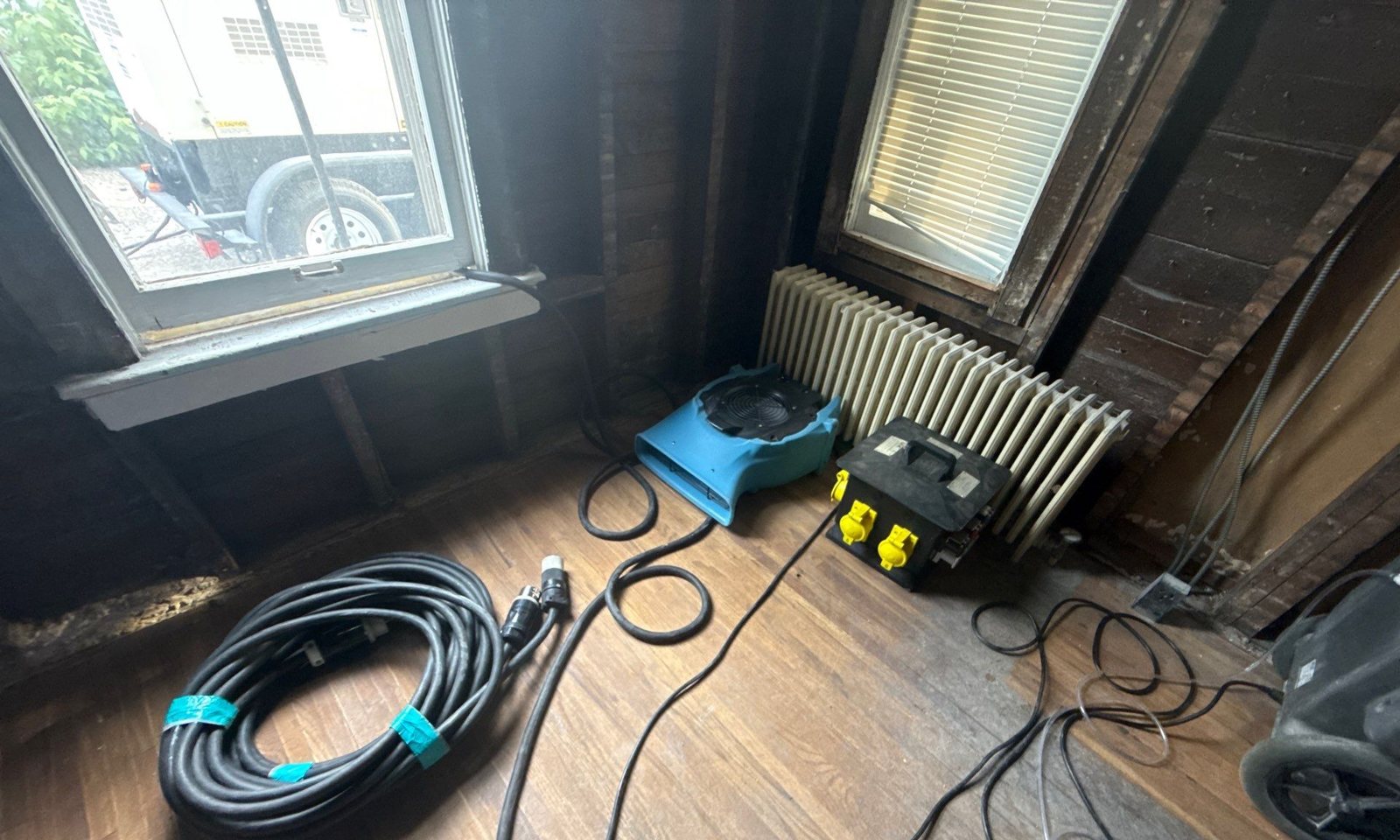
Old radiators, lath and plaster, and plumbing all slow demolition. On our job a floor-mounted radiator sat right over the wall that had to come out, so crews had to work around it carefully.
What slows this phase down
- Lath and plaster, which holds water longer and comes down in heavy, dusty sections
- Radiators and old piping in the way of removal
- Minnesota winter: an unheated fire house needs its pipes winterized, which our crew did in November
- Contents still in the rooms
Why did smoke damage add months to the job?
Because many older Twin Cities homes are balloon framed, with wall cavities open from floor to floor. Smoke and soot travel up those cavities, so damage shows up in rooms that looked fine.
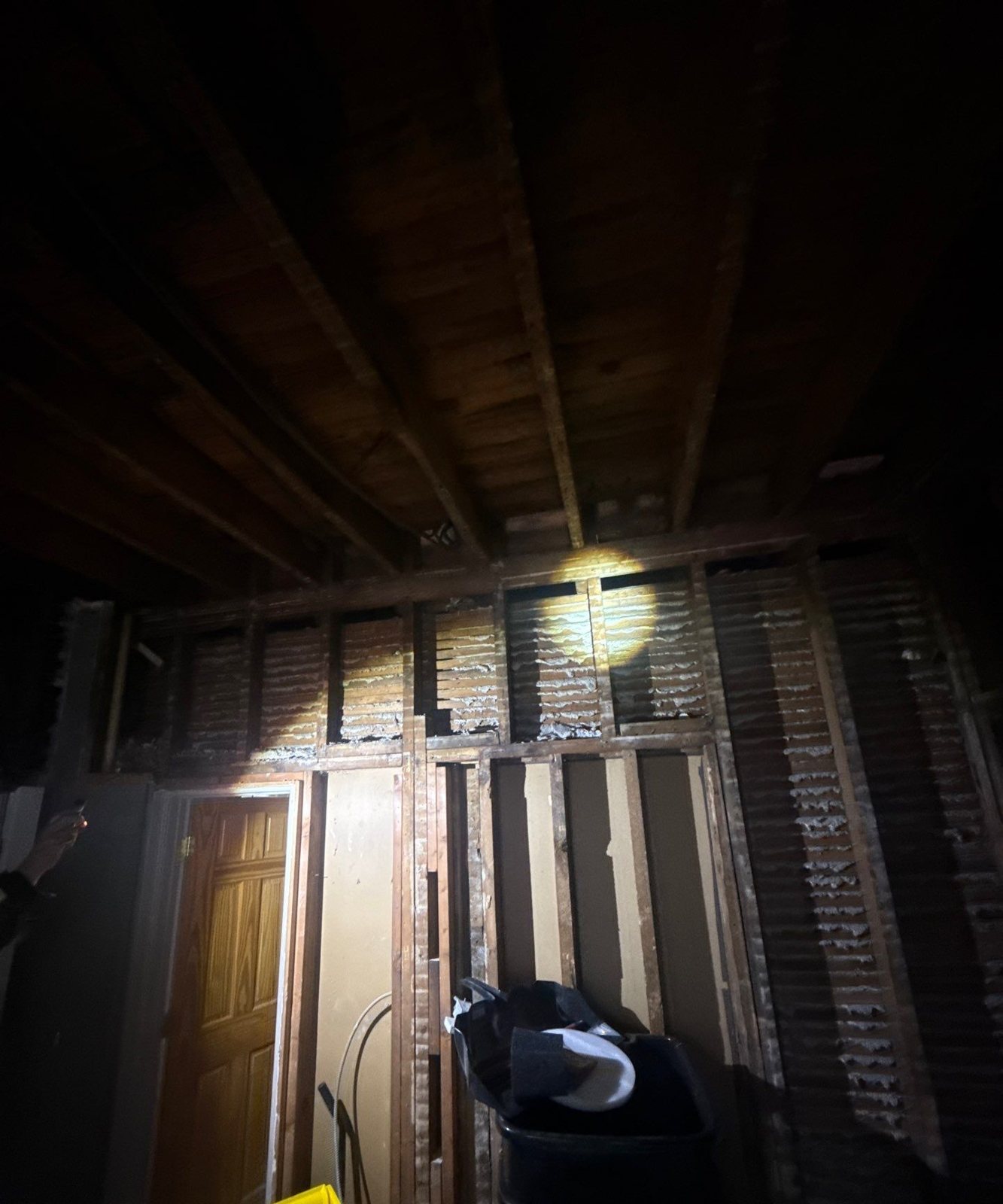
About four months in, a third-party inspection found soot embedded in wall texture in the living room and connected areas. That confirmed smoke had moved through the house, and the scope grew.
Do you need a permit to repair fire damage in Minneapolis or St. Paul?
Yes, in Minneapolis the city lists fire or water damage repairs among projects that require permits. St. Paul's Department of Safety and Inspections issues building permits and inspections for this work too, so check with DSI before rebuilding.
Permits and inspections add waiting time between phases. Electrical, plumbing and mechanical rough-ins are inspected before walls close, so drywall can't start until those pass. St. Paul permit info is on the DSI building permits page.
Phase 4: When do framing and rough-ins happen?
Only after demo, drying and scope are settled. On our South Minneapolis job new electrical equipment was in about 8 months after the fire, and walls were being reframed at 10 to 11 months.
This is also where decisions pile up. If you want to change layouts, add outlets or move a bathroom, now is the cheap moment, not after drywall.
Get the paperwork organized before the rebuild starts
Our free After-the-Fire Kit lays out what to document, save and ask for.
Download the After-the-Fire KitPhase 5: How long do insulation, drywall and finishes take?
Insulation follows passed rough-in inspections. On our job it went in about 12 months after the fire, with drywall, trim, flooring and paint to follow.
Finishes are where material choices and delivery times matter. Matching old trim or hardwood in an older house can take longer than new work.
What can a homeowner do while the house is being rebuilt?
Keep your own paper trail, answer scope questions fast, and make finish decisions early. Most delays you control are decisions and paperwork.
- Track your 60-day date Write down when the insurer asked for proof of loss.
- Keep receipts Save living-expense and purchase receipts in one folder.
- List contents Room by room, with photos where you have them.
- Ask for photo updates Every Repair King job is photo-documented, so you can see progress without driving over.
- Pick finishes early Flooring, cabinets, fixtures, paint.
- Check upgrade options Our grant and program finder may help if you want to improve beyond the original.
What slows a fire rebuild down the most?
Hidden water and smoke damage, scope approvals, permits and inspections, and winter. On our job, the longest quiet stretches in the photo record were months with little construction on site.
A contractor can't speed up an insurer or a city inspector. What we can do is document thoroughly so the scope is right the first time.
Rebuilding after a fire?
Download the free After-the-Fire Kit: what to document, save and ask for at every phase.
Questions people also ask
How long does fire damage restoration take in Minnesota?
It depends on how far water and smoke spread. Minor fires may take weeks; a whole-house smoke and water loss can run many months. Our South Minneapolis rebuild reached insulation at month 12.
Can I start repairs before the permit is issued?
In Minneapolis, emergency repairs like board-up can start first, but you must apply for a permit by the next working business day. Rebuild work needs permits before it starts.
How long do I have to file a proof of loss after a fire in Minnesota?
Minnesota's standard fire policy provisions call for a signed, sworn proof of loss within 60 days. Check your policy and any written request from your insurer for your exact deadline.
Why is my fire rebuild stalled when nobody is on site?
Quiet weeks are often scope review, approvals, permit review or waiting on inspections. Ask your contractor what phase you are in and what is holding it.
Does balloon framing make fire damage worse?
It can spread smoke further. Balloon-framed walls have cavities open between floors, so smoke and soot can reach rooms that look undamaged, which usually enlarges the cleaning and removal scope.
Sources
- Minnesota Statutes 65A.01 (MN Revisor of Statutes)
- Work Exempt from Permit (City of Minneapolis)
- Online Permit System (City of Minneapolis)
- Building Permits & Inspections (City of Saint Paul DSI)
Repair King is a licensed contractor, not an insurance company, public adjuster or attorney. We inspect, document and repair. Coverage decisions belong to your insurer, so read your own policy and ask your agent.


