

Do I need a permit to remodel my house in Minnesota? (And how to check a contractor's license first)
Unpermitted work doesn't usually cause trouble while you live with it. The trouble starts later. A buyer's inspector spots a basement bedroom with no permit history. An appraiser asks when the kitchen wall came out. Or after a fire or water loss, somebody has to document what was behind the drywall and who built it.
At that point you're answering for work that nobody inspected. Sometimes it was done by a contractor who's long gone. This guide explains what needs a permit in Minneapolis and St. Paul, who should pull it, and how to check a contractor's license in about two minutes before you sign anything.
Do I need a permit to remodel my house in Minnesota?
Usually yes, if the remodel changes structure, walls, plumbing, electrical, or mechanical systems. Finish work like paint, flooring, cabinets, and countertops generally doesn't need a building permit in Minneapolis or St. Paul. Your city makes the final call, so confirm with it before you start.
Both cities work from the same state rule (Minnesota Rules 1300.0120) and then add their own local rules. St. Paul's handout begins with the broad rule and then lists the exceptions.
Minneapolis frames it the other way around. Most projects need a permit, and the city publishes a short list of small jobs that may not. The city also says the size, location, and other conditions of a project can change the answer.
Which remodeling projects need a permit in Minneapolis and St. Paul?
In both cities, structural changes, additions, most decks, and any plumbing, electrical, or HVAC changes need a permit. Cosmetic finish work usually doesn't. Use the table below as a starting point, then check with your city.
| Project | Usually needs a permit? | Source |
|---|---|---|
| Painting, wallpaper | No | Minneapolis, St. Paul |
| New flooring, tile, carpet | No | Minneapolis, St. Paul |
| Swapping cabinets and countertops | No (building permit). Moving the sink or adding outlets brings in trade permits. | Minneapolis, St. Paul |
| Removing or moving a wall | Yes. It's an alteration, and in St. Paul anything over $500 that isn't maintenance needs a permit. | St. Paul |
| Kitchen or bath remodel with new plumbing or wiring | Yes. Trade permits are needed, and often a building permit too. | St. Paul |
| Replacing a faucet, toilet, or disposal with a similar unit | Often no in Minneapolis, as long as the supply line and piping system aren't altered | Minneapolis |
| Finishing a basement | Yes. It involves framing, electrical, and often plumbing and egress. | St. Paul (alterations + trade permits) |
| Deck | Yes, unless it's freestanding, no more than 30 in. high, and not a landing at an exterior door (Minneapolis: not serving the main entrance) | St. Paul, Minneapolis |
| Shed | No if one story and under 200 sq ft (zoning setbacks still apply) | St. Paul, Minneapolis |
| Plaster or stucco work | Yes. St. Paul requires a separate stucco/plaster permit. | St. Paul |
| Exterior work in a St. Paul heritage district | Permit plus Heritage Preservation Commission approval | St. Paul |
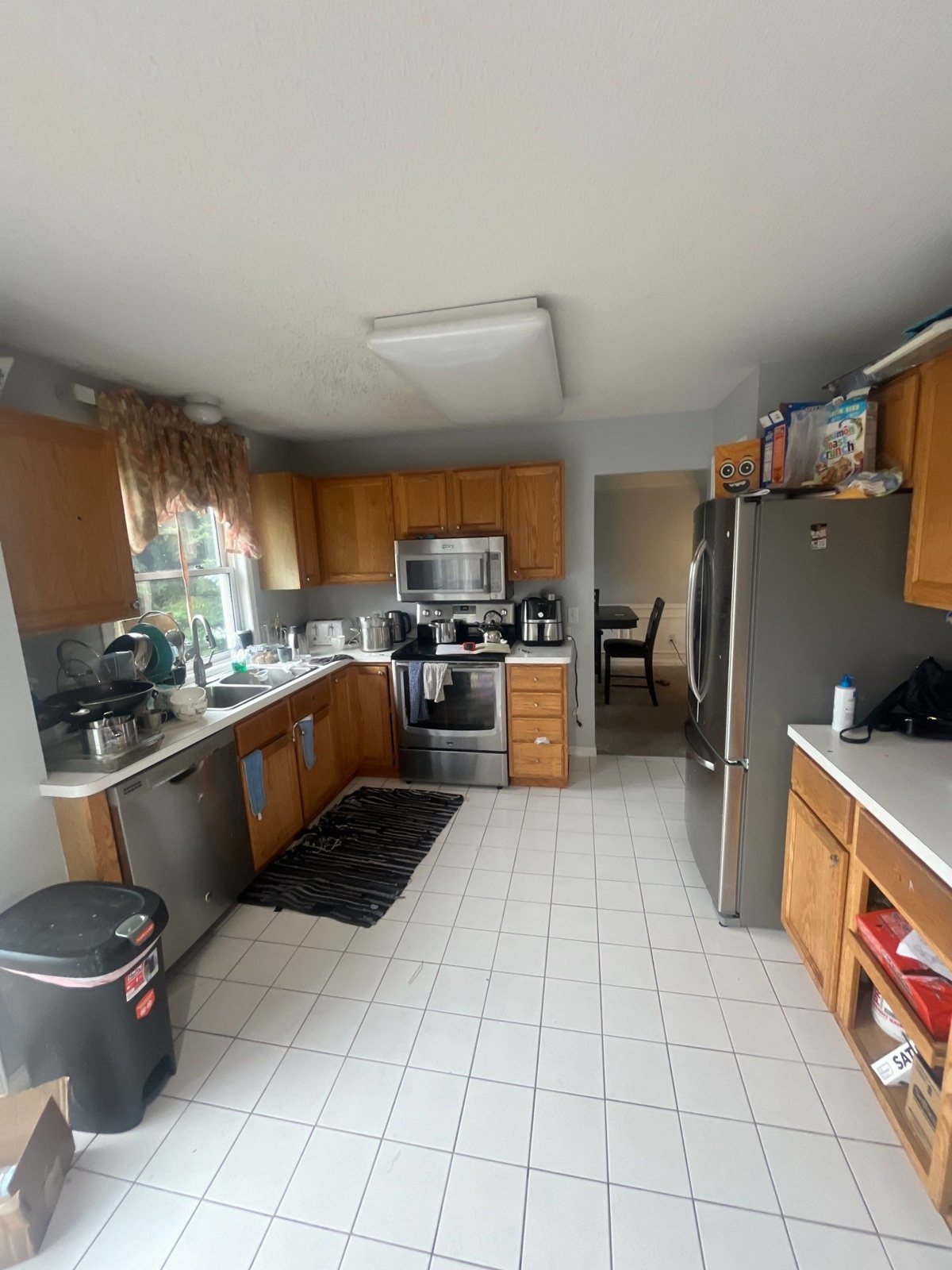
A kitchen shows how fast a small job can grow. Swapping cabinet doors needs no permit. Taking out the wall between the kitchen and dining room, moving the sink, and adding circuits could mean a building permit plus plumbing and electrical permits.
Roofing and siding have their own rules. See our homeowner questions page and Minneapolis roofing for those.
Who pulls the permit, the homeowner or the contractor?
Either one can in many cases. St. Paul recommends that your contract name the contractor as responsible for all permits. Whoever pulls the permit is responsible for the inspections and for meeting code.
What inspections happen during a permitted remodel?
A city inspector checks the work at set stages. For a typical interior remodel, that means before the walls are closed and again at the end. The permit card lists what's required for your job.
The exact inspections depend on the permits. Framing, rough plumbing, rough electrical, and insulation are usually looked at while the walls are still open, followed by a final. That's why the timing matters. After the drywall goes up, nobody can see the wiring without cutting it open again.
- The permit is posted on site before demolition starts. Minneapolis notes that permits are required before any work that needs one begins.
- Walls stay open until the rough inspections pass.
- You get a copy of the final approval for your house file.
- Final payment is tied to final inspection.
How do I check a contractor's license in Minnesota?
Search the contractor's name or license number in the Minnesota Department of Labor and Industry (DLI) license lookup. A company that contracts directly with you for work involving more than one special skill must hold a residential building contractor or residential remodeler license.
- Get the exact business name and license number. DLI says license numbers must appear on business cards, contracts, and all advertising, including websites (see DLI contractor FAQ).
- Search the DLI lookup. Use DLI's license and registration lookup. Confirm the license is active and that the license type matches the job.
- Check the name on the contract. The company you sign with should be the company holding the license.
- Look for enforcement actions. DLI publishes contractor enforcement and licensing actions on its residential contractors page.
- Ask whose name goes on the permit. A licensed contractor should expect to pull it.
What is the Minnesota Contractor Recovery Fund?
It's a state fund that can pay homeowners for certain out-of-pocket losses caused by a licensed residential contractor's fraud, dishonest practices, or failure to perform. It only applies if the contractor was licensed when you signed.
An unlicensed contractor gives you no access to that fund. That's the most practical reason to spend two minutes on the lookup.
Planning a remodel and not sure what it'll take?
We'll lay out the scope, the likely permits, and the order of work before any demolition.
Build my remodel game planWhy does unpermitted work cause problems when you sell?
Buyers, their inspectors, and their agents often compare the house to its permit history. When the two don't match, the questions start. That can lead to price negotiations, requests for retroactive permits, or a delayed closing.
Agents who want this checked before listing can use our address-based property report for Realtors. It pulls St. Paul permits and Minneapolis code cases.
What does a remodel look like before permits and demolition?
It starts with a scope: what stays, what comes out, and which systems are affected. That scope determines which permits you need.
Repair King also rebuilds homes after fire and water losses. See fire and water restoration. Rebuild work is permitted and inspected the same way a remodel is.
What should I do before I sign a remodeling contract?
Confirm the license, confirm who's pulling the permits, and tie final payment to final inspection. Do all three before any money changes hands.
- License is active in the DLI lookup, under the same name as the contract
- Contract says the contractor obtains all permits
- Scope lists which trades are involved (plumbing, electrical, HVAC)
- Final payment depends on final inspection approval
- Heritage district? Ask about HPC approval for exterior changes in St. Paul
Looking for help paying for repairs? Our home repair grant finder lists local programs.
Know the permits before the first wall comes down
Tell us what you want to change. We'll map out the scope, the likely permits, and the order of work.
Questions people also ask
Do I need a permit to replace kitchen cabinets in Minneapolis or St. Paul?
Usually not for the cabinets and countertops alone. Both cities list them as exempt finish work. If you move the sink or add circuits, you'll need plumbing or electrical permits.
Can I pull my own remodeling permit in Minnesota?
Often yes. But in St. Paul, a homeowner who pulls permits becomes responsible for all required inspections and code compliance. The city recommends that the contract name the contractor as responsible for permits.
Is there a dollar threshold for permits in St. Paul?
Yes. St. Paul says minor alterations that aren't normal maintenance need a building permit when labor plus materials exceed $500. Finish work like paint and flooring is exempt no matter the cost.
Can emergency repairs start before a permit?
In Minneapolis, emergency repairs can start before you apply, but you must apply within the next working business day. Check with your city for its own rule.
Does a handyman need a license in Minnesota?
Under Minn. Stat. 326B.805 and DLI guidance, anyone who contracts directly with a homeowner for work in more than one special skill needs a residential building contractor or remodeler license. For single-trade or edge cases, ask DLI.
Sources
- When Is a Permit Required? (City of Saint Paul DSI)
- Guide to Residential Improvements (City of Saint Paul DSI)
- Work Exempt from Permit (City of Minneapolis)
- Minn. Stat. 326B.805 Licensing Requirements (Minnesota Revisor of Statutes)
- Residential contractors, remodelers, roofers (Minnesota DLI)
- Residential contractor FAQs (Minnesota DLI)
- Contractor Recovery Fund fact sheet (Minnesota DLI)
- License and registration lookup (Minnesota DLI)
Repair King is a licensed contractor, not an insurance company, public adjuster or attorney. We inspect, document and repair. Coverage decisions belong to your insurer, so read your own policy and ask your agent.


